
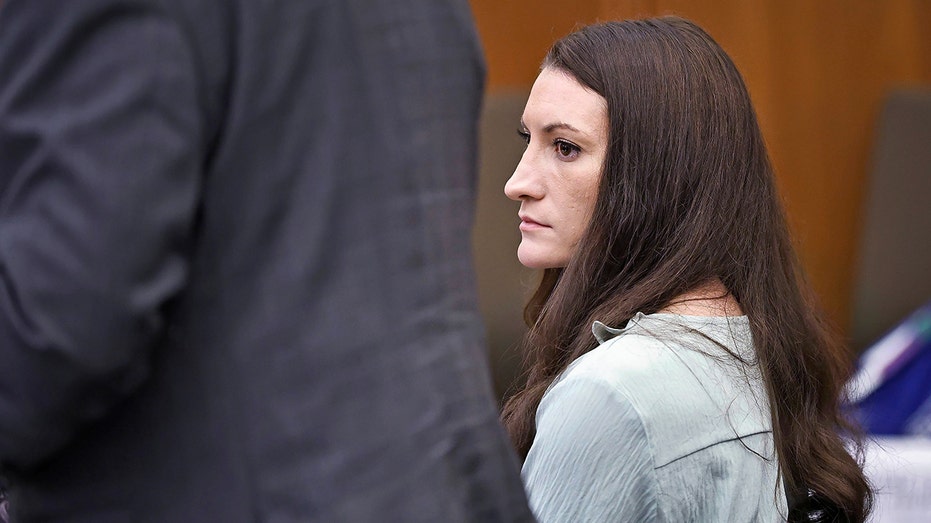
Lindsay Clancy’s murder trial could give her defense an unusual advantage if jurors remain unable to reach a unanimous verdict, according to retired Massachusetts Superior Court Judge Jack Lu. Jurors reported for a second time that they were deadlocked after more than 28 hours of deliberations. The case involves three first-degree murder charges in the deaths of Clancy’s three young children at the family’s Duxbury, Massachusetts, home in January 2023. Lu said the widespread influence of social media has changed the traditional expectations surrounding retrials after hung juries.
| 1) | Jury remains divided after extended deliberations |
| 2) | What the Tuey-Rodriguez instruction means |
| 3) | Why social media may affect a retrial |
| 4) | Defense and funding concerns |
| 5) | What may happen next in court |
Jury remains divided after extended deliberations
The jury has been considering the case in Plymouth Superior Court and had already deliberated for more than 28 hours by Wednesday. Jurors first told Judge William Sullivan earlier in the week that they were struggling to agree, but the judge initially sent them back without issuing a formal deadlock instruction. On Wednesday, they again reported that they could not reach a unanimous decision.
The possible outcomes under discussion include first-degree murder, second-degree murder, voluntary or involuntary manslaughter, not guilty by reason of lack of criminal responsibility, and not guilty. The charges arise from the deaths of Cora, Dawson and Callan Clancy, all younger than 6, who were found strangled at the family’s home in January 2023.
What the Tuey-Rodriguez instruction means
The Tuey-Rodriguez charge is used when a jury says it is deadlocked. It asks jurors to continue deliberating, listen carefully to one another and reconsider their views while preserving opinions they honestly hold. The instruction is intended to encourage a verdict without directing jurors toward a particular result.
After the charge, Sullivan directed the panel to resume its review of the evidence and follow the instructions previously provided during the trial. The proceedings included more than 80 witnesses and over 300 exhibits, adding to the complexity of the deliberations.
“In the past, the conventional wisdom was that the prosecution is more likely to win on a retrial after a hung jury. Now it’s different… The new conventional wisdom is question mark because of social media infected trials,” Jack Lu said.
Why social media may affect a retrial
Jack Lu said the extensive online discussion surrounding high-profile criminal cases can influence the environment in which jurors and witnesses participate. He described social media as an abusive and pressuring setting and said it has complicated the conventional view that prosecutors generally benefit when a first trial ends with a hung jury.
Lu cited the case of Karen Read, a Massachusetts woman whose prosecution for the death of her Boston police officer boyfriend drew significant online attention. Read’s first trial ended with a deadlocked jury in 2024, and she was acquitted at a retrial in 2025. Lu said online activity that had built gradually during the first proceeding intensified during the second.
Defense and funding concerns
Clancy’s attorney, Kevin Reddington, said he would be prepared to try the case again if Sullivan declares a mistrial. He also told reporters that Clancy might not be able to emotionally withstand another trial, describing her as sad and displaying a flat affect.
A fundraising campaign for Clancy’s parents, the Musgrove family, had exceeded $830,000. It was unclear how a retrial would be financed or whether Reddington would charge for additional representation. Those practical and emotional issues would become more significant if the current proceedings end without a verdict.
What may happen next in court
Jurors are scheduled to return Thursday for a sixth day of deliberations. If they report again that they cannot agree, Lu said the case would likely end in a mistrial, also known as a true hung jury, with limited exceptions.
A mistrial would not resolve the murder charges and could allow prosecutors to seek a new trial. However, Lu’s assessment suggests that the public debate and social media attention surrounding a second proceeding could create different pressures and dynamics from those present in the first trial. Until the jury reaches a decision or the court declares a mistrial, the legal outcome remains unsettled.
| 1 | The jury has reported twice that it is deadlocked. |
| 2 | Judge William Sullivan issued a Tuey-Rodriguez charge to encourage continued deliberations. |
| 3 | The jury is weighing several murder, manslaughter and criminal-responsibility outcomes. |
| 4 | A retired judge said social media could change the usual dynamics of a retrial. |
| 5 | Another report of deadlock could lead to a mistrial. |
Summary
The Clancy jury’s continuing deadlock has brought the case close to a possible mistrial. While a retrial could follow, Jack Lu said heavy social media attention may undermine the traditional assumption that a second prosecution has an advantage. The jury’s next report will determine whether deliberations continue or the court moves toward ending the trial without a verdict.
Frequently Asked Questions
What is a Tuey-Rodriguez charge?
It is a judicial instruction given to a deadlocked jury that encourages continued discussion and careful consideration of other jurors’ views without requiring anyone to abandon an honestly held position.
What happens if the jury remains deadlocked?
The judge may declare a mistrial. The charges would remain unresolved, and prosecutors could potentially pursue a retrial.
Why does social media matter to a possible retrial?
The retired judge said online commentary can create pressure around jurors, witnesses and high-profile proceedings, potentially changing the dynamics of a second trial.