
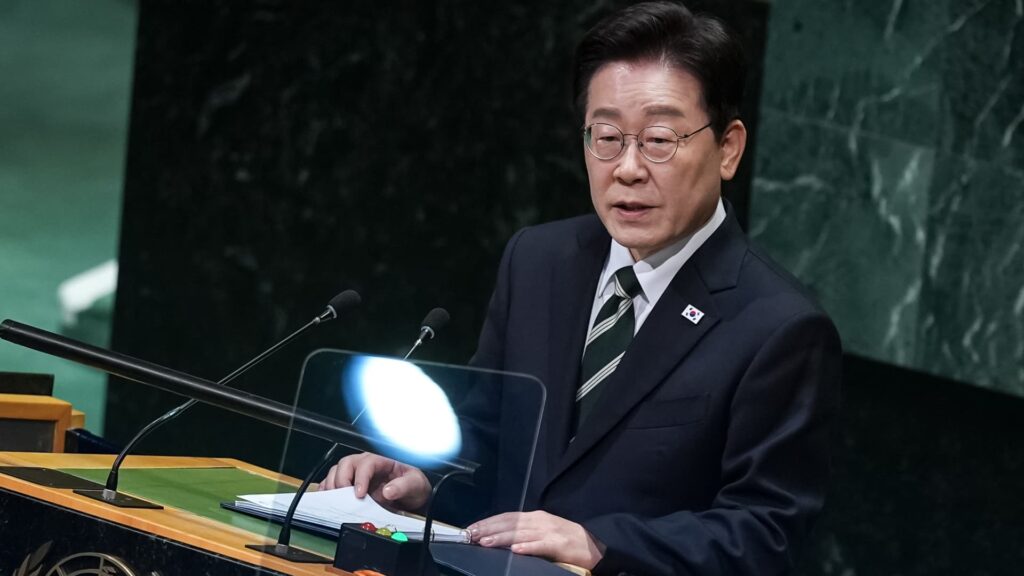
On September 22, South Korean President Lee Jae Myung expressed strong condemnation towards Ukraine’s disclosure regarding the transfer of North Korean prisoners of war to South Korea. This unexpected revelation has escalated tensions between Seoul and Kyiv, with President Lee demanding a public apology as he perceives this incident as a matter of national honor. Ukrainian Foreign Minister Andrii Sybiha stated that the situation was a diplomatic misunderstanding that his country hopes to resolve amicably.
| Article Subheadings |
|---|
| 1) Rising Tensions Between South Korea and Ukraine |
| 2) The Breach of Confidentiality |
| 3) Implications of the UN Assembly Statement |
| 4) Context of the Conflict |
| 5) Future Diplomatic Relations at Stake |
Rising Tensions Between South Korea and Ukraine
The relationship between South Korea and Ukraine has significantly strained following President Lee Jae Myung‘s vehement response to a statement made during the United Nations General Assembly. On September 22, Lee objected to the disclosure that Ukraine had sent two North Korean soldiers to South Korea, claiming that it undermined national honor. The President articulated his discontent through a post on X, asserting that the unilateral announcement by Ukraine made him appear insincere regarding issues of confidentiality that had been previously discussed.
Lee’s statements are reflective of South Korea’s sensitivity regarding diplomatic communication, especially on matters as volatile as the North Korean presence in international conflicts. Following this incident, the South Korean President has made it clear that he perceives the situation as one of dishonor, thus characterizing the act as not simply a diplomatic mistake but a significant affront to Korean dignity.
The Breach of Confidentiality
The heart of the conflict revolves around allegations that a nondisclosure agreement was breached by Ukrainian officials. According to South Korean authorities, there had been prior discussions regarding the confidentiality of the POW transfer to avoid jeopardizing ongoing negotiations and prisoner exchanges with Russia. Andrii Sybiha, Ukraine’s Foreign Minister, responded by labeling the incident a “diplomatic misunderstanding,” yet this explanation did little to assuage the ire of President Lee.
Lee expressed his dissatisfaction regarding the lack of acknowledgment of this supposed agreement, stating that Ukraine further exacerbated the situation by discussing potential military confrontations involving North and South Korea. By diverging from a mutual understanding, officials in South Korea postulate that Ukraine has not only provoked diplomatic tensions but also challenged the political landscape on the Korean Peninsula.
Implications of the UN Assembly Statement
At the United Nations General Assembly, Ukrainian President Volodymyr Zelenskyy stated that Ukraine had indeed transferred two North Korean POWs to South Korea, confirming the initial account that sparked outrage in Seoul. This announcement was perceived by South Korean officials as a problematic disclosure that could potentially hinder future diplomatic negotiations, particularly those involving military cooperation against common adversaries. South Korean lawmakers have expressed concerns that the premature disclosure could undermine support for military assistance to Ukraine, such as the air defense systems that Zelenskyy had requested from Seoul in the past.
This situation encapsulates a broader geopolitical struggle, as South Korea grapples with balancing its support for Ukraine in the context of the Russia-Ukraine conflict while aiming to maintain diplomatic decorum in dealing with North Korea. Scholars and geopolitical analysts will be watching closely how this incident unfolds, as it may set the tone for South Korea’s involvement in international military aid discussions moving forward.
Context of the Conflict
The controversy arises amidst a heightened climate of military tension in the Korean Peninsula, where relations between North and South Korea remain fraught. The mention of potential military clashes by Ukrainian officials only adds to South Korea’s apprehensions about an unprecedented escalation in the region. Kyrylo Budanov, a senior adviser to President Zelenskyy, indicated that North Korea’s participation in the Ukraine-Russia conflict hints at escalated military preparations that could directly impact stability in South Korea.
Such statements feed into long-standing fears in Seoul regarding North Korea’s growing military ambitions, echoed recently by increased military drills and rhetoric from Pyongyang. This situation leaves South Korea in a precarious position as it navigates international relations amid the chaotic dynamics of an ongoing war in Ukraine, a historical adversary in North Korea, and a supportive stance towards global alliances against aggression.
Future Diplomatic Relations at Stake
As South Korea’s diplomatic relations with Ukraine are put to the test, the fallout could have substantial repercussions for both nations. Lee has already threatened “additional measures” should Kyiv fail to issue a public apology for what he perceives as a serious breach of trust. The potential fallout from this incident could affect military assistance from South Korea to Ukraine and future cooperation on regional security initiatives.
Simultaneously, the friction could also embolden North Korea to adopt a more aggressive posture, with a clearer incentive to exploit the rift. As such, the balance of power in the region hangs perilously, driven by events that took place far from the Korean Peninsula. It poses questions over how well nations can adapt to fluid geopolitical realities, reinforce their alliances, and ensure their interests are safeguarded in the midst of rising tensions.
| No. | Key Points |
|---|---|
| 1 | President Lee Jae Myung has condemned Ukraine for disclosing the transfer of North Korean POWs. |
| 2 | Seoul demanded a public apology from Kyiv, citing a breach of a nondisclosure agreement. |
| 3 | The incident has escalated diplomatic tensions between South Korea and Ukraine. |
| 4 | Ukraine’s Foreign Minister described the situation as a diplomatic misunderstanding. |
| 5 | The broader geopolitical implications could affect regional stability and future collaborations. |
Summary
In summary, the tense exchange between South Korea and Ukraine over the disclosure of North Korean POW transfers highlights the complexity and fragility of international relations, particularly in a region still influenced by historical adversities. The potential ramifications of this incident could extend beyond bilateral relations, shaping how the Korean Peninsula interacts with global security issues and reflects the ongoing geopolitical struggles faced. As both nations navigate this incident, the outcome may determine the future of military cooperation and diplomatic relations in a world increasingly marked by uncertainty.
Frequently Asked Questions
Question: What led to the conflict between South Korea and Ukraine?
The conflict arose when President Lee Jae Myung condemned Ukraine for disclosing the transfer of North Korean prisoners of war, which South Korea claims breached a nondisclosure agreement.
Question: What was Ukraine’s response to the allegations made by South Korea?
Ukrainian Foreign Minister Andrii Sybiha referred to the episode as a “diplomatic misunderstanding” and expressed hopes to mend the situation.
Question: How might this incident affect military relations in the future?
This incident could complicate South Korea’s military assistance to Ukraine, particularly as South Korea balances its support while managing its regional security concerns regarding North Korea.