
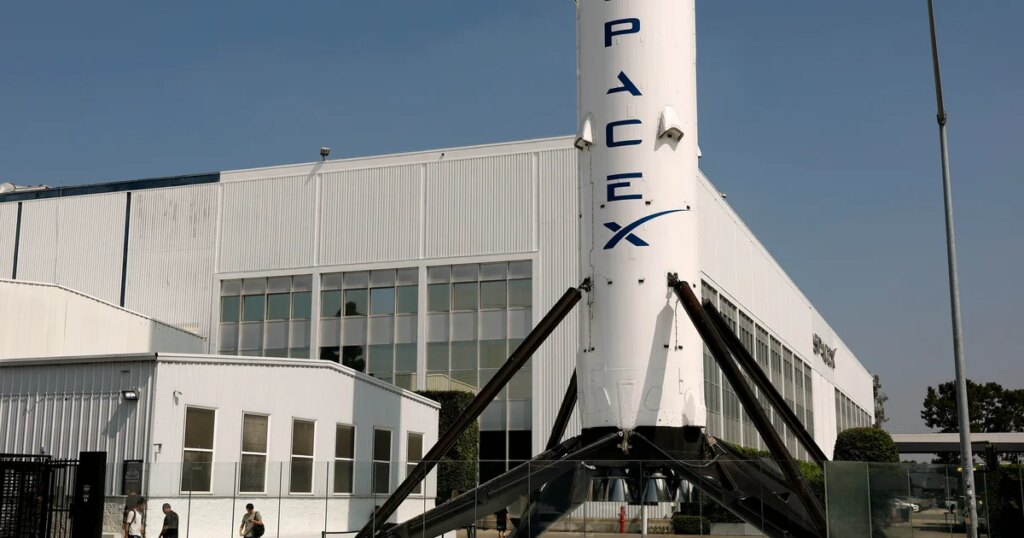
SpaceX recently unveiled its second-quarter earnings report, marking a significant moment as the company continues to navigate its journey as a publicly traded entity. Revenue soared to $7.8 billion, improving upon a staggering net loss of $541 million, compared to a loss of $1 billion during the same quarter last year. As analysts closely monitor the performance of its key divisions, particularly the Starlink satellite service, the report brings both optimism and skepticism from investors.
| Article Subheadings |
|---|
| 1) Revenue Growth and Business Units |
| 2) Performance of Starlink Subscribers |
| 3) Musk’s Ambitious Plans for SpaceX |
| 4) Investor Reactions and Stock Performance |
| 5) Future Projections and Target Milestones |
Revenue Growth and Business Units
SpaceX’s latest earnings show a remarkable revenue increase, reaching $7.8 billion in the second quarter. This performance stands out particularly as it improves from a significant net loss of $1 billion reported in the same period last year. Analysts tracked this growth closely, as expectations were set lower at $6.8 billion based on predictions from financial analysts compiled by FactSet. The business segments contributing to this growth include Space, Connectivity, and AI, each demonstrating robust gains during the quarter.
The diverse business units of SpaceX reflected a balanced performance. The Space division, which includes launching satellites into orbit, the Connectivity division, primarily through its Starlink service, and an emerging AI unit, each played a crucial role in driving the company’s earnings upward. Analysts like Adam Crisafulli from Vital Knowledge highlighted that all three divisions exceeded revenue expectations, indicating an overall healthy operational environment for SpaceX.
Performance of Starlink Subscribers
A focal point of the earnings report was the growth of Starlink, the satellite internet service best known for bringing connectivity to underserved areas. SpaceX reported a substantial doubling in Starlink subscribers, which increased from 6 million to 12 million over the year. This surge saw the revenues from the Connectivity unit achieving $4.3 billion, significantly surpassing expectations of $3.8 billion.
During a call with financial analysts, Elon Musk emphasized the potential for Starlink to become a dominant player in global internet provision. “It’s not out of the question that at some point, Starlink will deliver the majority of the world’s internet,” he remarked, underscoring the ambitious nature of SpaceX’s goals and the perceived market potential of its services.
Musk’s Ambitious Plans for SpaceX
In addition to immediate revenue concerns, Elon Musk laid out grand visions for the future of SpaceX during the earnings call, including his expectation that the company could eventually deliver “well over 1 million tons to orbit per year.” He noted that global competitors currently yield around 300 tons, suggesting that SpaceX aims to radically shift the paradigms of space transport.
Musk’s ambitions extend beyond immediate financial metrics, indicating that the company is committed to innovation and expanding its markets. He hinted at long-term goals involving solar-powered data centers in space and even missions to Mars, outlining a timetable for significant industry advancements that, while inspiring, will require a long-term commitment from investors and partners alike.
Investor Reactions and Stock Performance
Despite the positive revenue news, investor sentiment appeared lukewarm following the earnings report. SpaceX’s stock dipped nearly 7% in after-hours trading, closing at $116.40—below the company’s initial public offering (IPO) price of $135 per share. This drop has raised concerns among market observers about the company’s ability to convert growth into shareholder value amid ambitious long-term objectives.
Analysts suggest that the market’s reaction stems from investors’ desire for greater transparency and immediate results instead of long-term promises. Gadjo Sevilla, a senior analyst at Emarketer, pointed out that discussions around ambitious missions, like trips to Mars, may not satiate investors looking for quick returns. They want to gauge the company’s ability to translate its extraordinary growth into tangible financial health.
Future Projections and Target Milestones
Looking ahead, SpaceX has ambitious targets involving space exploration and profitability. The company anticipates launching its 13th Starship rocket, with the aim of landing on the Moon by 2028. However, as of now, no Starship has yet been deployed in Earth orbit. The path forward remains enticing but fraught with challenges as the company navigates regulatory hurdles and operational inefficiencies.
In retrospect, last year’s performance metrics showed SpaceX generating about $18.7 billion in overall revenue against a net loss of more than $4.9 billion. The contrasting narratives of revenue generation and net losses point to a larger story of a company in transition—experimenting with innovative offerings while grappling with the financial realities of rapid expansion.
| No. | Key Points |
|---|---|
| 1 | SpaceX’s second-quarter revenue hit $7.8 billion, improving from a year-ago loss of $1 billion. |
| 2 | Starlink subscribers doubled to 12 million, significantly boosting the Connectivity unit’s revenue. |
| 3 | Elon Musk aims to increase payload deliveries to orbit substantially, targeting a million tons annually. |
| 4 | Despite impressive numbers, SpaceX’s stock has declined nearly 50% since its IPO. |
| 5 | Future milestones include targets for lunar landings by 2028 and ongoing expansion in space technologies. |
Summary
SpaceX’s recent earnings report reflects a complicated mix of impressive revenue growth, ambitious future plans, and investor apprehension. While the doubling of Starlink subscribers and a surge in revenue across several divisions instill a sense of optimism, the significant stock decline since the IPO underscores a pressing need for the company to demonstrate immediate value and address investor concerns about long-term commitments. As SpaceX seeks to position itself as a leader in the commercial space sector, navigating these dual pressures will be crucial.
Frequently Asked Questions
Question: What were SpaceX’s key financial highlights from the earnings report?
SpaceX reported $7.8 billion in revenue for the second quarter, an improvement over the previous year’s loss of $1 billion, with key divisions exhibiting significant growth.
Question: How did the performance of Starlink impact SpaceX’s revenue?
Starlink’s subscriber base surged from 6 million to 12 million, contributing to a substantial increase in revenue within the Connectivity unit, which exceeded analysts’ expectations.
Question: What are SpaceX’s future goals following the earnings report?
SpaceX aims to deliver over a million tons to orbit annually and is targeting a lunar landing by 2028, while expanding its presence in innovative technologies and services.