
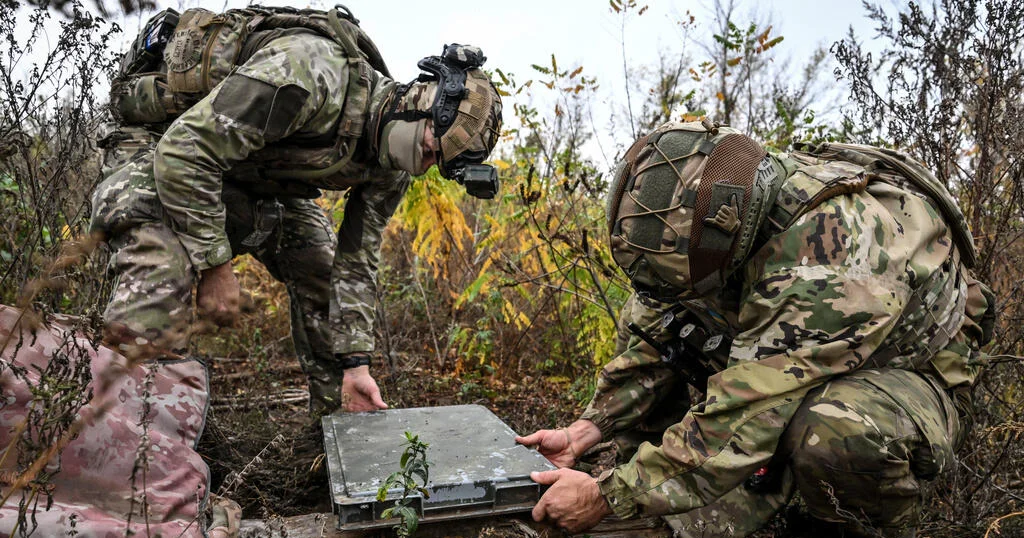
In recent developments, Ukraine’s military operations have faced significant challenges due to limitations imposed on the Starlink and Starshield satellite networks, vital for drone communication and strategy. The restrictions, which reportedly began on October 13, have raised concerns about Ukraine’s operational capabilities amidst an ongoing conflict with Russia that has continued for nearly five years. Both networks, operated by Elon Musk’s SpaceX, have proven essential for Ukraine’s tactical advantage, and any disruption poses a serious threat to its efforts on the battlefield.
| Article Subheadings |
|---|
| 1) Understanding the Recent Disruptions in Ukraine |
| 2) Overview of Starshield and Starlink Technologies |
| 3) The Conflict Over Access to Starlink and Starshield |
| 4) Role of U.S. Intelligence and Military Support |
| 5) Consequences of the Throttling for Ukraine’s War Efforts |
Understanding the Recent Disruptions in Ukraine
On October 13, Ukrainian forces began experiencing unprecedented difficulties with the Starshield satellite communications network, which is crucial for operating fast-moving drone missions during the ongoing conflict with Russia. Reports indicate that Ukrainian soldiers have identified new “speed limits” imposed on the military-grade Starshield internet dishes. These limits severely hampered the ability of Ukrainian drones to function effectively, affecting their maneuverability and, ultimately, their operational capabilities against Russian targets.
According to various sources within Ukraine’s military, the restrictions were enacted without prior notice, resulting in major operational setbacks. Specifically, drones equipped with Starshield dishes encountered throttled connectivity, ultimately leading to their termination mid-flight—resulting in crashes and loss of essential equipment. This restriction occurred as Ukrainian forces sought to enhance their defensive measures against Russian drone and missile strikes, illustrating how vital these technologies are for maintaining a strategic edge on the battlefield.
Overview of Starshield and Starlink Technologies
Starshield and its civilian counterpart, Starlink, are satellite networks operated by SpaceX, featuring a constellation of thousands of low-Earth satellites. Starlink provides essential internet access to both military and civilian users, while Starshield, specifically catering to the military, boasts enhanced features for secure communications. The U.S. government has a contractual relationship with SpaceX for the operation of Starshield, which is primarily utilized by Ukraine and other allied nations.
Starshield operates with fewer limitations than Starlink, especially in terms of speed and security, making it an indispensable resource for real-time drone operations and battlefield strategy. However, both systems share the same satellite constellation, meaning that limitations applied to one network will likely impact the other. As Ukraine’s reliance on drones has significantly increased during the conflict, disrupting the satellite connectivity offered by either network poses a serious risk to their military operations.
The Conflict Over Access to Starlink and Starshield
The access limitations have sparked a complex debate regarding the involvement of Elon Musk and U.S. government officials. Ukrainian President Volodymyr Zelenskyy has publicly speculated that Musk may have responded to pressure from U.S. authorities in enforcing these restrictions. However, Musk has denied any direct involvement, asserting that decisions regarding speed limitations and access to Starshield have ultimately been determined by the U.S. military and the President. This situation has led to a confusing narrative surrounding the control and usage of crucial satellite communication technology.
Some defense officials in the U.S. have echoed Musk’s claims, indicating that limitations on Starshield were not part of a coordinated effort by the Pentagon. Pete Hegseth, the Defense Secretary, explicitly stated that there had been no directives from the Department of Defense to manipulate the service deliberately. Conversely, Marco Rubio, a U.S. Senator, suggested that the decision-making surrounding access to these networks rests with Musk, given his unique position as the owner of the SpaceX brand.
Role of U.S. Intelligence and Military Support
In addition to challenges posed by the Starshield throttling, Ukraine has confronted failures in receiving critical early warnings from U.S. intelligence regarding significant Russian strikes. The reliance on U.S. technology for intelligence-gathering and monitoring Russian military movements is paramount for Ukraine’s strategic planning. However, reports indicate that Ukraine has not received notifications of incoming missile attacks on two occasions in October, leading to substantial losses and casualties.
On these occasions, Ukrainian officials expressed uncertainty over the reasons for the failure of their warning systems, citing poor weather as a potential factor. Still, military leaders remain skeptical of the explanation, suggesting that the U.S. is “playing” with the system, casting doubt on the reliability of their intelligence-sharing framework. This crisis in communication further complicates Ukraine’s already fragile position in combating an overpowering adversary in Russia and demonstrates the interconnectedness of battlefield strategies and technological reliance.
Consequences of the Throttling for Ukraine’s War Efforts
The implications of the recent throttling go beyond mere operational disruptions; they extend into financial losses and strategic vulnerabilities for Ukraine. Analysts estimate that the degradation of Starshield operations has cost Ukraine tens of millions of dollars in unanticipated losses, which are compounded by the existing challenges posed by military engagement with Russia. Although some reports indicated that the restrictions had been lifted, Zelenskyy confirmed that speed limitations were still in place, underscoring the ongoing challenges faced by his forces.
The importance of effective communication networks during wartime cannot be overstated, and with every operation, Ukraine’s reliance on these technologies grows. As both commercial and military satellites become increasingly essential for battlefield success, the ramifications of disruptions not only threaten immediate military goals but also jeopardize longer-term strategic outcomes. The reliance on a private entity for such critical infrastructure raises questions about sovereignty and control in modern warfare.
| No. | Key Points |
|---|---|
| 1 | Ukraine’s military operations are becoming increasingly dependent on SpaceX’s Starlink and Starshield networks. |
| 2 | Recent throttling on Starshield has severely impacted drone operations, leading to crashes and operational disruptions. |
| 3 | The U.S. government has a contractual relationship with SpaceX, which complicates the decisions surrounding military network access. |
| 4 | Failures in U.S. intelligence systems have further exacerbated Ukraine’s vulnerability to Russian military actions. |
| 5 | The disruption has led to significant financial losses for Ukraine’s military operations, raising questions about the reliance on private technology for national defense. |
Summary
The recent disruptions to Ukraine’s access to the Starlink and Starshield satellite networks have underscored the complexities and vulnerabilities inherent in modern warfare, particularly regarding dependency on private technology. The inability to effectively operate drones and receive timely military intelligence has significant implications for Ukraine’s defense capabilities amidst an unrelenting conflict with Russia. As Ukraine continues to navigate these challenges, the fundamental question of resilience in warfare hinges not just on military strategy but also on reliable access to critical technological infrastructure.
Frequently Asked Questions
Question: What role do Starlink and Starshield play in Ukraine’s military strategy?
Starlink and Starshield provide crucial communication capabilities for drone operations and general battlefield communications, allowing Ukrainian forces to coordinate and execute military strategies effectively.
Question: How has the throttling of Starshield affected Ukraine’s military operations?
The throttling of Starshield has impeded drone operations, causing crashes and operational limitations, which has significant ramifications on Ukraine’s ability to respond to Russian military actions effectively.
Question: What has been the response from U.S. officials regarding Musk’s control over Starshield access?
U.S. officials have pointed fingers both at Musk for imposing restrictions and at defense channels, emphasizing confusion around decision-making related to access to satellite technologies vital for military operations.