
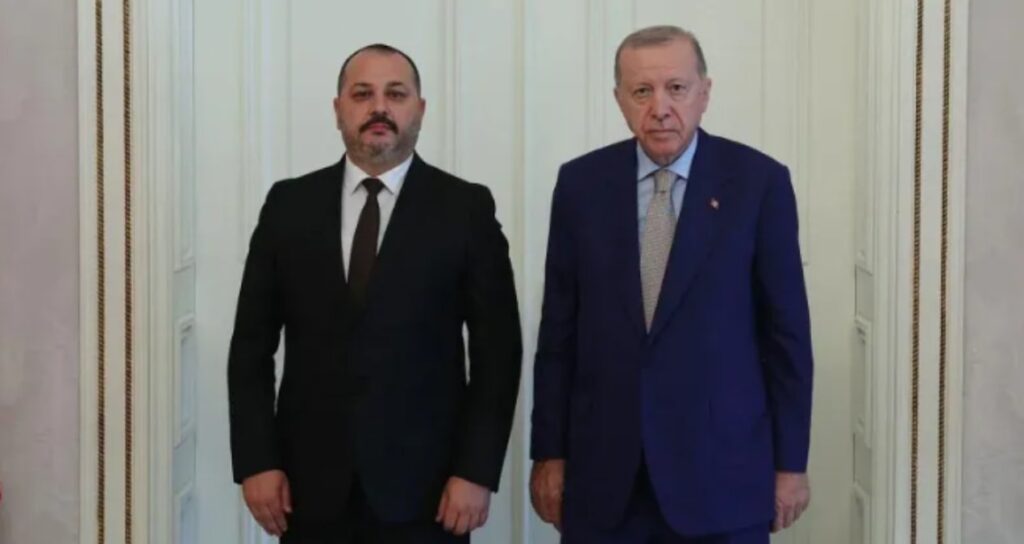
In a recent incident that has sparked considerable discussion, the newly appointed chairman of the AK Party in Karaman Province, Adem Küçükyarma, was the center of controversy following the use of public-sector social media to announce political activities. The Karaman Provincial Health Directorate’s official social media account shared a post that mirrored content from the AKP’s account, leading to questions about the appropriateness of utilizing public resources for political communications. This occurrence has raised eyebrows regarding the principles of impartiality that govern public institutions.
| Article Subheadings |
|---|
| 1) Celebrating a New Leadership Era in the AKP |
| 2) The Social Media Controversy Unfolds |
| 3) Implications for Public Institutions |
| 4) Reactions from the Public and Officials |
| 5) Conclusion and Future Considerations |
Celebrating a New Leadership Era in the AKP
The recent appointment of Adem Küçükyarma as the provincial chairman of the AK Party in Karaman marked a significant event for the local political landscape. This event was characterized by “congratulations” visits from party members and local citizens, reflecting a sense of community and political solidarity. The transition in leadership was communicated to the public through an official post on the AKP Karaman Provincial Directorate’s social media account, where it was stated that Küçükyarma would engage with party members and the local populace following his inauguration.
Understanding the backdrop of such developments is critical. Adem Küçükyarma, who has been active in local politics for years, is perceived as a strong ally of the AK Party’s agenda. His leadership is expected to steer party initiatives aimed at uplifting regional concerns and addressing local governance issues. The congratulations visits initiated upon his appointment are not merely ceremonial; they signify an approach toward fostering unity within the party’s ranks and displaying strong leadership to the constituents. Such actions are commonly observed in political transitions, serving both as a public relations tool and a means to rally support for upcoming initiatives.
Thus, examining the motivations behind these social media communications reveals a deeper intent to validate the new chairmanship while also adhering to traditional political customs within the party.
The Social Media Controversy Unfolds
The controversy erupted when it was discovered that the same text and photographs celebrating Adem Küçükyarma’s office commencement were also disseminated through the official social media account of the Karaman Provincial Health Directorate. Many observers reacted with surprise, reflecting concerns over the appropriateness of this overlap between government institutions and political party activities. Questions arose regarding the fundamental use of public platforms to promote a political agenda, igniting an essential dialogue about the ethical considerations that should govern such actions.
The post, which included an expression of gratitude towards guests for their kind visits and support, reinforced the community bonds that local politicians often wish to establish. However, the dual posting of this political messaging from a public health account blurred the lines between governmental duties and partisan promotion, prompting criticisms from various sectors, including political analysts and civic leaders.
As the debate unfolded, it became critical to assess the boundaries of social media use by public institutions, especially as they pertain to the principles of impartiality and public service that should govern them. These institutions are expected to maintain a non-partisan stance; thus, their engagement in activities perceived as political can lead to questions about credibility and the misuse of taxpayer resources.
Implications for Public Institutions
Discussions surrounding the implications of this incident have surfaced relevant concerns about the governance of public institutions. The use of social media platforms is becoming increasingly vital for public institutions to communicate effectively with citizens. However, incidents like this create apprehension about how closely tied these communications can or should be to political entities.
As officials scrutinize the fallout from this event, it becomes crucial to establish clear guidelines for how social media accounts of public institutions should be operated. Questions arise regarding the necessity for a more stringent policy framework, which would delineate the boundaries between political communication and governmental communication. Such measures could help restore public trust in these institutions and reaffirm their commitment to serve all citizens impartially, irrespective of political affiliations.
The critical takeaway from this incident is the recognition that social media can serve as a powerful tool for officials and public institutions. Still, it must be wielded with consideration for its ramifications and a respect for the ethical standards expected from these entities.
Reactions from the Public and Officials
Public reaction to the controversy was swift and varied. Many voiced their dissatisfaction with the sharing practices, feeling that public resources should not support political endeavors. Local citizens expressed concerns over what they perceived as a misuse of official platforms, echoing longstanding sentiments regarding the blurred lines between governance and political maneuvering.
Officials from various sectors began to weigh in on the subject, advocating both for and against the practices displayed. Some defended the sharing as a celebration of local political achievement, stressing that unity within the party should be promoted. Others contended that the situation required immediate action to prevent any similar occurrences, emphasizing the importance of reestablishing the boundaries of public entities.
Amid growing tensions surrounding the issue, the Karaman Provincial Health Directorate took action by removing the controversial post from their account. Nonetheless, this prompted further questions regarding their decision to deactivate the entire Facebook account, raising suspicion about whether the decision was made to absolve the institution from public scrutiny regarding the incident.
These discussions revealed an urgent need for clearly articulated protocols, establishing appropriate procedures for social media communication, particularly in contexts involving political parties and public service mandates.
Conclusion and Future Considerations
The incident involving Adem Küçükyarma and the dual posting of congratulatory messages serves as a reminder of the complexities inherent in modern governance. As the lines between social media and political discourse continue to intersect, it becomes essential for public institutions to tread carefully, ensuring that they retain their integrity and impartiality in communications.
Moving forward, the experiences stemming from this controversy ought to prompt local authorities to reevaluate their use of social media platforms. Establishing rigorous operational guidelines regarding the content shared by public institutions will be essential to avoid future pitfalls and maintain the public’s trust. Such measures not only safeguard the credibility of public entities but also ensure that political activities do not overshadow essential public services.
In summary, while the sharing of political content through public channels may appear innocuous, it carries the potential to undermine essential values of democracy, requiring careful consideration and strategy moving ahead.
| No. | Key Points |
|---|---|
| 1 | The appointment of Adem Küçükyarma as AK Party provincial chairman generates congratulatory visits and messages. |
| 2 | The dual posting of political communication on a public institution’s account raises ethical concerns. |
| 3 | The debate highlights the need for clear guidelines on the use of social media by public entities. |
| 4 | Public reaction underscores dissatisfaction with perceived misuse of resources for political purposes. |
| 5 | Decisions taken by the health directorate to remove and deactivate accounts spur further scrutiny. |
Summary
This recent incident involving Adem Küçükyarma and the use of the Karaman Provincial Health Directorate’s social media to promote political activities has exposed pressing concerns about the intersection of governance and political communication. The ensuing discussions illustrate the need for public institutions to maintain clear boundaries in their communication strategies, particularly when leveraging social media. This case serves as an important reminder of the principles of impartiality expected from public entities and highlights the need for comprehensive guidelines to protect the integrity of public service in a politically charged environment.
Frequently Asked Questions
Question: What sparked the controversy regarding the social media post?
The controversy arose when a post announcing congratulations for Adem Küçükyarma‘s appointment as AK Party provincial chairman was published on both the AK Party’s official social media account and that of the Karaman Provincial Health Directorate, leading to questions about the appropriateness of using public institution channels for political endorsements.
Question: What actions were taken following the backlash over the social media posting?
Following the public outcry, the post on the official social media account of the Karaman Provincial Health Directorate was removed, and the entire Facebook account of the Health Directorate was deactivated, which raised further questions about the decision-making process in that context.
Question: Why is this incident significant for public institutions?
This incident is significant as it highlights the ethical responsibilities of public institutions in maintaining impartiality and the challenge they face in managing social media effectively. It emphasizes the necessity for clear communication guidelines to uphold public trust and integrity while engaging with the community.