
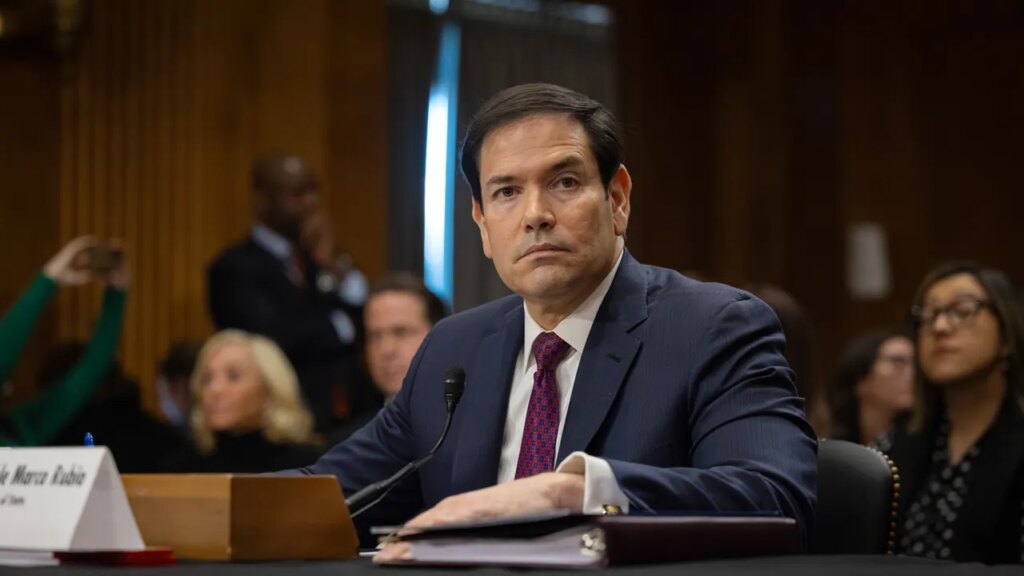
The U.S. State Department has condemned Senate Democrats for what it perceives as “grandstanding” regarding a briefing on a controversial oil deal with Venezuela. After calls for more transparency, Democrats delayed a meeting originally scheduled for October 1, 2026, prompting accusations from officials that the move was politically motivated. The fallout centers around the Pentagon’s 35% stake in North American Blue Energy Partners (NABEP), a substantial player in Venezuela’s oil sector, raising contentious legal and ethical questions about the deal’s implications and the legislators’ response.
| Article Subheadings |
|---|
| 1) Overview of the Controversial Oil Deal |
| 2) Political Reaction and Accusations |
| 3) Legal Implications of the Agreement |
| 4) Strategic Goals of the Administration |
| 5) Potential Economic Impact and Future Outlook |
Overview of the Controversial Oil Deal
At the heart of the current controversy is a deal between the U.S. government and North American Blue Energy Partners (NABEP), which grants the Pentagon a 35% equity stake in one of Venezuela’s largest oil companies. The agreement aims to revitalize U.S. economic interests in the Venezuelan oil sector following the political turmoil that has gripped the nation. Initially, the deal received mixed reactions but has now escalated into a major point of contention among lawmakers, particularly with respect to its legal soundness and potential consequences.
The transaction is part of a more extensive effort by the Trump administration, which has recently overthrown former President Nicolás Maduro. It is aimed at reshaping Venezuela’s economy amidst a backdrop of international criticism and humanitarian issues resulting from years of mismanagement in the oil sector. The Pentagon, through the Office of Strategic Capital, plans to participate financially in a way that does not entail immediate taxpayer costs, thus raising eyebrows about the federal approach to international investment.
Political Reaction and Accusations
The delay in the Senate briefing, which was meant to clarify the specifics of the deal and the Pentagon’s role, has led to accusations that Democratic leaders are using the situation as a political tool. The State Department criticized Senators who postponed the briefing, implying they were aware of the planned update long in advance yet chose to act to avoid accountability. State Department Assistant Secretary for Global Public Affairs Dylan Johnson stated,
“This is pure grandstanding.”
His remarks reflect a frustration within the administration regarding the legislative maneuvers perceived as an attempt to undermine the initiative.
In their defense, the Democratic senators argue that their requests stem from a genuine need for oversight and legal clarity, asserting that they were not sufficiently informed about the details of the deal prior to submitting their letter questioning it. This has led to further tensions between the White House and Capitol Hill as both sides try to navigate the complexities of oversight and political strategy.
The heated exchanges have now raised the stakes, prompting congressional disputes over the administration’s capability to manage such a high-stakes foreign investment while ensuring alignment with U.S. laws and norms. The outcome of these debates will likely influence public perception and future legislative actions regarding U.S. foreign engagements.
Legal Implications of the Agreement
As the political dust settles, the legality of the agreement is under scrutiny, with Democratic lawmakers questioning whether the Pentagon possesses the authority to acquire equity stakes in a foreign oil company through the Office of Strategic Capital. Critics argue that the existing legislation does not provide a clear legal framework for this type of investment and that the venture might exceed the powers allotted to the Pentagon. This concern has been echoed in letters sent to key officials, such as Secretary of State Marco Rubio and Secretary of Defense Pete Hegseth.
Additionally, the senators have expressed alarm over the reputation of NABEP and its leadership, particularly the past investigations involving its chairman, Alejandro Betancourt. While no criminal charges have surfaced, concerns about vetting and due diligence remained pivotal topics during discussions. Democratic leaders articulated these worries in correspondence suggesting that entangling the United States with lesser-known foreign companies could have risky ramifications for both American interests and the Venezuelan populace.
In light of these legal and ethical questions, the possibility of more extensive congressional hearings looms. A thorough examination of the circumstances surrounding the deal could present new challenges for the Trump administration as it tries to solidify its foreign policy agenda amidst a rising chorus of dissent.
Strategic Goals of the Administration
The driving force behind the agreement with NABEP is a multi-faceted strategic initiative aimed at not only rebuilding Venezuela’s oil sector but also recapturing American influence in a region historically affected by adversaries like China and Russia. By investing in the Venezuelan oil industry, the administration hopes to redirect energy supplies toward the U.S. while simultaneously supporting the re-establishment of democratic principles in a nation recently ravaged by dictatorship.
The Pentagon’s financial position in NABEP is structured through so-called penny warrants, designed to avoid a hefty initial investment while maintaining potential upside for the U.S. The intention is to capitalize on Venezuela’s natural resource wealth, which has been largely untapped in recent years due to mismanagement and economic instability.
By carefully crafting the agreement to complement various U.S. interests—such as energy security, geopolitical stability, and regional influence—the administration aims to foster a broader political transformation in Venezuela, aligning economic restructures with the necessary diplomatic efforts to assure lasting change.
Potential Economic Impact and Future Outlook
If successful, the agreement with NABEP could prove economically significant for both nations. The expectation is that revitalizing the oil sector will yield high returns for U.S. investors and bolster Venezuela’s economy, which has cratered in recent years. Current projections estimate NABEP’s production could rise dramatically, potentially reaching 500,000 barrels a day by 2028, offering a new energy source at a crucial time when oil prices continue to fluctuate worldwide.
Additionally, this arrangement allows the U.S. government the opportunity to replenish its Strategic Petroleum Reserve, thereby enhancing national security and economic stability. The hope is that by reintegrating Venezuelan oil into the global market, the supply chain will increase, ultimately benefiting consumers through reduced fuel prices and broader availability.
Moreover, the infrastructure investments associated with this project could create new jobs within the U.S. as American technology and expertise become essential for efficient oil development. This multifaceted approach could restore economic growth on multiple fronts, offering a beacon of hope in a politically and economically divided landscape.
| No. | Key Points |
|---|---|
| 1 | Senate Democrats are under fire for delaying a scheduled briefing regarding a controversial oil deal with Venezuela. |
| 2 | The deal grants the Pentagon a 35% stake in Venezuelan oil production through an agreement with NABEP. |
| 3 | Concerns have been raised regarding the legal authority of the Pentagon to engage in such investments. |
| 4 | The agreement is part of a broader strategy by the Trump administration to reshape Venezuela’s economy post-dictatorship. |
| 5 | Successful execution of the deal could yield significant economic benefits, including job creation and reduced oil prices. |
Summary
The unfolding situation surrounding the U.S.-Venezuela oil deal highlights significant political and legal dilemmas at a time when bipartisan consensus is often challenging to achieve. A coalition of Senate Democrats is questioning the administration’s actions regarding the legality and implications of this agreement, which fundamentally modifies U.S. involvement in Venezuela’s oil sector. As both political parties navigate this complex landscape, the resolution of this dispute will likely determine the future of U.S. foreign policy in Latin America, oil markets, and domestic energy costs.
Frequently Asked Questions
Question: What is the main purpose of the oil deal with NABEP?
The primary objective of the oil deal is to revive Venezuela’s oil production industry while allowing the U.S. to gain a significant stake in this sector without immediate taxpayer funding.
Question: What are the legal concerns raised by Senate Democrats regarding the agreement?
Democratic senators are questioning whether the Pentagon has the legal authority to acquire equity stakes in foreign oil companies through the Office of Strategic Capital, with calls for more clarity on the legal framework governing such investments.
Question: How could this agreement impact U.S. energy prices and availability?
If successfully executed, the agreement could lead to increased oil production from Venezuela, which may help stabilize global oil supply and potentially reduce consumer fuel prices in the United States.