
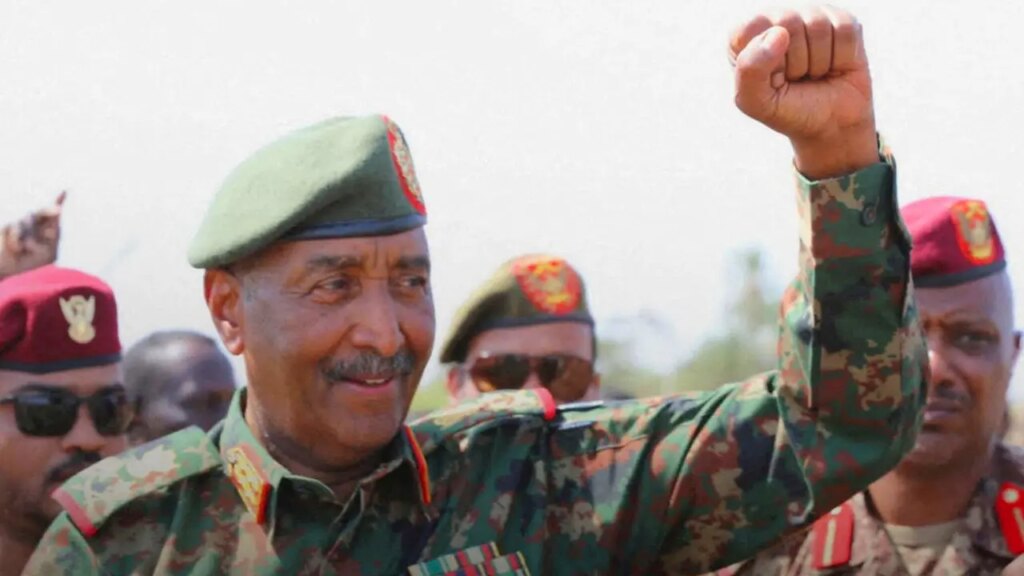
The ongoing conflict in Sudan continues to escalate, with military leader General Abdel Fattah al-Burhan openly resisting a U.S.-led push for a ceasefire as tensions rise. This refusal follows a visa denial by the U.S. for Burhan to attend the U.N. General Assembly, a decision that signifies growing diplomatic rifts. The humanitarian crisis resulting from a power struggle between Burhan and rival forces has drawn international concern, emphasizing the urgent need for peaceful resolution.
| Article Subheadings |
|---|
| 1) Background of the Conflict in Sudan |
| 2) U.S. Diplomatic Efforts and Visa Controversy |
| 3) Responses from Sudanese Authorities |
| 4) Humanitarian Impact and Global Attention |
| 5) The Role of Regional and Global Powers |
Background of the Conflict in Sudan
The conflict in Sudan dates back to April 2023, spurred by escalating tensions between General Abdel Fattah al-Burhan and former deputy Mohamed Hamdan Daglo, known as “Hemedti.” These hostilities have evolved into a brutal civil war that has claimed tens of thousands of lives and displaced millions. The fighting predominantly pits Burhan’s Sudanese Armed Forces (SAF) against the paramilitary Rapid Support Forces (RSF), with both sides accused of perpetrating serious human rights violations against civilians.
The conflict’s origin lies in a struggle for political power and control over Sudan’s vast resources, including gold and agricultural assets. This fierce competition has transformed Sudan into a battleground, not only for domestic power dynamics but also for external influences from various regional and global actors, thereby complicating the situation further.
U.S. Diplomatic Efforts and Visa Controversy
The recent diplomatic tensions escalated when the U.S. government withheld a visa for Burhan, who was expected to address the U.N. General Assembly. This decision came amid a push for a 90-day humanitarian ceasefire, which Burhan has openly defied. In a statement from Khartoum, he proclaimed,
“We will keep our heads high. We will not accept bargaining, sell ourselves cheaply to anyone or bow to anyone.”
This reflects a growing rift between Burhan and U.S. diplomatic efforts to broker peace.
The U.S. has criticized both the SAF and RSF for failing to engage in meaningful discussions regarding a ceasefire or negotiation toward a stable governance framework. State Department spokesman Tommy Pigott commented on September 22, highlighting that neither group represents legitimate governance for Sudan, a position that underscores the international community’s frustrations with the ongoing violence.
Responses from Sudanese Authorities
In response to the U.S. visa denial and accusations of defiance, Sudan’s foreign affairs advisor Dr. Amjad Farid Al-Tayyib asserted that the government never outright rejected the U.S. ceasefire proposal, mentioning that technical comments were offered instead. He accused the United States of undermining the negotiation process by preventing the Sudanese delegation from traveling to New York, emphasizing the need for a diplomatic resolution.
Farid argued that the core issue remains the potential requirement for the RSF to withdraw from populated civilian areas, fearing that stopping current lines of control might de facto partition Sudan. This view complicates discussions around a humanitarian truce, which both sides have approached with some skepticism due to fears of losing control over territories.
Humanitarian Impact and Global Attention
The humanitarian situation in Sudan has deteriorated dramatically over recent months, leading to millions suffering from food insecurity and displacement. Over 12 million individuals have been forcibly displaced since the conflict began, raising alarm bells at various international organizations. The U.N. has documented significant civilian casualties and a rise in war crimes, resulting in calls for urgent humanitarian assistance.
Despite global attention shifting towards other ongoing crises, the plight of Sudanese civilians remains critical. Human rights organizations highlight severe violations, including mass rape, torture, and arbitrary killings perpetrated by both combatant groups. Reports from the U.N. indicate that the RSF, in particular, has committed extensive atrocities against vulnerable populations.
The Role of Regional and Global Powers
The ongoing violence in Sudan is not occurring in isolation; it is deeply intertwined with the interests of various regional and global powers. Countries such as Egypt, Turkey, Saudi Arabia, and UAE have been accused of providing support to different factions within the conflict. The RSF has reportedly received assistance from certain nations, complicating the U.S. efforts to mediate the situation.
Former U.S. official Cameron Hudson pointed out that U.S. pressure on Sudanese leaders has not corresponded with sufficient direct engagement inside Sudan. He expressed concern that the lack of on-the-ground diplomacy has hampered the possibility of achieving a lasting resolution to the war.
The strategic significance of Sudan, including its control over vital trade routes for oil, further amplifies the stakes involved. With geopolitical interests at play, the ongoing conflict serves as a proxy battleground for various foreign powers, thereby prolonging the bloodshed and suffering.
| No. | Key Points |
|---|---|
| 1 | The conflict in Sudan has caused extensive humanitarian crises, claiming tens of thousands of lives and displacing millions. |
| 2 | The U.S. denied Sudan’s military leader a visa to the U.N. General Assembly amid ongoing ceasefire negotiations. |
| 3 | International criticism targets both the Sudanese Armed Forces and Rapid Support Forces for alleged war crimes. |
| 4 | Diplomatic efforts for a ceasefire are complicated by the influence of regional and global powers. |
| 5 | The strategic importance of Sudan complicates the situation as foreign actors pursue their interests, furthering the conflict. |
Summary
The situation in Sudan underscores a multifaceted crisis marked by internal conflicts, external interferences, and dire humanitarian consequences. As military leader General Burhan resists international calls for peace, the plight of millions caught in this turmoil calls for renewed global vigilance and diplomatic efforts. Ensuring stability in Sudan is crucial not just for its citizens, but also for the broader regional balance, making it imperative that global powers work cohesively toward a viable solution.
Frequently Asked Questions
Question: What caused the conflict in Sudan?
The conflict in Sudan began in April 2023 as a power struggle between General Abdel Fattah al-Burhan and his former deputy Mohamed Hamdan Daglo, leading to widespread violence and humanitarian crises.
Question: What are the humanitarian challenges in Sudan?
The ongoing conflict has resulted in over 12 million people being forcibly displaced, widespread food insecurity, and numerous reports of human rights violations, including mass killings and sexual violence.
Question: How has the international community responded to the Sudan crisis?
The international community has expressed concern and criticized both sides for not committing to peace talks, while also attempting to mediate through various diplomatic channels, albeit with limited success.