
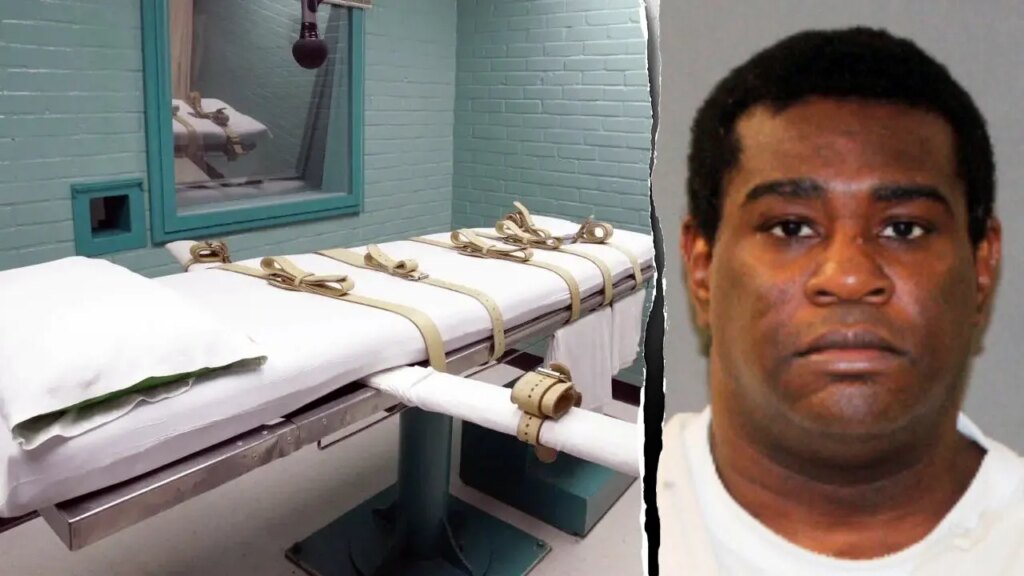
On October 7, 2026, the state of Texas executed 46-year-old Jamaal Howard, who was convicted of the 2000 capital murder of convenience store clerk Vickie Swartout. The execution proceeded after the U.S. Supreme Court rejected Howard’s emergency appeal, which contended safety concerns regarding the lethal injection drug to be used, amidst recent complications stemming from another execution attempt in Tennessee. Howard’s execution has attracted significant attention not only for the heinous crime he committed but also for the ethical discussions surrounding capital punishment and the methods employed.
| Article Subheadings |
|---|
| 1) The Execution of Jamaal Howard |
| 2) Supreme Court’s Decision and Legal Arguments |
| 3) Concerns About Lethal Injection Protocol |
| 4) The Victim’s Story and Crime Context |
| 5) Broader Implications of the Case |
The Execution of Jamaal Howard
On the evening of October 7, 2026, at 8:03 PM, Jamaal Howard was executed by lethal injection at the Huntsville Unit in Texas. He was pronounced dead shortly after the administration of pentobarbital, the drug used in the lethal injection protocol. Howard had been convicted for the murder of Vickie Swartout, a convenience store clerk, during a robbery nearly 26 years earlier. As the execution proceeded, Howard reportedly experienced several gasps and snoring sounds before being pronounced dead, raising concerns about the execution method and its impact on witnesses present.
Supreme Court’s Decision and Legal Arguments
The U.S. Supreme Court denied Howard’s emergency appeal just hours before his execution, without providing a detailed explanation for their decision. Justice Ketanji Brown Jackson was noted as the only dissenter in the ruling. Howard’s legal team sought to halt the execution based on the grounds that he might be intellectually disabled and that insufficient evidence supported the legality of his execution method. However, the state maintained that the attorneys had failed to establish sufficient evidence of Howard’s intellectual disability to meet the required legal standards.
Legal experts suggest the Supreme Court’s refusal to intervene reflects the increasingly polarized views on capital punishment in the U.S. Observers note that the court often refrains from detailed commentary on individual cases, which might reveal the nuances behind judicial decisions. The results of such cases can have systemic implications, particularly in the realm of criminal justice reform.
Concerns About Lethal Injection Protocol
Howard’s attorneys expressed serious concerns related to the lethal injection drug, pentobarbital, particularly following a highly publicized botched execution attempt involving a different inmate in Tennessee just days prior. During that incident, Christa Pike survived two doses of the drug, raising alarms over its reliability and the potential risks associated with lethal injections. In their filings, Howard’s attorneys argued against Texas’s eagerness to implement a similar execution strategy—suggesting that a stay would be prudent to ensure that such an error did not reoccur.
Despite these concerns, the Texas Court of Criminal Appeals had rejected two requests to halt the execution prior to the Supreme Court’s decision. This ongoing tension between legal proceedings and the methods of capital punishment continues to elicit debates across the United States regarding the moral and ethical implications of such measures.
The Victim’s Story and Crime Context
The execution of Jamaal Howard shines a light on the case of Vickie Swartout, whose tragic story often gets overshadowed in discussions about capital punishment. On the day of her murder in 2000, Swartout was working at a convenience store when Howard, then 20 years old, entered and demanded money. After shooting her once in the chest, he made off with $114 from the cash register. This act not only ended Swartout’s life but also devastated her family and resonated throughout the community for decades.
Swartout’s murder sparked public outrage and prompted calls for justice, leading to Howard’s conviction on charges of capital murder. The case highlights the broader societal issues surrounding crime, punishment, and the profound impact that violent actions can have on the lives of victims and their families.
Broader Implications of the Case
The execution of Jamaal Howard poses significant implications for future cases related to capital punishment in the United States. The continued reliance on lethal injection, despite ongoing controversies surrounding its efficacy, brings into question the ethical frameworks employed in the judicial system. Activists argue that cases like Howard’s reflect systemic issues within the capital punishment framework, including the need for comprehensive reform to ensure justice is achieved without causing undue suffering to those being executed.
The recent incidents in Tennessee have further amplified these concerns, as advocates for change cite the necessity to re-evaluate not only the methods of execution but also the moral grounds for capital punishment itself. Many believe that Howard’s case will be emblematic of the larger dialogue surrounding the effectiveness and humanity of capital punishment moving forward.
| No. | Key Points |
|---|---|
| 1 | Jamaal Howard was executed for the 2000 murder of Vickie Swartout during a robbery. |
| 2 | The Supreme Court rejected Howard’s last-minute appeal, with only Justice Ketanji Brown Jackson dissenting. |
| 3 | Concerns were raised by Howard’s defense team about the lethality of the drug used, following a botched execution in Tennessee. |
| 4 | The case of Vickie Swartout underscores the need to consider the impact of capital punishment on victims’ families. |
| 5 | The execution brings to light ongoing debates regarding the morality and ethics of capital punishment in the U.S. |
Summary
The execution of Jamaal Howard not only serves as a tragic conclusion to a long-standing case but also highlights the complexities surrounding capital punishment in modern America. With ongoing concerns about execution methods, calls for justice from victims’ families, and the ethical implications of state-sanctioned death, this case may shape future legal decisions and public opinion regarding the death penalty. As the nation grapples with these issues, Howard’s execution underscores the dire need for a deeper evaluation of the criminal justice system and its practices.
Frequently Asked Questions
Question: What was the crime Jamaal Howard was convicted for?
Jamaal Howard was convicted for the capital murder of Vickie Swartout during a convenience store robbery in 2000, where he shot her while stealing money from the cash register.
Question: Why did Howard’s attorneys seek to halt the execution?
Howard’s attorneys sought to halt the execution based on concerns about the lethal injection drug to be used and claims that he might be intellectually disabled, which they argued should preclude him from facing the death penalty.
Question: What happened during Howard’s execution?
During Howard’s execution, witnesses reported that after the drug pentobarbital was administered, he gasped and made snoring noises before being pronounced dead 19 minutes after the procedure began.