
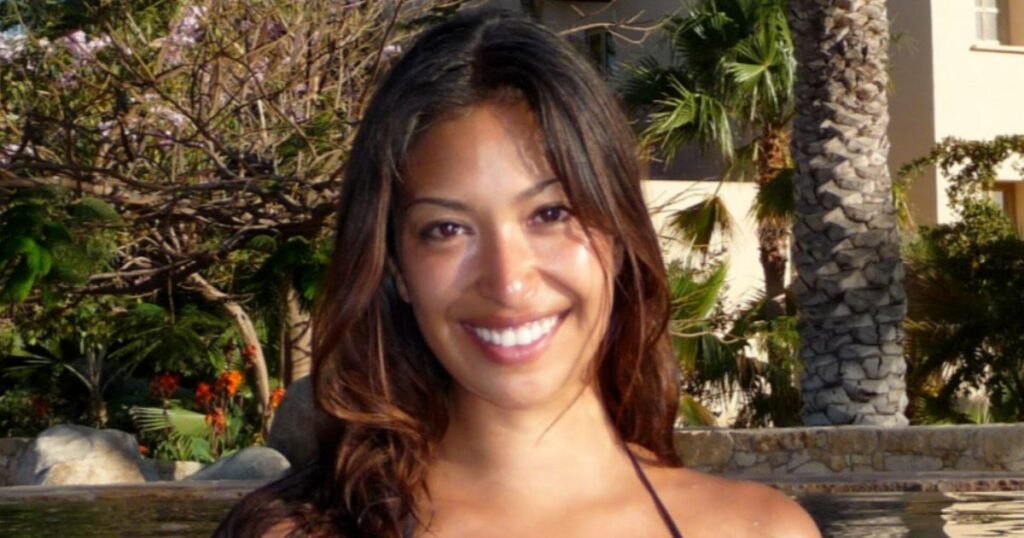
Fashion designer Sylvie Cachay was found dead in an overflowing bathtub at New York’s Soho House hotel in December 2010. Her boyfriend, Nicholas Brooks, was arrested after investigators identified signs they considered consistent with strangulation. Brooks said Cachay had taken medication, become disoriented and later drowned accidentally. The case turned on conflicting accounts of the couple’s final hours, forensic evidence and Brooks’s behavior after her death.
Cachay had built a promising swimwear business and was known as ambitious and committed to her work. The financial crisis forced her to close her label temporarily, but she continued working in fashion and hoped to revive it. Her relationship with Brooks began during a difficult period in her personal and professional life.
| 1) Cachay’s fashion career and personal setbacks |
| 2) The discovery of the hotel-room death |
| 3) Brooks’s account of the night |
| 4) The competing interpretations of the evidence |
| 5) The family history surrounding the case |
Cachay’s fashion career and personal setbacks
Sylvie Cachay launched her Syla swimwear line at age 29 after working in fashion, including as a designer for Anne Cole. Her bikinis received attention from fashion publications and upscale retailers. The line was also featured in a Sports Illustrated swimsuit video.
The 2008 financial crisis disrupted her progress when investors withdrew support. Cachay temporarily closed the business and ended her engagement to photographer Ben Baker, choosing to focus on rebuilding her career. Friends said she was affected by those losses and unhappy in her subsequent job, although she had not abandoned her own brand.
The discovery of the hotel-room death
In December 2010, Cachay checked into Soho House with Nicholas Brooks, who was then 24. Staff found her body after tracing a water leak to the room. She had been pulled from an overflowing bathtub, and an empty pill bottle was reportedly found on a dresser.
Detectives Robert Moller and Tommy Jones said Cachay was wearing a black turtleneck and underwear, with her watch still on. They also noted marks on her neck and a cut inside her lip. Investigators considered the clothing, injuries and water-filled tub inconsistent with a routine bath accident and began treating the death as a possible homicide.
Brooks’s account of the night
Nicholas Brooks told police that he met Cachay at her apartment, where they watched a movie, lit candles and had sex. He said a candle started a fire on the bed while Cachay was asleep or heavily affected by medication. According to his statement, he woke her, helped her leave and accompanied her to Soho House.
Hotel employee Kristen Stephens said Cachay told her the fire was caused by candles Brooks had placed near the headboard. Stephens recalled that Cachay was exhausted, had taken sleeping pills and needed help reaching the room. She later reported hearing an argument that stopped abruptly. Surveillance showed Brooks leaving several times, departing for the last time at 2:18 a.m., and later going out with musician David Raleigh.
The competing interpretations of the evidence
Prosecutors argued that bruising on Cachay’s neck indicated violent strangulation and that she had been forced under the water. They also pointed to Brooks’s absence when staff discovered her and his reported reaction after returning to the hotel. Detective Robert Moller said Brooks later asked how much time he might receive, which investigators regarded as incriminating.
Defense attorney Jeffrey Hoffman disputed that interpretation. He argued that Cachay had taken prescription medication for fibromyalgia, became unsteady and could have slipped beneath the water while bathing. Brooks’s sister, Amanda Brooks, said the neck marks could have resulted from consensual rough sex earlier that night. The defense also noted that only Cachay’s DNA was found on the bathtub control.
The defense argued that the evidence was insufficient to prove beyond a reasonable doubt that Cachay had been murdered.
The family history surrounding the case
Public attention also focused on Brooks’s father, composer Joseph Brooks, who wrote the song “You Light Up My Life.” His later criminal charges involving alleged sexual assaults and his suicide before trial shaped public discussion of the case. Amanda Brooks argued that her brother was being judged partly because of their father’s notoriety.
Amanda said she and Nicholas had been separated from their mother during childhood and later reconnected as adults. She described their father as controlling and said Nicholas had lived under pressure connected to his inheritance and family relationships. Prosecutors maintained that the case should be decided by the evidence surrounding Cachay’s death.
| Number | Key Point |
|---|---|
| 1 | Cachay was found drowned in an overflowing Soho House bathtub. |
| 2 | Investigators cited neck bruising, her clothing and Brooks’s conduct as suspicious. |
| 3 | Brooks said medication and exhaustion led to an accidental drowning. |
| 4 | The prosecution and defense offered different explanations for the injuries. |
| 5 | The available account describes pretrial disputes without presenting a final resolution. |
Summary
The death of Sylvie Cachay raised questions about whether she was strangled and drowned or became incapacitated after taking medication and accidentally slipped beneath the bathwater. Investigators focused on physical marks, the hotel timeline and Nicholas Brooks‘s actions, while the defense challenged the meaning of that evidence. The reported pretrial arguments left the central question unresolved in the material available here.
Frequently Asked Questions
Who was Sylvie Cachay?
Sylvie Cachay was a fashion designer who founded the Syla swimwear line and gained early attention from retailers, fashion publications and Sports Illustrated.
Where was Cachay found?
She was found in an overflowing bathtub in a room at Soho House in New York in December 2010.
What did Nicholas Brooks tell police?
Nicholas Brooks said a candle-related apartment fire, Cachay’s medication and her exhaustion led to events ending in an accidental drowning.
Why did investigators suspect murder?
Investigators cited marks on Cachay’s neck, a cut inside her lip, her clothing and watch, the surveillance timeline and Brooks’s reported behavior.