
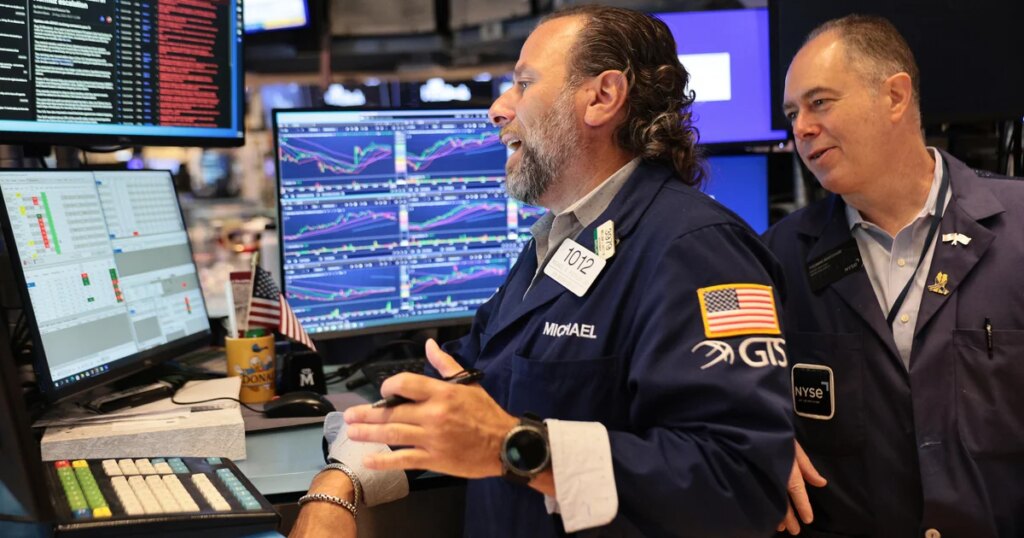
Recent calls for a slowdown in artificial intelligence (AI) development have ignited a global sell-off in technology stocks. Investors are increasingly concerned about the long-term sustainability of the sector whose remarkable growth has driven financial markets to historic heights. The declines on major indices highlight a precarious moment for the tech-heavy sectors that have been the backbone of recent market performance.
| Article Subheadings |
|---|
| 1) Recent Market Reactions to AI Development Concerns |
| 2) Statements from Industry Leaders Igniting Concern |
| 3) Analysis of Current Market Dynamics and Predictions |
| 4) The Potential Impact on Investors and Retirement Funds |
| 5) Navigating the Future of AI and Market Expectations |
Recent Market Reactions to AI Development Concerns
On a recent Monday, the tech-heavy Nasdaq Composite Index witnessed a decline of 147 points, translating to a 0.6% drop, closing at 26,186. This downturn was echoed by the S&P 500 and the blue-chip Dow Jones Industrial Average, registering declines of 0.5% and 0.3%, respectively. The market jitters were a direct response to fears regarding the pace of AI development and spending, contributing to a broader conversation about the viability of ongoing investments in tech stocks.
Notably, shares of prominent chipmakers such as Nvidia and Micron Technology fell significantly, dropping 3.4% and 5.3%, respectively. This sell-off highlights the precariousness surrounding companies intimately tied to AI infrastructure. Analysts, including Adam Crisafulli, head of investment advisory firm Vital Knowledge, indicated that “pick and shovel” stocks, which are essential for building AI capabilities, faced the hardest hits in early trading.
Statements from Industry Leaders Igniting Concern
The overarching fears in the market were partially fueled by recent statements from key leaders in the tech industry. Notably, comments from Dario Amodei, CEO of Anthropic, called for a reevaluation of the industry’s trajectory regarding AI advancements. In a published essay over the previous weekend, Amodei insisted on the necessity to “pace the frontier” of AI development. Such positions were echoed by other influential executives, including Elon Musk of SpaceX and Sam Altman of OpenAI, who shared similar sentiments regarding a more cautious approach to AI.
Market analysts suggest that these musings from industry heads reflect a genuine concern over potential risks associated with rapid AI advancements. AI’s rapid growth has raised questions about its implications for jobs, ethics, and even financial markets as pressures mount for these companies to innovate responsibly.
Analysis of Current Market Dynamics and Predictions
The technology sector, a significant growth engine for the stock market, has experienced a sharp increase in investments, particularly in AI. This surge has not only inflated stock prices but has also resulted in a growing concentration of wealth among a few major tech firms. According to Bank of America Global Research, stocks of only five companies—Alphabet, Apple, Micron Technology, Microsoft, and Nvidia—are projected to be responsible for 27% of S&P 500 growth over the coming year. Overall, tech stocks are expected to contribute to 50% of earnings growth from the index.
However, some analysts caution against the sustainability of such growth. An investment firm, Capital Economics, forecasts the S&P 500 could rise to 8,250 by the end of the year but warns that what some deem an AI bubble could burst, potentially leading to a 20% drop in the index by 2027. Crisafulli emphasizes the nuance in the current situation, suggesting that while unsustainable spending patterns in AI might surface, it doesn’t automatically imply a catastrophic market downturn. The complexities of this situation require careful consideration as investors reevaluate their positions.
The Potential Impact on Investors and Retirement Funds
The implications of the market volatility extend beyond immediate losses for investors; they tap into the broader concerns surrounding Americans’ retirement savings. As major indices falter, the ripple effect could have dire consequences for individuals invested in 401(k) plans or other retirement funds, which often heavily feature technology stocks. Investors are increasingly anxious that the concentration of stock market performance within a few tech giants leaves them vulnerable to fluctuations that might threaten their financial security.
Market dynamics suggest heightened caution among investors, as they weigh their portfolios against potential fallout from a slowdown in AI spending and development. The fallout of previous stock downturns has highlighted just how quickly market sentiment can shift, creating a precarious landscape for individual and institutional investors alike.
Navigating the Future of AI and Market Expectations
Facing these uncertainties, investors and market analysts are left to discern the future of AI investments and the potential for recovery or further decline. The technology sector has been renowned for its volatility, with rapid growth cycles often juxtaposed against abrupt corrections. Nonetheless, some analysts remain optimistic, believing that while certain investments may cool off, the underlying technology could still present opportunities for growth.
As the industry leaders advocate for a more prudent pace in AI development, the emphasis is likely to shift toward sustainable practices that balance innovation with responsibility. This transition may redefine how investments in AI are approached and what expectations can be reasonably set for future performance in the stock market.
| No. | Key Points |
|---|---|
| 1 | A global sell-off in technology stocks has been triggered by concerns over AI development. |
| 2 | Major indices like the Nasdaq Composite and S&P 500 observed significant declines amid investor apprehension. |
| 3 | Industry leaders, including Dario Amodei, are calling for a more cautious approach to AI advancements. |
| 4 | Concerns about AI spending could have adverse effects on individual investors’ retirement funds. |
| 5 | Analysts forecast a mixed outlook for technology stocks, uncertain of the balance between growth and sustainability. |
Summary
The recent downturn in technology stocks, driven by concerns surrounding AI development, signals a critical moment for investors. Statements from industry leaders advocating for a more cautious approach have heightened market volatility, raising questions about the sustainability of current investments. As analysts forecast a mixed outlook for technology stocks moving forward, both individual and institutional investors may need to navigate these changes carefully to safeguard their financial futures.
Frequently Asked Questions
Question: What are the implications of a slow down in AI development?
A slowdown in AI development could lead to reduced investments in technology stocks, causing market volatility and potential declines in stock prices.
Question: Why are some analysts concerned about AI spending?
Concerns about AI spending arise from fears that rapid investments may not be sustainable and could outpace profits, leading to a market correction.
Question: How might the tech downturn affect individual investors?
The downturn in the tech sector could adversely affect individual investors’ retirement funds, particularly those invested in tech-heavy indices like the S&P 500.