
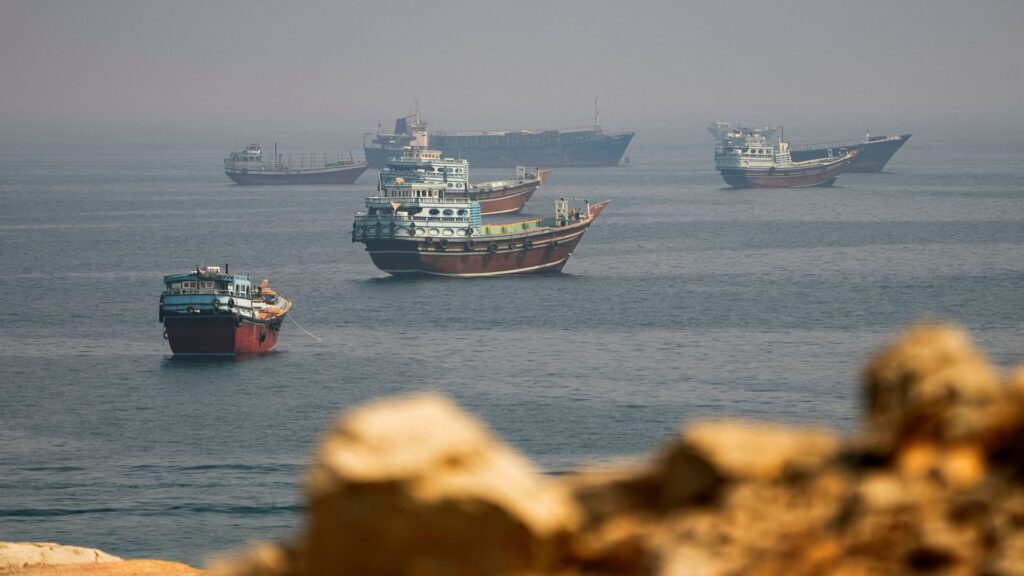
Recent tensions in the Middle East have resulted in increased oil prices as military confrontations between the United States and Iran escalate. A series of attacks, including a missile strike on a tanker in the Strait of Hormuz and retaliatory strikes on U.S. bases in Jordan, have left traders and analysts speculating about potential further hostilities. With both nations signaling readiness for military responses, the situation is mounting, potentially disrupting global oil supplies, which are already under strain.
| Article Subheadings |
|---|
| 1) Overview of Recent Attacks |
| 2) The Strategic Importance of the Strait of Hormuz |
| 3) Economic Ramifications of the Conflict |
| 4) International Reaction and Analyst Perspectives |
| 5) The Future of U.S.-Iran Relations |
Overview of Recent Attacks
On Monday, August 31, 2026, military tensions escalated significantly in the Middle East. A tanker passing through the Strait of Hormuz was struck by three unidentified projectiles, raising alarms among maritime safety officials. The UK Maritime Trade Operations (UKMTO) confirmed the incident and reported that the vessel was navigating in the southern shipping lane near Oman’s coast. Fortunately, there were no casualties reported from this attack, but it underscored the precarious position of commercial shipping in this volatile region.
Simultaneously, the Iranian military launched retaliatory strikes against two American bases located in Jordan. This offensive was ostensibly in response to U.S. airstrikes that targeted Iranian rocket launchers on Larak Island, a strategic location that has been used by Iran to control maritime passage in the Hormuz Strait. These hostilities between the two countries marked a significant escalation, as it was the first exchange of military strikes in over a month, and both sides seemed poised to respond further if provoked.
The Strategic Importance of the Strait of Hormuz
The Strait of Hormuz serves as one of the world’s most crucial maritime routes, facilitating the transit of approximately one-fifth of the global oil supply. Located between Oman and Iran, this narrow waterway is vital for international trade and the energy sector. Iran has historically viewed this strait as a vital point of leverage against its adversaries, particularly the United States and its allies in the region.
Given the geopolitical significance, control over the Strait allows Iran to exert strategic pressure on global oil markets, particularly at times of conflict. Defense analysts emphasize that any disruption to shipping through this chokepoint could have cascading effects, significantly driving up global oil prices and causing broader economic repercussions. The current escalation in military activity around the strait has raised concerns not just about oil supply disruptions but also about maritime security and ecological risks related to shipping traffic.
Economic Ramifications of the Conflict
As hostilities resumed, international oil prices surged, with Brent crude trading above $90 per barrel. The increase in prices reflects concern among traders about the potential for further military engagement in the region. The recent spike indicates the fragile state of global energy supplies, already strained by the ongoing conflict and sanctions against Iran.
U.S. Treasury officials noted that increased sanctions have begun to severely impact Iran’s economy, leading officials to describe Iran as “lashing out kinetically.” This term refers to Iran’s military responses to economic pressures. President Donald Trump remarked on the precarious situation, stating that Iran’s financial systems and military capabilities have significantly deteriorated. However, he also indicated a willingness to respond forcefully to any further Iranian incursions.
Despite this military strategy, analysts suggest that the U.S. approach aims to penalize specific behaviors of the Iranian military rather than broadening the scope of the conflict. This nuanced strategy seeks to maintain economic pressure while preventing a full-scale war. In the context of midterm elections approaching, the U.S. administration is under pressure to show effectiveness in countering Iranian influence.
International Reaction and Analyst Perspectives
The international community has been closely monitoring the exchanges between the U.S. and Iran. Responses have varied among allied nations, with some calling for de-escalation while others express support for U.S. actions. Analysts at organizations like the International Crisis Group have described the U.S. attack on Larak Island not solely as a military decision but rather as a tactical move to incentivize Iran to reconsider its aggressive behavior concerning maritime threats.
Despite the military tensions, it is not presently perceived that either side seeks a return to full-scale war. Both the U.S. and Iran appear to be navigating this crisis with a focus on deterrence rather than escalation. As former diplomats and defense analysts point out, the unpredictable nature of President Trump’s responses complicates the situation further, leading to speculation about Iran’s possible retaliatory actions as economic pressures continue to build.
The Future of U.S.-Iran Relations
Going forward, the trajectory of U.S.-Iran relations appears fraught with challenges. With both military and economic strategies in play, tensions will likely remain high unless a diplomatic avenue can be restored. Iranian President Masoud Pezeshkian has hinted at a willingness to engage in talks under certain conditions, suggesting that if Washington returns to its commitments within the framework of the interim deal, there could be room for negotiation.
However, adherence to the conditions set forth by each side will be critical for any potential reconciliation. As both nations seem locked in their respective diplomatic and military strategies, resolving these tensions could take considerable time, requiring careful navigation of a complex geopolitical landscape.
| No. | Key Points |
|---|---|
| 1 | The Strait of Hormuz is a crucial maritime route for global oil supply. |
| 2 | Recent military escalations include a tanker strike and retaliatory actions from both the U.S. and Iran. |
| 3 | Oil prices surged above $90 per barrel amid rising tensions and potential supply disruptions. |
| 4 | Analysts are monitoring the situation, noting it as an exercise in endurance and predictability from both countries. |
| 5 | There is speculation regarding future diplomatic talks between the U.S. and Iran, depending on adherence to existing agreements. |
Summary
In summary, the renewed hostilities between the U.S. and Iran highlight a precarious situation in the Strait of Hormuz that could have significant implications for global oil markets and international relations. As both nations navigate their military strategies and economic pressures, the possibility for escalation remains, necessitating close observation and analysis by global leaders. The coming weeks may prove crucial in determining whether diplomatic avenues can be resurrected amidst the backdrop of rising tensions.
Frequently Asked Questions
Question: What is the significance of the Strait of Hormuz?
The Strait of Hormuz is vital for international shipping and oil transportation, as it carries about one-fifth of the world’s oil supply.
Question: How have oil prices reacted to the recent conflicts?
Oil prices have surged above $90 per barrel in response to rising tensions, reflecting trader concerns over potential disruptions in supply due to military action.
Question: What are the potential consequences of U.S.-Iran tensions?
Continued hostilities could result in significant economic ramifications, including disturbances in global energy supplies, increased oil prices, and potential military confrontations.