
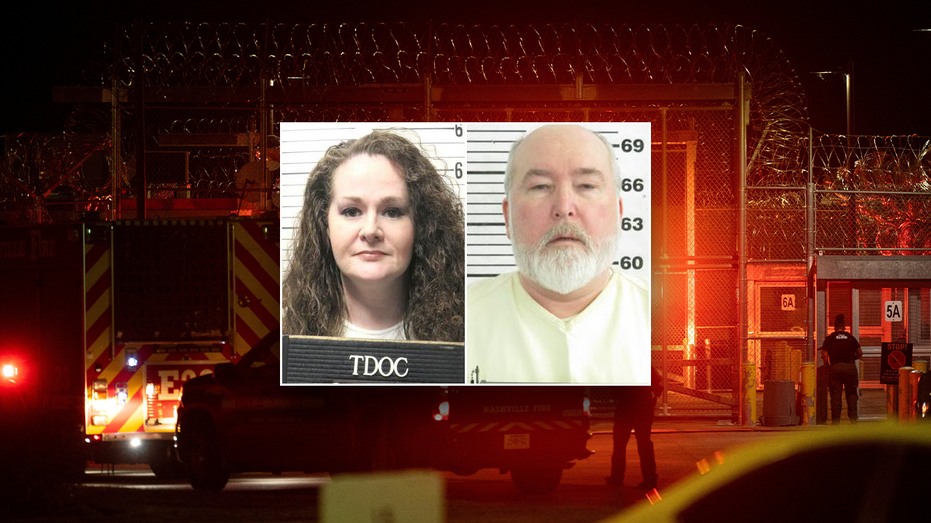
Tennessee Gov. Bill Lee has paused executions across the state through the end of 2026 after a failed lethal injection left condemned inmate Christa Pike hospitalized. The suspension delays the scheduled Dec. 3 execution of convicted double murderer Gary Wayne Sutton. Sutton was sentenced for the 1992 killings of siblings Tommy Griffin and Connie Branam, although he continues to maintain his innocence. The failed execution has also prompted an independent review and followed another unsuccessful execution attempt in Tennessee earlier this year.
| 1) | Statewide execution pause follows failed injection |
| 2) | Sutton’s scheduled execution is delayed |
| 3) | The 1992 killings of Griffin and Branam |
| 4) | Continuing questions surrounding the convictions |
| 5) | Uncertainty over Tennessee’s next executions |
Statewide execution pause follows failed injection
The pause was announced by Gov. Bill Lee after Tennessee’s attempt to execute Christa Pike failed. Pike was hospitalized in critical condition after two doses of lethal-injection drugs were administered without causing her death. Witnesses were asked to leave the execution room while she had not yet been declared dead.
The incident led to an independent review of the state’s execution procedures and to the resignation of Tennessee’s prison chief. Pike’s condition and next legal steps remained unclear as of Oct. 5, 2026. The failed attempt was the second such incident in Tennessee this year.
Sutton’s scheduled execution is delayed
Gary Wayne Sutton had been scheduled to die on Dec. 3. Because the governor’s order covers the remainder of the year, that execution will not proceed on its original date. Sutton’s uncle and co-defendant, James Dellinger, died of natural causes on death row in 2023.
Sutton was convicted in separate trials for the killings of Tommy Griffin and Connie Branam. He has maintained his innocence, while supporters have argued that the prosecution’s case was circumstantial. The execution delay concerns the state’s ability to carry out the sentence, not a reversal of Sutton’s convictions.
The 1992 killings of Griffin and Branam
According to court records, Sutton and Dellinger went drinking with Griffin at Howie’s Hideaway in Knoxville on Feb. 21, 1992. After an argument, the two men left Griffin on the roadside. A passing driver alerted a police officer, who found Griffin shirtless and injured. He was arrested for public intoxication after declining to provide detailed information.
“On the verge of tears”
The officer described Griffin as being “on the verge of tears” and noted scrapes, scratches and a cut behind his ear. Sutton and Dellinger later went to the police station to bail him out, first at about 8:30 p.m. and again around 11:30 p.m., when they brought a flannel shirt. Witnesses reported hearing three gunshots roughly 30 minutes later, and Griffin was subsequently found dead from a shotgun blast to the head.
On Feb. 22, Branam went with Sutton and Dellinger to the same bar while looking for her brother. Her body was later discovered in her burned vehicle. The fire damage was so extensive that a forensic pathologist could not determine whether she was alive when the fire began. Detectives found a .303 cartridge that matched a rifle recovered from Dellinger’s home.
Continuing questions surrounding the convictions
The precise circumstances of both deaths remain disputed. The available account does not establish who fired the shot that killed Griffin or exactly how Branam died. Sutton’s supporters have cited those unresolved issues in challenging the strength of the case, while the convictions from the separate trials remain in place.
The killings occurred in Knoxville more than three decades ago, but the case remains connected to current capital punishment proceedings because Sutton is still on Tennessee’s death row. The state’s decision to delay his execution gives the governor and officials additional time to assess execution protocols after the Pike incident.
Uncertainty over Tennessee’s next executions
Tennessee also canceled the scheduled May execution of Tony Carruthers after execution personnel could not find a suitable vein. Gov. Bill Lee said Carruthers would not face another execution attempt for at least a year. Together with Pike’s failed injection, the incidents have intensified scrutiny of the state’s procedures.
Pike’s case was described by the Death Penalty Information Center as the first instance in which a person survived the administration of lethal-injection drugs. In 2014, Oklahoma inmate Clayton Lockett initially survived an injection but later died of a heart attack while still in the execution chamber. Tennessee’s review will determine what happens next for Pike and how the state approaches future executions.
| Number | Key Point |
|---|---|
| 1 | Tennessee halted executions through the end of 2026. |
| 2 | Gary Wayne Sutton’s Dec. 3 execution was placed on hold. |
| 3 | Sutton was convicted in the deaths of Tommy Griffin and Connie Branam. |
| 4 | Christa Pike remained hospitalized after a failed lethal injection. |
Summary
Tennessee’s statewide execution pause has delayed Sutton’s death sentence while officials review a failed lethal injection that left Pike alive and critically ill. The move follows a second unsuccessful execution attempt in the state this year. Sutton’s convictions remain in effect, but the unresolved details of the 1992 killings continue to shape debate over his case.
Frequently Asked Questions
Why was Gary Wayne Sutton’s execution delayed?
His Dec. 3 execution was delayed because Gov. Bill Lee paused all Tennessee executions through the end of 2026 after the state’s failed attempt to execute Christa Pike.
Who were Sutton’s victims?
Sutton was convicted in separate trials for the Feb. 1992 killings of siblings Tommy Griffin and Connie Branam in Tennessee.
What happened during Christa Pike’s execution attempt?
Two lethal-injection doses failed to kill Pike, who was hospitalized in critical condition. The incident triggered an independent review of Tennessee’s execution procedures.