
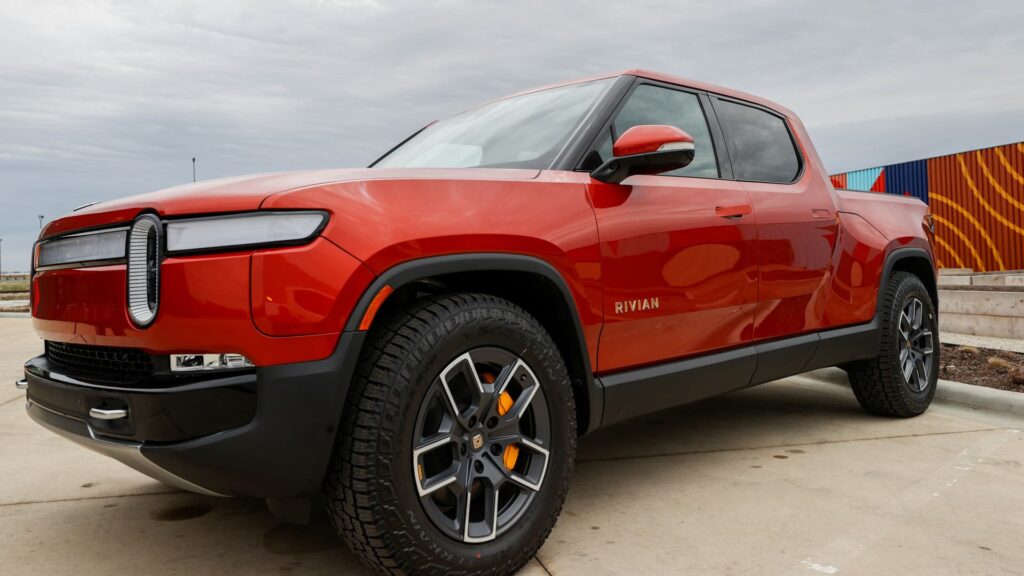
Rivian Automotive has made significant strides in the realm of advanced driver-assistance systems (ADAS) with the launch of its in-vehicle AI assistant on May 12, 2026. The company’s new AI capabilities aim to compete against industry giants such as Tesla in providing safer and more efficient driving experiences. Rivian’s focus on vertical integration and enhanced software has positioned it as a formidable challenger in the autonomous driving sector, despite still facing hurdles in fully autonomous functionality.
| Article Subheadings |
|---|
| 1) Rivian’s AI Assistant Launch and Features |
| 2) Comparison with Competitors: Tesla and GM |
| 3) Challenges in Achieving Full Autonomy |
| 4) Safety Concerns Surrounding ADAS |
| 5) Future Expectations for Rivian’s Technology |
Rivian’s AI Assistant Launch and Features
Rivian Automotive launched its in-vehicle AI assistant on May 12, 2026, signifying a new era in advanced driver-assistance technology. The AI, dubbed Autonomy+, aims to provide an exceptional user experience and enhance safety features within Rivian’s vehicles, primarily its R1T pickup truck. According to company officials, the AI integration is designed as a companion for drivers, facilitating tasks such as navigation and vehicle control, thereby creating an unparalleled blend of technology and safety. The assistant boasts capabilities that allow the vehicle to handle control on highways and manage complex driving scenarios, even though full autonomy is not yet achieved.
The AI assistant’s functionality has been specifically structured to enhance drivers’ engagement while ensuring they remain attentive to the road. Rivian aims to create a seamless driving experience that moves beyond simply accessing navigation information and into a realm where vehicles become proactive participants in the driving experience. Rivian’s focus on vertical integration has helped the company control more aspects of software development and vehicle architecture, leading to improvements in its ADAS capabilities.
Comparison with Competitors: Tesla and GM
In the competitive landscape of driver-assistance systems, Rivian’s Autonomy+ is positioned to rival those offered by both Tesla and General Motors. Notably, Rivian’s system has been noted to surpass GM’s Super Cruise in many respects, particularly in its ability to navigate longer stretches of highways with limited driver intervention. However, Rivian is still working to match Tesla’s Full Self-Driving (FSD) capabilities, particularly in nonhighway situations and point-to-point navigation. This differentiation is critical as consumers increasingly demand technology that can handle diverse driving environments.
Tesla’s advanced AI has created a reputation for handling complex driving tasks exceptionally well, including navigating traffic lights and varied road conditions with minimal user input. While Rivian’s technology can identify road signals, it currently requires the driver to take prompt action, rather than managing those signals autonomously. This comparison raises questions about Rivian’s pace toward achieving similar levels of integration.
Challenges in Achieving Full Autonomy
Despite Rivian’s advancements, the journey toward full autonomy remains fraught with challenges. As of now, no vehicle sold to consumers fully qualifies as self-driving; drivers must be prepared to assume control at any moment. This reality has prompted ongoing discussions within the industry about the extent of automation and the necessary driver engagement. Rivian acknowledges that its next significant leap entails achieving true point-to-point navigating capabilities, akin to Tesla’s operation.
Automakers today face technical hurdles significantly influenced by legal regulations and consumer safety concerns. These barriers slow the pace of innovation and require companies to tread cautiously as they develop and deploy autonomous systems. Rivian must navigate these same challenges, hoping to accelerate its rollout of features while ensuring user safety and adherence to regulations.
Safety Concerns Surrounding ADAS
As the prevalence of ADAS grows, safety concerns have intensified about its reliability and the potential for driver inattention. Industry experts express concerns that drivers may become overly reliant on these technological aids, which could impair their readiness to intervene when necessary. This issue is further complicated by inherent limitations within current systems, requiring monitoring from the human driver even in low-risk scenarios.
Many automakers, including Rivian and Tesla, are working to mitigate these risks through driver-facing cameras that monitor attention. However, the path to ensuring user focus remains a steep challenge. Instances of misuse of ADAS are prevalent on social media platforms, showcasing the consequences of poor user engagement with technology. Consequently, regulating and promoting responsible use of these systems remains a paramount concern within the industry.
Future Expectations for Rivian’s Technology
In light of the competition and the spectrum of challenges faced, Rivian’s prospects hinge on its ability to innovate while addressing safety and user engagement. Between increased software capabilities, modifications in hardware, and feedback from the latest AI enhancements, Rivian aims to enhance its systems significantly over the coming years. Rivian officials indicated that more updates are anticipated, and they aim to offer a product that is increasingly competitive with Tesla’s offerings in non-highway settings.
On the development front, Rivian is confident in its strategy centered around vertical integration, projecting that this will allow the company to better monetize software services in conjunction with vehicle sales, thereby creating a sustainable business model. The merger of advanced technology and engaging driving experiences is expected to position Rivian favorably among consumers who prioritize safety and reliability in their vehicles.
| No. | Key Points |
|---|---|
| 1 | Rivian launched its AI assistant, Autonomy+, on May 12, 2026. |
| 2 | The assistant aims to enhance driving safety and efficiency. |
| 3 | Rivian competes with Tesla and GM in the ADAS markets. |
| 4 | Concerns about driver reliance on ADAS technologies persist. |
| 5 | Rivian plans to enhance technology while ensuring compliance with regulations. |
Summary
The advancements in Rivian’s Autonomy+ system signify both an opportunity and a challenge for the burgeoning electric vehicle market. As Rivian positions itself as a competitor to Tesla and GM, the focus will be on building more robust and safer systems while addressing the regulatory landscape concerning autonomous driving. The balance between innovation and safety remains crucial, as the demand for advanced technology and the need for driver attention evolve concurrently.
Frequently Asked Questions
Question: What is Rivian’s Autonomy+?
Rivian’s Autonomy+ is an advanced driver-assistance system designed to enhance the driving experience through improved safety features and vehicle control.
Question: How does Rivian’s technology compare to Tesla’s?
While Rivian’s Autonomy+ offers significant capabilities, it is still catching up to Tesla’s Full Self-Driving system, especially in nonhighway navigation.
Question: Are ADAS systems fully autonomous?
No, currently, no commercially available vehicle is fully autonomous; drivers are required to remain attentive and ready to intervene at any moment.