
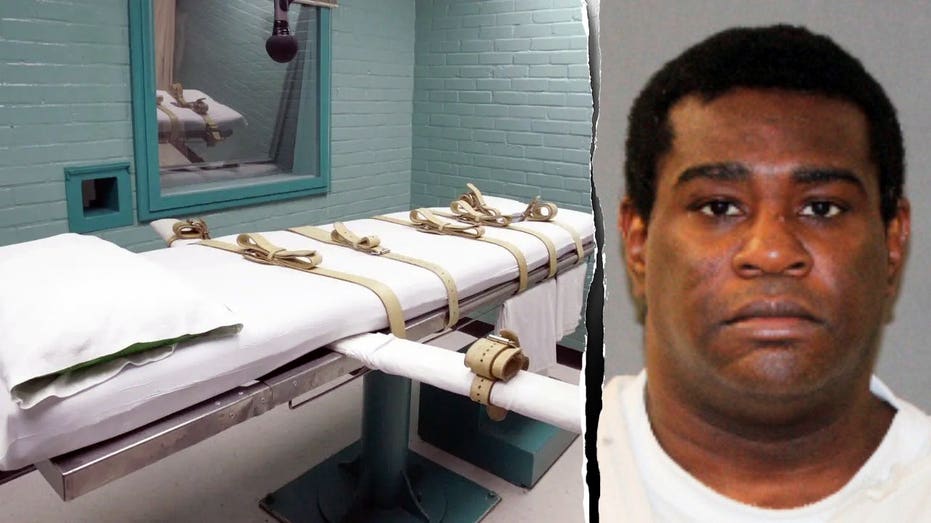
Jamaal Howard was executed in Texas on October 7, 2026, for the 2000 killing of convenience store clerk Vickie Swartout. The execution proceeded after the U.S. Supreme Court declined to intervene, despite concerns about pentobarbital used in a failed Tennessee execution attempt. Howard’s attorneys also argued that he was intellectually disabled, but courts rejected requests to halt the execution.
Howard was pronounced dead at 8:03 p.m. at a Texas prison. The case drew renewed attention to lethal injection procedures after Tennessee prisoner Christa Pike survived two doses of pentobarbital during an execution attempt the previous week.
| 1) | Execution proceeds after Supreme Court refusal |
| 2) | Attorneys challenge the planned pentobarbital use |
| 3) | Details emerge from the Texas execution |
| 4) | Tennessee case prompts evidence preservation |
| 5) | Separate intellectual disability claim rejected |
Execution proceeds after Supreme Court refusal
Jamaal Howard, 46, was executed Wednesday evening at a Texas prison after the U.S. Supreme Court rejected his emergency appeal. The court issued its decision without explanation, and Justice Ketanji Brown Jackson was the only justice to publicly dissent.
Howard had been sentenced to death for the 2000 capital murder of Vickie Swartout, a 42-year-old convenience store clerk in Silsbee, Texas. Prosecutors said Howard shot Swartout once in the chest during a robbery and took $114 from the store’s cash register. He was 20 years old at the time of the killing.
Attorneys challenge the planned pentobarbital use
Howard’s attorneys asked courts to stop the execution because Texas planned to use pentobarbital, the same drug involved in Christa Pike‘s failed execution attempt in Tennessee on September 30. Pike reportedly survived two doses of the drug, prompting Howard’s legal team to argue that the Texas procedure could present similar risks.
The attorneys said they had requested information from the Texas Department of Criminal Justice about the dose planned for Howard’s execution. In a court filing, they argued that Texas should not proceed while questions remained about the drug’s performance and reliability.
Texas should not be eager to follow in Tennessee’s footsteps; a stay would keep that from happening.
The Texas Court of Criminal Appeals had already rejected two requests based on the pentobarbital concerns before the issue reached the nation’s highest court.
Details emerge from the Texas execution
Pentobarbital began taking effect Wednesday evening, according to accounts of the execution. Howard took several breaths and gasped, then began making snoring sounds. He coughed and resumed snoring, with the sounds becoming progressively quieter.
His movements reportedly stopped after about 30 seconds. Officials pronounced him dead at 8:03 p.m., approximately 19 minutes after the lethal injection began. The account provided no indication that the procedure was halted or that Texas officials considered it unsuccessful.
The execution took place amid national scrutiny of lethal injection practices. The concerns centered on whether the drug and dosage used by Texas could avoid the complications reported during Pike’s execution attempt.
Tennessee case prompts evidence preservation
The Tennessee developments unfolded on the same day as Howard’s execution. A Tennessee judge granted a request from Christa Pike‘s attorneys requiring the Tennessee Department of Correction to preserve evidence connected to the failed execution attempt.
Pike reportedly awoke after receiving two doses of pentobarbital. Her attorney, Randy Spivey, said she asked, “Where am I?” and “Who are you?” after waking. Her legal team had previously believed she was brain dead, according to the account.
The Death Penalty Information Center has described Pike as the first person in the modern era reported to survive a lethal injection. Her condition and the preservation order intensified questions about the execution process and the evidence needed to evaluate what happened.
Separate intellectual disability claim rejected
Howard’s lawyers also argued that his execution should be blocked because he was intellectually disabled. The claim was presented to the Supreme Court alongside the challenge to pentobarbital.
Texas opposed the request, saying Howard’s attorneys had not provided evidence showing that he met the legal criteria for intellectual disability. The courts declined to halt the execution on that basis, allowing the sentence for Swartout’s killing to proceed.
Together, the drug challenge and disability claim formed the final legal effort to stop the execution. Neither argument secured a stay before Howard was put to death.
| No. | Key Point |
|---|---|
| 1 | Texas executed Jamaal Howard for the 2000 killing of Vickie Swartout. |
| 2 | His attorneys challenged the use of pentobarbital after Christa Pike survived two doses in Tennessee. |
| 3 | The Supreme Court rejected the emergency appeal without explanation. |
| 4 | The courts also rejected an argument that Howard was intellectually disabled. |
Summary
Texas carried out Howard’s execution after state and federal courts declined to grant a stay. The case was closely watched because of the recent failed Tennessee execution involving the same lethal injection drug. Although Howard’s attorneys raised questions about pentobarbital and his intellectual capacity, the sentence proceeded, and he was pronounced dead at 8:03 p.m.
Frequently Asked Questions
Why was Jamaal Howard executed?
Howard was executed for the 2000 capital murder of convenience store clerk Vickie Swartout during a robbery in Silsbee, Texas.
What concerns did Howard’s attorneys raise?
They questioned Texas’s planned use of pentobarbital after Christa Pike survived two doses during a failed execution attempt in Tennessee. They also argued that Howard was intellectually disabled.
Did the Supreme Court stop the execution?
No. The Supreme Court rejected Howard’s emergency appeal without explanation. Justice Ketanji Brown Jackson publicly dissented.
When was Howard pronounced dead?
Howard was pronounced dead at 8:03 p.m. on October 7, 2026, after the lethal injection began.