
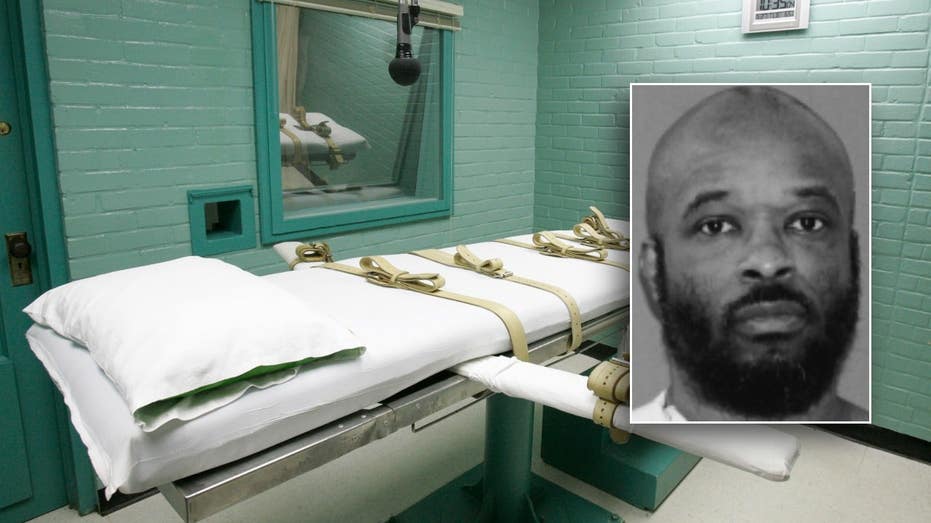
Ker’Sean Ramey, 41, was executed by lethal injection in Texas on Wednesday evening for the 2005 killings of three people in Edna. His execution came one week after his accomplice, LeJames Norman, was put to death for the same crimes. Hours before the execution, the U.S. Supreme Court rejected Ramey’s final appeal. In his last statement, Ramey thanked relatives, friends and fellow death row inmates, whom he called his brothers.
Ramey was pronounced dead at 6:34 p.m. CDT at the state penitentiary in Huntsville. He became the sixth prisoner executed in Texas this year, with three additional executions scheduled over the following two months.
| 1) | Execution follows Supreme Court rejection |
| 2) | Ramey uses final statement to address death row inmates |
| 3) | 2005 home invasion left three people dead |
| 4) | Accomplice was executed one week earlier |
| 5) | Defense challenged consideration of mitigating evidence |
Execution follows Supreme Court rejection
The execution took place Wednesday, Sept. 24, 2026, at the Huntsville Unit, where Texas conducts executions. Prison officials said a chaplain placed a hand on Ramey’s shoulder and led a brief prayer before the warden asked whether he wanted to make a final statement. The Supreme Court rejected his last appeal only hours before the lethal injection was administered.
Pentobarbital was used in the execution. Ramey took a deep breath, sputtered and began snoring after the drug took effect. Officials recorded 10 loud snores followed by two that were barely audible before he became still. He was pronounced dead 14 minutes after the injection began.
Ramey uses final statement to address death row inmates
Ramey began his final statement by praising God and thanking his family and friends. He also directed his remarks to men imprisoned with him on Texas’ death row, saying they had helped him understand adulthood and responsibility after he arrived at a young age.
“To the brothers on Texas death row that grew up with me, that poured into me and showed what it means to be a man, because I came in young, and didn’t understand what manhood was … to you brothers … I greatly appreciate you,” Ramey said.
His remarks were made immediately before the injection was prepared. The statement did not alter the scheduled execution, which proceeded after the final legal challenge was denied.
2005 home invasion left three people dead
Ramey was convicted and sentenced to death in January 2007 for the Aug. 24, 2005, shootings of Samuel Roberts, 24, Tiffani Peacock, 18, and Celso Lopez, 38. The victims shared a home in Edna, a rural city about 100 miles southwest of Houston.
According to court records, Ramey and Norman believed cocaine was inside the home. The men, who wore masks, crossed the street from Norman’s residence and knocked on the door. After Lopez answered, they forced their way inside. When they found no drugs, Lopez was shot, followed by Peacock and Roberts when they arrived. Court documents state that Ramey returned before leaving and shot the victims again to make sure they were dead.
Accomplice was executed one week earlier
Norman was executed at the same Huntsville prison on Sept. 16, one week before Ramey. He had fled to Mexico after the killings and was arrested about five months later while trying to re-enter the United States.
During Ramey’s 2007 trial, Norman testified that both men participated in the shootings. Ramey’s lawyers argued instead that Norman alone was responsible. Ramey’s former girlfriend testified that she was with him when he threw two handguns into a lake and that he later gave her a detailed account of his role. Norman pleaded guilty to capital murder in 2008 and received a death sentence.
Defense challenged consideration of mitigating evidence
Ramey’s attorneys asked the Supreme Court to halt the execution, arguing that jurors had not heard important evidence about his childhood and background. They said he had experienced physical abuse as a child and had grown up in poverty.
State prosecutors urged the court to reject the appeal, describing it as meritless. They argued that the record showed an escalating pattern of criminal behavior. The court’s rejection left the execution warrant in place, allowing Texas officials to proceed with the lethal injection.
| Number | Key Point |
|---|---|
| 1 | Ramey was executed in Huntsville on Sept. 24, 2026. |
| 2 | He was convicted in the deaths of Samuel Roberts, Tiffani Peacock and Celso Lopez. |
| 3 | His accomplice, LeJames Norman, was executed on Sept. 16. |
| 4 | The Supreme Court rejected Ramey’s final appeal before the execution. |
Summary
Texas carried out Ramey’s execution after courts declined to intervene in his case. His final remarks focused on fellow death row inmates, while the underlying conviction stemmed from a failed search for drugs that ended in three killings. The execution completed the state’s separate proceedings against Ramey and Norman for the same 2005 crime.
Frequently Asked Questions
Why was Ker’Sean Ramey executed?
He was executed after being convicted and sentenced to death for the 2005 murders of Samuel Roberts, Tiffani Peacock and Celso Lopez in Edna, Texas.
What did Ramey say before his execution?
He praised God, thanked his family and friends, and expressed appreciation to fellow Texas death row inmates who had supported him.
When was Ramey’s accomplice executed?
LeJames Norman was executed at the Huntsville prison on Sept. 16, 2026, one week before Ramey.