
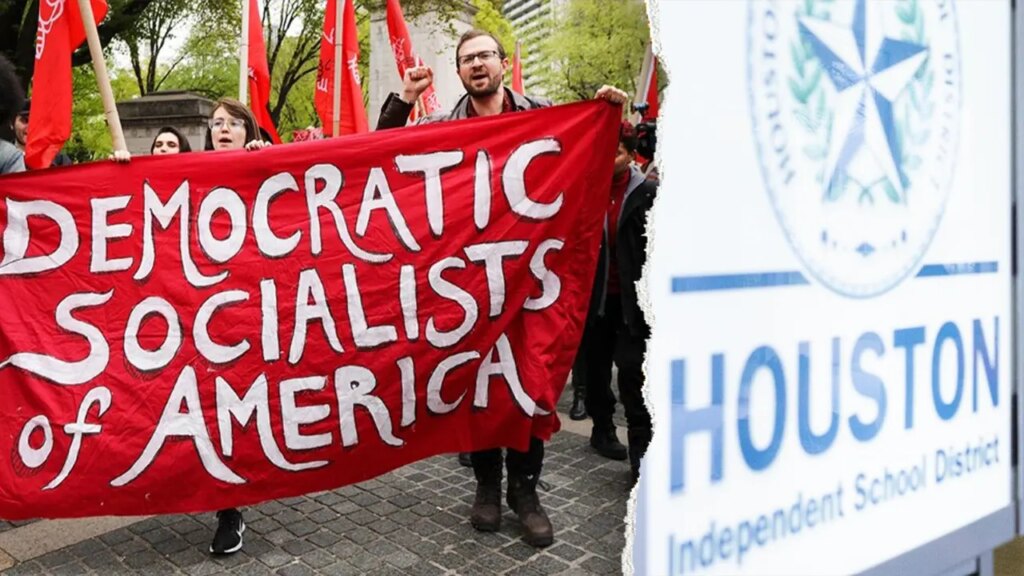
A report from the Texas Public Policy Foundation (TPPF) has raised concerns over the activities of Community Voices for Public Education (CVPE), a Houston-based educational advocacy group. The report accuses CVPE of utilizing tactics akin to those of far-left organizations in their opposition to a state-led takeover of the Houston Independent School District (HISD). The tensions underscore a wider debate about educational policies and reforms amidst notable improvements in academic performance within HISD following state intervention.
| Article Subheadings |
|---|
| 1) Overview of TPPF’s Report and CVPE |
| 2) The State’s Intervention in HISD |
| 3) Criticism of CVPE’s Tactics and Policies |
| 4) CVPE’s Defense and Response |
| 5) Implications for Education Policy |
Overview of TPPF’s Report and CVPE
The Texas Public Policy Foundation (TPPF), a conservative think tank, recently published a report questioning the motivations and actions of Community Voices for Public Education (CVPE), a coalition claiming to represent parents, teachers, and community members in Houston. TPPF argues that CVPE serves as a facade for teachers’ unions and organizations aligned with far-left ideologies, effectively pushing radical policies that threaten public education systems. According to Kate Bierly, campaign director for TPPF’s Next Generation Texas Campaign, this coalition advocates for strategies that could be “questionable at best, but very harmful” for students and their educational outcomes.
The State’s Intervention in HISD
HISD has faced considerable challenges over the years, particularly regarding academic performance. Subsequently, the Texas Education Agency (TEA) intervened, citing years of underachievement among certain campuses. This takeover, enacted in 2023, has been met with stiff opposition from CVPE, which views the intervention as an overreach. In contrast, data from the TEA reveals significant improvements in academic metrics since the state’s involvement, indicating a notable rise in reading and math proficiency among students in grades 3 through 8.
The district’s performance metrics illustrate a shift from 93 campuses rated A and B to 197, while the number of campuses receiving failing grades diminished from 56 to just five. The overall district rating improved from C to B, an outcome that supporters of TEA suggest reflects the potential of state-led educational reform.
Criticism of CVPE’s Tactics and Policies
TPPF’s findings present CVPE as employing strategies akin to those of the Democratic Socialists of America (DSA), a group that has gained traction due to a growing number of its endorsed candidates at various governmental levels. Among the initiatives CVPE champions are ongoing opposition to mandatory STAAR testing and calls for parents to boycott these examinations, which CVPE argues perpetuate racism and inequality in education.
Bierly contends that the push to eliminate standardized testing could hinder low-income students’ access to advanced academic opportunities. Furthermore, CVPE advocates for reducing police presence in schools and encourages direct political activism among students and parents. Critics argue such tactics could undermine educational integrity and compromise student safety.
CVPE’s Defense and Response
In response to the allegations leveled by TPPF, CVPE co-founder Ruth Kravetz has publicly defended the coalition, asserting that it represents a diverse political spectrum ranging from Republicans to socialists. Kravetz argues that the group’s advocacy for restorative justice and mental health resources aims to create safer learning environments than traditional punitive measures.
Kravetz has also dismissed the notion that CVPE mirrors the tactics of the DSA, claiming that such accusations are unfounded. She argues that the desire for educational equity and advocacy against high-stakes testing are noble aims that transcend political affiliations. Her comments stress the importance of inclusive dialogue in addressing education policies, suggesting that constructive criticism should not morph into an ideological battle against community groups that seek reform.
Implications for Education Policy
The conflict between TPPF and CVPE, juxtaposed with the state’s recent academic results, underscores the complexities surrounding education reform in Texas. As stakeholders debate the implications of the ongoing policies, it remains clear that both sides possess valid concerns regarding the education system’s direction in Houston and beyond.
The dispute reflects a larger national dialogue about educational equity, testing practices, and the degree of government intervention in local educational systems. As HISD continues to evolve, stakeholders may find themselves at a crossroads where community advocacy meets political ideology, potentially influencing future policies and reforms in Texas education.
| No. | Key Points |
|---|---|
| 1 | TPPF accuses CVPE of using socialist tactics to influence educational policies in Houston. |
| 2 | HISD has seen marked improvements in academic performance following state intervention. |
| 3 | CVPE advocates for policies against standard testing and reduces student policing. |
| 4 | CVPE defends its agenda as a legitimate movement for educational reform across political lines. |
| 5 | The ongoing debate represents broader national discussions about education equity and reform. |
Summary
The ongoing conflict between the Texas Public Policy Foundation and Community Voices for Public Education highlights the fraught nature of education reform in America today. Amidst rising academic performances in the Houston Independent School District, accusations of political machinations juxtapose sharply with community advocates’ pursuit of justice and equity in education. As the dialogue continues, stakeholders are urged to find common ground that places students’ educational needs at the forefront of reforms.
Frequently Asked Questions
Question: What is the main claim against Community Voices for Public Education (CVPE)?
The Texas Public Policy Foundation claims that CVPE is using tactics aligned with far-left organizations to push radical educational reforms, undermining the quality of public education in Houston.
Question: How has the state intervention in HISD impacted academic performance?
Since the Texas Education Agency intervened in 2023, HISD has reported significant academic improvements, with increased ratings among schools and better testing scores across multiple grades.
Question: What are CVPE’s views on mandatory STAAR testing?
CVPE opposes mandatory STAAR tests, arguing that they perpetuate systemic inequality and advocating for parents to boycott the exams as part of their reform efforts.