
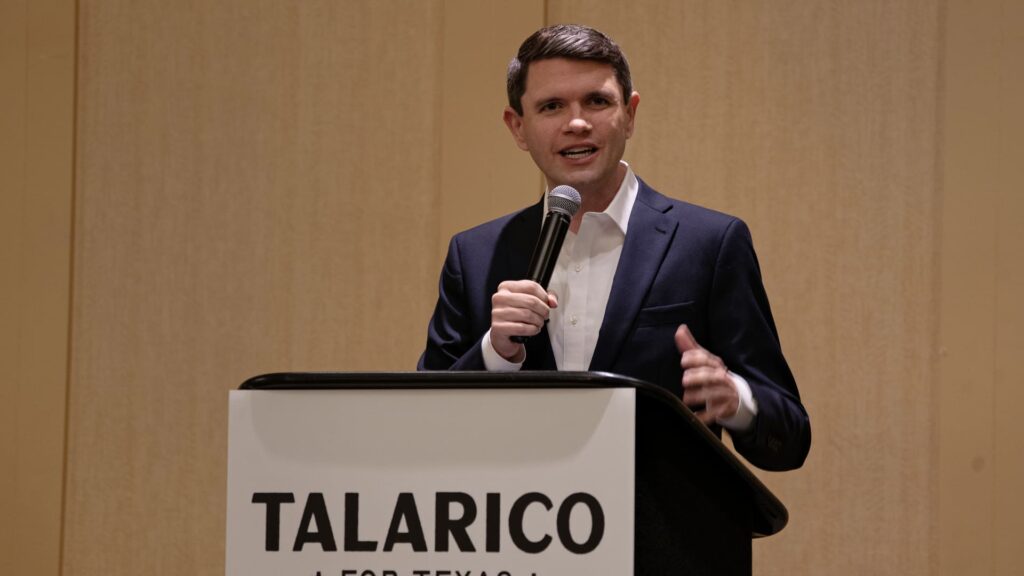
In a dramatic escalation of rhetoric during the Texas Senate race, Democratic candidate James Talarico has publicly confronted billionaire entrepreneur Elon Musk. This confrontation comes on the heels of Musk’s recent substantial financial contributions to Republican candidates, specifically in support of Talarico’s opponent, GOP nominee Ken Paxton. Talarico’s comments, made during a campaign event in Houston, not only highlight the growing divide between the candidates but also spotlight the influence of wealth in politics.
| Article Subheadings |
|---|
| 1) Talarico’s Direct Challenge to Musk |
| 2) Background of the Funding Controversy |
| 3) Impacts of Wealth in Political Campaigns |
| 4) Voter Reactions and Implications for the Election |
| 5) Looking Ahead: Key Dates and Strategies |
Talarico’s Direct Challenge to Musk
During a campaign event at the Hilton University of Houston on October 21, 2026, James Talarico launched a pointed attack on Elon Musk, responding to Musk’s earlier comment on social media that suggested something was “deeply wrong” with him. Talarico’s retort was incisive, emphasizing the integrity of the political system and accusing Musk of attempting to exert undue influence over public office through financial means. He remarked,
“There is something deeply wrong with a political system that allows one trillionaire to buy his own personal U.S. Senator.”
This statement signifies not only Talarico’s defensive strategy but also his broader critique of wealth’s role in shaping political discourse.
The exchange reveals a clash between a Democratic candidate looking to unseat a Republican incumbent and a billionaire often viewed as a political influencer. Talarico pointed to a series of attacks and misinformation campaigns allegedly initiated by Musk and his affiliated interests, alleging that they were the source of disturbing campaign ads and misleading communications sent to voters. By doing so, Talarico aims to rally his support base and underscore the stakes of the upcoming election, framing the contest as one of principle against the power of wealth.
Background of the Funding Controversy
The backdrop to this public confrontation is Musk’s significant financial backing of Republican candidates. Just five days before the verbal clash, it was reported that Musk had contributed a staggering $158 million to the Senate Leadership Fund, a PAC aligned with Republican candidates, which subsequently funneled money to support Talarico’s opponent, Ken Paxton. Additionally, Musk donated $10 million to another PAC, Lone Star Liberty PAC, further bolstering Paxton’s campaign efforts.
This influx of cash into the Texas Senate race has prompted discussions about the extent to which money can influence electoral outcomes. Talarico’s campaign has arisen as a formidable force, raising a record-setting $64 million in the third quarter of the year, dwarfing Paxton’s $18 million. This dynamic has turned Musk’s financial contributions into a focal point of the campaign, illustrating how the intersection of wealth and politics can mobilize public sentiment against the perceived oligarchic tendencies in political funding.
Impacts of Wealth in Political Campaigns
The current Senate race in Texas exemplifies how wealth impacts political dynamics and candidate viability. With Talarico amassing historic fundraising totals, he positions himself as a counter-narrative to the traditional Republican stronghold that often benefits from major contributions from wealthy donors like Musk. As a result, this race is not just about two candidates; it represents a broader struggle concerning who holds power in the political arena.
Campaign financing has increasingly become a hot-button issue, drawing attention to the disparities that exist between candidates and the ways in which personal wealth can skew the political landscape. Talarico’s emphasis on Musk’s donations highlights a growing concern among voters about the influence of billionaires in political campaigns and whether elected office can truly represent the interests of everyday citizens under such financial strain. Talarico’s focus on these issues aims to resonate with voters who question the fairness of a system where money can overshadow ideas.
Voter Reactions and Implications for the Election
Voter feedback has mirrored the public sentiment around the growing influence of wealth in politics. Many constituents express disillusionment with the political process when they perceive that wealthy individuals like Musk can manipulate the outcome of elections through their financial clout. This sentiment could play a crucial role in shaping voter turnout in the upcoming election.
As the campaign intensifies, Talarico’s team is strategizing on how best to leverage this narrative. By framing Musk’s interventions as symptomatic of broader issues in American democracy, Talarico not only strengthens his position among the electorate but also aims to galvanize support from those who may have reservations about the established political order. This may particularly resonate with younger voters and those disenchanted by traditional politics, who may see Talarico’s candidacy as a refreshing alternative.
Looking Ahead: Key Dates and Strategies
As the Texas Senate election approaches, several key dates and strategies will shape the contest. The election is scheduled for November 3, 2026, marking a pivotal moment for both candidates. Talarico’s campaign is building momentum through grassroots organizing, digital campaign strategies, and targeting key demographics that resonate with his message of inclusion and opposition to inequality.
In contrast, Paxton’s campaign appears heavily influenced by Musk’s contributions and that support aids in rallying his voter base. It is expected that as the election date approaches, both candidates will ramp up their campaigning efforts, with Talarico potentially focusing on public forums and debates to underscore his positions on wealth influence and transparency.
Given the contrasting financial backing and campaign strategies, the November election could symbolize a broader referendum on issues that extend beyond Texas, reflecting voter attitudes toward wealth and influence in American politics.
| No. | Key Points |
|---|---|
| 1 | James Talarico challenges Elon Musk over perceived attempts to influence Texas Senate race. |
| 2 | Musk donated $158 million to Republican PACs supporting Talarico’s opponent. |
| 3 | Talarico raised a record $64 million in the third quarter of 2026. |
| 4 | Wealth’s influence on politics is a central theme in the current Senate race. |
| 5 | Upcoming election on November 3 is pivotal for both candidates. |
Summary
The escalating confrontation between James Talarico and Elon Musk encapsulates a significant narrative in the Texas Senate race: the intersection of wealth and politics. As candidates rely more on financial contributions to navigate their campaigns, the implications of this influence are coming to the forefront of public discourse. With the election rapidly approaching, voters are poised to cast their judgments not only on the candidates themselves but also on the very nature of political financing in America.
Frequently Asked Questions
Question: Who are the main candidates in the Texas Senate race?
The main candidates are James Talarico, the Democratic nominee, and Ken Paxton, the Republican nominee and current Texas attorney general.
Question: What role has Elon Musk played in this election?
Elon Musk has made substantial donations to Republican PACs that back Ken Paxton, which Talarico has accused of attempting to unduly influence the electoral process.
Question: What is the significance of the fundraising totals reported?
Talarico’s fundraising of $64 million in the third quarter represents the highest amount ever for a Senate candidate in that period, suggesting strong financial backing and public support compared to Paxton’s $18 million.