
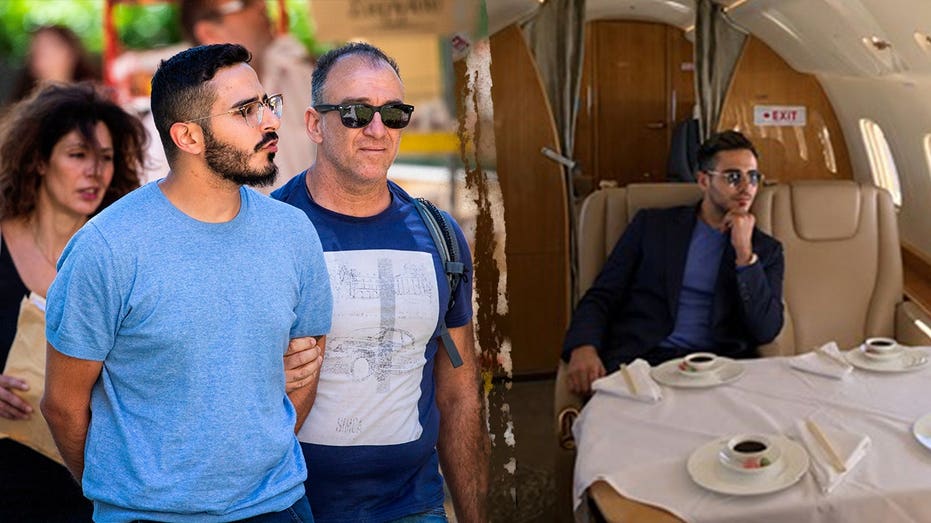
Shimon Hayut, known as the “Tinder Swindler,” plans to launch a dating app called Safe Love that he says will reduce romance fraud and identity deception. The proposed platform would require government identification, selfie verification and an emergency SOS function. Hayut’s criminal record and history of romance fraud have prompted an online dating industry group to urge Apple and Google to block the app. Safe Love is reportedly in the late stages of regulatory review, with release timing still uncertain.
| 1) | Hayut’s history as the Tinder Swindler |
| 2) | The proposed identity verification system |
| 3) | Emergency features planned for dates |
| 4) | Industry opposition to the planned launch |
| 5) | Hayut’s defense of his business plan |
Hayut’s history as the Tinder Swindler
Shimon Hayut, who also used the name Simon Leviev, became widely known as the “Tinder Swindler” because of romance fraud schemes involving women he met online. He acknowledged that he had used false identities and passports and said he was convicted of fraud, theft and forgery in Israel and Finland.
Hayut said he served time in Finland from September 2015 to March 2017. He was convicted in Finland in 2015 after authorities said he defrauded three women. In Israel, he was arrested in 2011 and 2017 in connection with the same case. After being extradited from Greece to Israel in June 2019, he remained jailed until May 2020. He said he has paid his debt to society and now wants to use his knowledge of deception to reduce risks in online dating.
“The idea came from me being the Tinder Swindler. They say I made the dating environment unsafe. So I thought, ‘All right. Let’s make it safe.’”
The proposed identity verification system
Safe Love is intended to impose stricter identification requirements than many existing dating services. Hayut said users would have to upload a government identification card and take a selfie so the platform could compare the person’s identity and appearance.
The proposed system would also restrict profile photographs that differ from the verification selfie by more than 15 percent. Hayut said the goal is to make sure that the person shown online is the same person who appears at an in-person date. He said his own experience with a misleading match influenced the concept. The app is still subject to regulatory approval before it can be released.
Emergency features planned for dates
A planned SOS button would allow users who feel unsafe during a date to trigger several actions at once. Hayut said the phone would begin recording audio and video, share the user’s location and provide that information to law enforcement authorities.
The feature is designed to address safety concerns that may arise after two people meet in person. Hayut said Safe Love was in the late stages of the regulatory process and could be released within days or weeks, although he did not provide a firm date. The proposed tools are intended to help users document an emergency and make their location known quickly.
Industry opposition to the planned launch
An online dating industry group has opposed Hayut’s plan and asked Apple and Google to prevent Safe Love from appearing in their app stores. The group argued that a convicted romance fraud offender should not operate a service built around trust and the emotional and financial vulnerabilities associated with dating.
The opposition reflects concerns about whether users could safely rely on a platform created by someone whose past crimes involved online relationships. Hayut rejected the effort, saying critics would not be able to stop the project. He claimed they were threatened by what he described as the superiority of his product. The technology companies were approached for comment, but no response was included.
Hayut’s defense of his business plan
Hayut said his past makes it especially important for Safe Love to function properly. He argued that his experience with false passports and identities gives him insight into how fraudsters challenge security systems. He compared his proposed role to that of Frank Abagnale Jr., a convicted fraudster who later became associated with fraud prevention.
Hayut also acknowledged that his criminal history could make users view him as a continuing threat. He said he is no longer the person he was at 19 and that people can change. Hayut, who divides his time mainly between Israel and the United Arab Emirates, said his public notoriety means he cannot afford mistakes in the app’s design or operation.
“Yes, on paper I’m a convicted criminal. But I’m not the same kid that I was at 19 years old. And we do change. People do change.”
| Number | Key Point |
|---|---|
| 1 | Safe Love is a proposed dating app from Shimon Hayut, also known as Simon Leviev. |
| 2 | Users would submit government identification and a selfie for verification. |
| 3 | A planned SOS tool would record audio and video and share a user’s location. |
| 4 | An online dating industry group wants major app stores to reject the platform. |
Summary
Safe Love combines identity checks and emergency response tools with an unusually controversial business model. Its proposed launch places Hayut’s claims about reform against concerns raised by his convictions and past romance fraud. The app’s availability will depend on regulatory approval and decisions by the major mobile app stores.
Frequently Asked Questions
Who is behind Safe Love?
Shimon Hayut, also known as Simon Leviev, says he is developing the dating app.
What safety features are planned?
The proposed platform would use government identification, selfie matching, limits on profile-photo differences and an SOS button that could record media and share a user’s location.
When could Safe Love launch?
Hayut said the app was in the late stages of regulatory review and might be released within days or weeks, but no firm launch date was provided.
Why is the app facing opposition?
An online dating industry group argues that Hayut’s convictions and history of romance fraud make him unsuitable to operate a dating service based on user trust.