
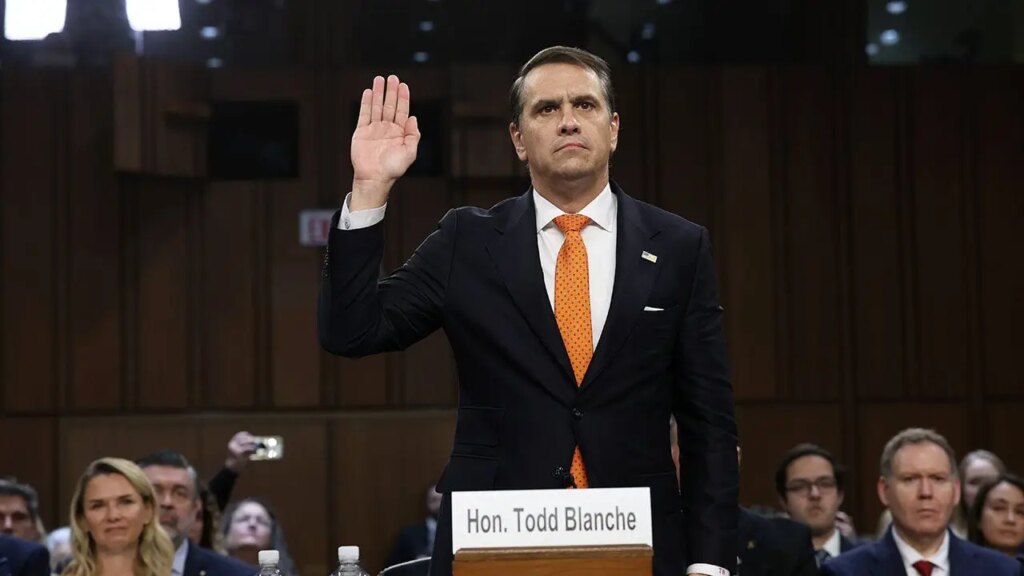
Acting Attorney General Todd Blanche is inching closer to Senate confirmation following key adjustments to controversial policies that were previously a hurdle for his nomination. He has rescinded a $1.8 billion “anti-weaponization fund” and clarified tax protections tied to a settlement involving former President Donald Trump. As intricate negotiations unfold, the Senate Judiciary Committee is set to vote on his nomination, with significant support expected from Republican senators.
| Article Subheadings |
|---|
| 1) Rescinding the “Anti-Weaponization Fund” |
| 2) Senate Negotiations and Support |
| 3) Implications of the IRS Settlement |
| 4) Response from Senate Republicans |
| 5) Looking Ahead: The Vote on Confirmation |
Rescinding the “Anti-Weaponization Fund”
Recently, Acting Attorney General Todd Blanche took decisive action by rescinding a previously proposed $1.8 billion “anti-weaponization fund.” According to sources within the Justice Department, this fund did not become operational and was characterized by the absence of appointed members, financial transfers, or claim processes. The initiative, which stirred significant discussion, particularly among critics of the former Trump administration, was completely nullified with Blanche’s formal order, indicating transparency and responsiveness to concerns raised by Senate leadership.
In particular, senators voiced apprehensions regarding the fund’s potential to make payments to individuals convicted of crimes associated with the January 6th Capitol riot. The former President’s continued support of the fund heightened these worries, and critics perceived it as a potential avenue for retribution against those who spoke out against the former administration. By eliminating the fund, Blanche sought to alleviate these anxieties, signaling a commitment to maintaining the integrity of his position amidst political scrutiny.
Senate Negotiations and Support
Senators John Cornyn of Texas and Thom Tillis of North Carolina played pivotal roles in reaching a crucial agreement that has opened the path for Blanche’s confirmation. Initially, both Cornyn and Tillis stalled Blanche’s nomination, demanding a written commitment from the Justice Department regarding the status of the fund. Following Blanche’s recent compliance in rescinding the directive establishing the fund, Cornyn confirmed that an agreement had been made, which potentially allows for bipartisan support during the upcoming Senate Judiciary Committee meeting.
This shift highlights the intricate dance of negotiation within the Senate, where support from at least some Republicans is essential to counter the unanimous opposition from Democrats regarding Blanche’s nomination. It remains unclear whether Tillis will formally announce his support following the agreement, but indications are strong that he is likely to align with Cornyn’s stance, given the resolutions reached regarding their initial concerns.
Implications of the IRS Settlement
Accompanying the cancellation of the anti-weaponization fund, Blanche clarified the scope of tax protections outlined in a settlement involving former President Donald Trump. These protections will apply retroactively, benefiting only those plaintiffs involved in the settlement rather than extending to new tax filings in the future. This clarification was an essential component of negotiations, reassuring senators that the original intent behind the settlement would remain safeguarded and not serve as a conduit for future advantages to a broader group of individuals.
The adjustments made by Blanche signify his willingness to engage constructively with congressional representatives and to adapt to their demands. As the Acting Attorney General continues to navigate his way through confirmation, his decisions regarding the IRS settlement and the anti-weaponization fund reflect a broader strategic approach aimed at fostering bipartisanship in a politically polarized environment.
Response from Senate Republicans
Reactions to Blanche’s moves from the Republican side of the aisle have varied. Some senators, notably Tillis, expressed relief that the situation appears to be heading toward resolution, despite earlier reservations. His statement regarding Blanche’s capabilities indicates a recognition that approving qualified candidates is essential, even amid party divisions. With discussions concerning future GOP leadership looming, leaders like Cornyn seem poised to assert their influence by backing Blanche.
Moreover, there is a growing concern among some Republicans about the potential return to the divisive rhetoric surrounding the anti-weaponization fund. Watching Trump’s public statements remain crucial as they may influence GOP senators’ decisions moving forward. Nevertheless, the decision taken by Blanche has helped to streamline thoughts within the party ranks and focus efforts on confirming qualified officials who can steer the Justice Department effectively.
Looking Ahead: The Vote on Confirmation
As the Senate Judiciary Committee gears up for the scheduled vote on Blanche’s nomination, the focus shifts to how many votes will be favorable in a session that might be fraught with contention. The committee’s vote will need to achieve complete Republican support to counter the unified opposition from Democrats. This pivotal vote is expected to take place soon, with critical momentum building behind Blanche following his recent adjustments.
Acting Attorney General Blanche’s ongoing negotiations and comprehensive communication with senators highlight a broader effort to craft a harmonious political climate within the Senate regarding his appointment. With the confirmation hearings fresh in public memory, their outcome could have far-reaching implications for the administration’s ability to navigate other sensitive political matters down the line.
| No. | Key Points |
|---|---|
| 1 | Acting Attorney General Todd Blanche rescinded the controversial $1.8 billion “anti-weaponization fund.” |
| 2 | Senators John Cornyn and Thom Tillis have reached an agreement that could ensure Blanche’s confirmation. |
| 3 | The IRS settlement clarifies tax protections, applying only retroactively to involved plaintiffs. |
| 4 | Responses from Senate Republicans indicate a shift towards supporting Blanche amid previous concerns. |
| 5 | The Senate Judiciary Committee is expected to vote on Blanche’s nomination soon, with party dynamics in play. |
Summary
In summary, Acting Attorney General Todd Blanche’s recent actions to rescind the controversial anti-weaponization fund and clarify the IRS settlement position have created a more favorable environment for his Senate confirmation. As bipartisan negotiations unfold, all eyes will be on the Senate Judiciary Committee’s upcoming vote, which could significantly impact the administration’s trajectory moving forward. The responsiveness shown by Blanche in addressing Senate concerns underscores his commitment to fostering a collaborative political atmosphere.
Frequently Asked Questions
Question: Who is Todd Blanche?
Todd Blanche is the Acting Attorney General who has recently taken steps concerning controversial policies to facilitate his confirmation in the Senate.
Question: What was the “anti-weaponization fund”?
The “anti-weaponization fund” was a proposed initiative amounting to $1.8 billion, aimed at addressing concerns surrounding political retribution and ensuring protections for individuals involved in specific allegations against the Trump administration.
Question: How will the IRS settlement impact future tax filings?
The IRS settlement, clarified by Todd Blanche, will apply retroactively to current plaintiffs but will not extend protections to future tax filings, addressing the concerns of several senators regarding its implications.