
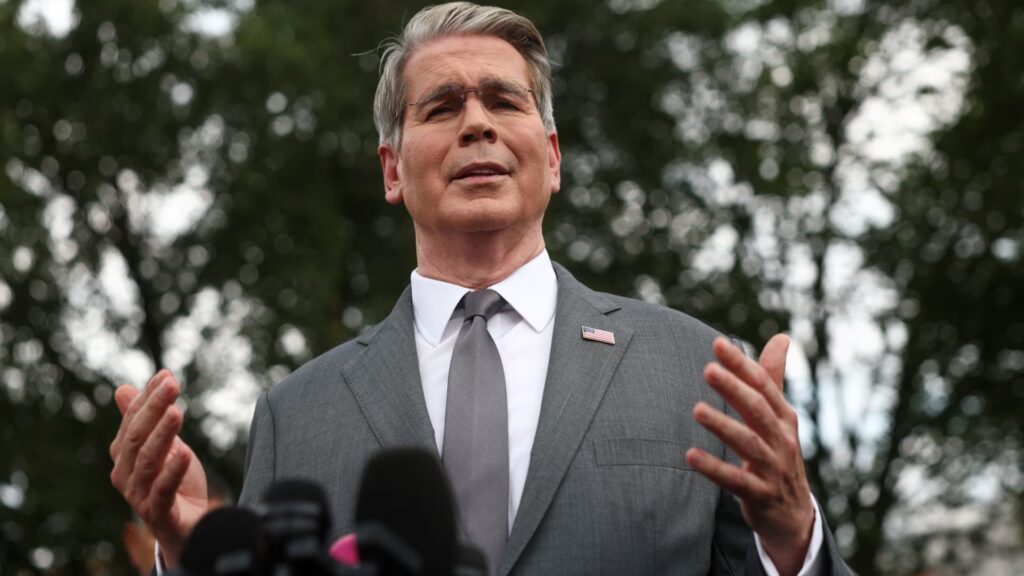
In a landmark announcement, Treasury Secretary Scott Bessent is set to unveil an unprecedented series of sanctions against Iran during a press conference on Monday. These sanctions have been characterized by Bessent as the most extensive campaign of economic isolation ever enacted. According to Bessent, this initiative, launched under the Trump administration, seeks to collapse the Iranian regime by coordinating global pressure to cease trade and economic relations with the Islamic Republic.
Bessent described the sanctions as equivalent to “economic D-Day,” emphasizing their unprecedented scale and intensity. The announcement comes on the heels of a statement from President Donald Trump expressing a commitment to deploy severe economic measures that would target Iran’s operational capabilities globally. As part of these efforts, the U.S. aims to send a clear message to its allies: compliance is mandatory, or they risk facing repercussions.
In conjunction with the announcement, President Trump has vowed to impose stringent financial penalties on any nation that assists Iran in evading these sanctions, labeling the situation as “Economic Warfare and Isolation” at an unprecedented scale. Such aggressive stances have prompted responses from Iran, with the Islamic Revolutionary Guard Corps expressing skepticism regarding the effectiveness of the U.S. sanctions. An IRGC spokesperson articulated confidence that Iran would successfully counter the consequences of what they perceive as a “war” declared against them, indicating their readiness to forge economic partnerships with alternative nations.
Despite the weight of these new sanctions, analysts express caution regarding their potential to modify Iran’s behavior. Notably, Helima Croft, a leading figure in global commodity strategy at RBC Capital Markets, remarked that Iran’s history of facing economic sanctions may embolden its resolve instead of prompting concessions. She emphasized Iran’s significant military capabilities and its strategic ability to disrupt shipping channels, indicating that the turmoil in the region could endure despite economic pressures.
| Article Subheadings |
|---|
| 1) Overview of the Sanctions Announcement |
| 2) Statements from Treasury Secretary Bessent |
| 3) Reactions from the Trump Administration |
| 4) Iran’s Response to the Sanctions |
| 5) Analysts’ Perspectives on Effectiveness |
Overview of the Sanctions Announcement
On Monday, the U.S. Treasury Secretary Scott Bessent convenes a press conference, poised to disclose an extensive set of sanctions targeting Iran. These sanctions are expected to represent one of the most coercive economic campaigns in modern history, with the explicit goal of crippling the Islamic Republic’s economic capacity. The sanctions will build upon existing measures that have placed Iran among the most sanctioned countries globally. These new initiatives arise amid growing concerns over Iran’s nuclear program and its support for militant groups across the Middle East.
The context of this announcement lies within a broader strategy from the Trump administration aiming to destabilize the Iranian regime through economic means. This marks a significant escalation in U.S. foreign policy, reflecting a desire to isolate Iran diplomatically and economically in the international arena. With countries around the world watching closely, the effectiveness and consequences of these measures could redefine U.S.-Iran relations for years to come.
Statements from Treasury Secretary Bessent
In his statements leading up to the announcement, Scott Bessent emphasized the significance of these sanctions, framing them as a crucial step towards “collapsing” the Iranian economy. He stated, “At dawn begins an economic D-Day — the single greatest financial offensive ever marshalled against an adversary.” This wording intends to incite a sense of urgency and gravity among U.S. allies and the global economic community.
Bessent reaffirmed the administration’s willingness to use its “full might” against those who might continue to engage with Iran economically. He declared, “We are going to them and saying you are either with us or against us,” which signals to the global community the expectation of uniform compliance with U.S. economic policies and highlights the administration’s increasing assertiveness.
Reactions from the Trump Administration
The forthcoming sanctions are coupled with heightened rhetoric from President Trump, who has pledged to impose severe penalties on nations aiding Iran’s attempts to bypass these sanctions. Trump’s social media post elaborated on this strategy, asserting that “this will be Economic Warfare and Isolation on an unprecedented scale.” This proclamation underscores the administration’s commitment to maintaining a relentless stance against Iran and indicates a willingness to expand measures if necessary.
The international community—especially U.S. allies—faces a crucial juncture. They must decide whether to comply with the U.S.’s demands or navigate the complex waters of diplomacy with Iran. Trump’s rhetoric places them in a challenging position, balancing economic interests against the backdrop of U.S. strategic objectives.
Iran’s Response to the Sanctions
In response to the impending sanctions, Iran’s Islamic Revolutionary Guard Corps (IRGC) has issued dismissive statements about the threats articulated by U.S. officials. An IRGC spokesperson claimed that Iran possesses the capabilities to counteract the negative repercussions of this “economic war.” They expressed confidence in establishing new economic partnerships beyond traditional channels, suggesting a strategy of diversification.
The IRGC’s dismissal of U.S. sanctions reflects a broader Iranian sentiment of resilience. They perceive these threats not merely as economic challenges but as part of a larger external conflict. An IRGC spokesperson purported that the U.S. acknowledgment of an “economic war” signals their failures in military confrontations, thus projecting an image of strength amidst adversity.
Analysts’ Perspectives on Effectiveness
Experts in global economics and international relations present mixed views about the potential impact of these sanctions on Iran’s behavior. Helima Croft, head of global commodity strategy at RBC Capital Markets, mentioned that while Iran is already one of the most sanctioned nations globally, further economic pressure may not lead to behavioral change. She remarked, “Iran still has significant disruptive capabilities,” indicating that Tehran could persist in supporting proxies across the region even under severe economic constraints.
The prevailing question remains whether the sanctions will compel Iran to alter its path regarding nuclear development and regional interventions. An economy already strained by sanctions may prompt Iran to pursue more aggressive military strategies as a form of exerting influence or retaliation, perpetuating a cycle of confrontation in the region.
| No. | Key Points |
|---|---|
| 1 | Treasury Secretary Scott Bessent plans to announce a historic series of sanctions against Iran. |
| 2 | Bessent has framed the sanctions as “economic D-Day,” emphasizing their unprecedented scale. |
| 3 | President Donald Trump has threatened severe penalties on nations that assist Iran in evading these sanctions. |
| 4 | Iran has expressed confidence in its ability to counter the economic war declared by the U.S. |
| 5 | Analysts remain skeptical about the effectiveness of additional sanctions on changing Iran’s behavior. |
Summary
The current trajectory of sanctions against Iran marks a pivotal moment in U.S. foreign policy, as officials announce one of the most comprehensive economic campaigns ever directed at a single nation. Moving forward, the repercussions of these sanctions could redefine international diplomatic relations and potentially destabilize the already turbulent region. As tensions escalate, the global community watches, weighing the implications of compliance with U.S. demands against the potential fallout of economic isolation.
Frequently Asked Questions
Question: What will the new sanctions aim to achieve?
The sanctions aim to significantly cripple Iran’s economy and curtail its support for militant activities, ultimately compelling the regime to alter its behavior regarding nuclear development.
Question: How is Iran responding to the threat of sanctions?
Iran has publicly dismissed the threats posed by the U.S. administration, asserting its capability to withstand economic pressure and forge new international partnerships.
Question: What do analysts predict regarding the effectiveness of these sanctions?
Analysts express skepticism about the capacity of the new sanctions to change Iran’s actions, noting that Iran has extensive disruptive capabilities that may allow it to navigate these economic challenges successfully.