
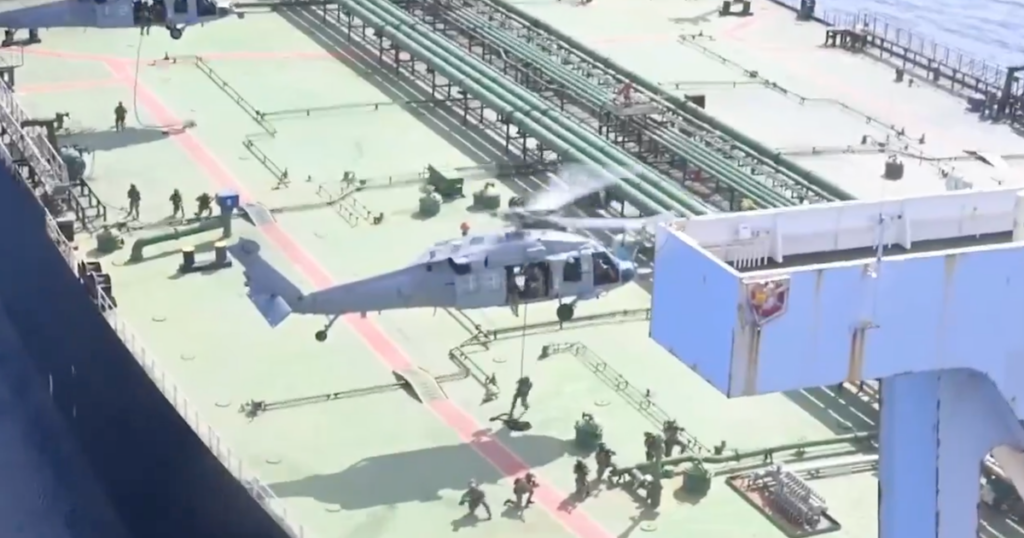
The Justice Department is pursuing a revival of prize law, an antiquated legal system, to facilitate the seizure of Iranian oil tankers linked to military objectives. The move represents a significant shift in maritime law practices and could streamline the adjudication process for U.S. courts regarding captured vessels. Experts caution, however, that challenges in implementation, legality, and international implications loom large.
This renewed interest in prize law comes as the administration seeks to expedite the legal handling of ships seized in efforts against perceived threats from Iran and other nations. With the ongoing military context and geopolitical complexities, officials are navigating uncharted waters, invoking a maritime framework that has not been regularly utilized since the 19th century.
| Article Subheadings |
|---|
| 1) Revival of Prize Law: A Historical Perspective |
| 2) The Role of the Justice Department |
| 3) Challenges and Legal Implications |
| 4) Expert Opinions on the Revival |
| 5) Potential Future Consequences |
Revival of Prize Law: A Historical Perspective
Prize law, dating back to the 17th century, encompasses legal protocols governing the seizure of enemy ships and the distribution of their cargo. Initially, it served as a mechanism for privateers and navies alike during conflicts, allowing for the capture of enemy vessels without direct military action. With the U.S. invoking such a framework centuries later, it raises questions about the context and efficacy of applying this archaic law in today’s geopolitical landscape.
The historical significance of prize law mainly derives from its role in maritime conflict. During the Revolutionary War and the War of 1812, the United States relied heavily on prize courts to adjudicate the legality of captures and distribute spoils. Given today’s advanced naval capabilities, the reactivation of this law has sparked debate among legal experts regarding its relevance and potential for abuse.
The informal use of prize law during this period was characterized by a lack of a formal navy, leading to the outsourcing of naval engagement to privateers. These private vessels were authorized to harass enemy shipping and were incentivized by the prospect of retaining a portion of their “prizes.” This historical context is relevant as the U.S. aims to utilize prize law amid contemporary conflicts, particularly concerning Iran.
The Role of the Justice Department
As part of this initiative, the Justice Department is aiming to streamline the legal processes involved in maritime seizures under prize law. The U.S. Attorney for Southern Texas, Aaron Reitz, has emphasized that national security interests may necessitate taking swift action against vessels suspected of supporting enemies during conflicts. He outlined the importance of having a legal framework ready to adjudicate seized vessels and their cargoes.
Under this initiative, the Justice Department would pursue new interpretations of existing laws to expedite the transfer of seized vessels into U.S. custody. Notably, the plans could bypass cumbersome civil asset forfeiture laws that have historically delayed the handling of such cases, thus allowing for a potentially quicker resolution.
The legal framework proposed seeks to ensure that once a vessel is designated as a “prize,” its adjudication could be sped up significantly. Required elements would involve the identification of contraband goods or identification as a vessel under enemy control, providing grounds for seizure under U.S. maritime law.
Challenges and Legal Implications
The revival of prize law poses considerable challenges that could complicate its practical implementation. One issue lies in the physical movement of seized vessels to U.S. ports, which is a prerequisite for the courts to exercise jurisdiction over these prize cases. Legal experts like Michael Sturley point out that for prize law to function effectively, the captured vessels must be brought to a U.S. port, such as Houston, which may not always be feasible.
In addition to logistical issues, there are significant international legal implications associated with employing prize law. Critics underscore the potential for creating diplomatic tensions with nations from which the vessels are seized. The legal grounds for capturing vessels, particularly those sailing under foreign flags, are fraught with complexity, especially if Congress has not sanctioned any military action against such nations.
Moreover, the application of prize law raises the question of alignment with existing U.S. military and foreign policy. Questions arise regarding consistency in the rationale for seizures, particularly as the U.S. continues to engage with various countries under different legal frameworks and policies.
Expert Opinions on the Revival
Experts in maritime law are exploring the potential ramifications of reviving prize law. While Ian Ralby, a maritime law expert, views the revival as a legitimate option, he also notes the associated “domestic and international legal challenges.” The dual claims of enforcement of sanctions versus blockade conduct can create confusion regarding the legality and interpretation of actions taken.
Additional legal experts like Thomas Lee express concern regarding future applications of prize law, particularly regarding third-party nations challenging the legality of seizures within international courts. He warns that reactivating such a law might invite retaliatory measures from other nations, undermining U.S. shipping interests.
While the potential speed and streamlined processes could benefit U.S. operations, experts caution that consideration must be given to the historical implications, primarily the fostering of international tensions and the possibility of setting dangerous precedents that could be exploited by adversaries.
Potential Future Consequences
If the revival of prize law proceeds successfully, the implications could span beyond immediate military objectives. Legal experts suggest that the long-term repercussions may include other nations adopting similar aggressive stances, leading to a legitimization of acts that could be construed as piracy under international law in response to U.S. policy shifts.
Moreover, implementing a renewed prize legal framework could undermine the traditional principles of international law regarding free trade and navigation rights. Increased maritime seizures under the banner of national security may prompt a reevaluation of maritime boundaries and prescribed navigational conducts among rival nations.
The absence of recent precedent under U.S. courts brings uncertainty to how prize cases will unfold, as highlighted by maritime law scholars. The lack of modern application may lead to a “make-it-up-as-we-go-along” scenario, wherein normative legal standards are tested for their adaptability in dynamic situations involving international marine trade.
| No. | Key Points |
|---|---|
| 1 | The Justice Department is looking to reactivate centuries-old prize law for seizing Iranian oil tankers. |
| 2 | Prize law has not been actively used since the Spanish-American War and raises questions about its relevance today. |
| 3 | Experts warn that implementing prize law may lead to complicated legal challenges both domestically and internationally. |
| 4 | Consensus among experts reveals uncertainty regarding repercussions on international relations and maritime trade norms. |
| 5 | There are logistical concerns regarding how seized vessels will be transported to U.S. courts for adjudication under prize law. |
Summary
The attempt by the Justice Department to revive prize law signifies a complex intersection of legal, military, and geopolitical strategies in addressing maritime threats. As officials prioritize national security, the application of outdated legal frameworks can expedite responses but also risks significant legal challenges and international backlash. The nature of maritime law will continue to evolve as these initiatives are tested in courts, providing a vital examination of the balance between national interests and global maritime norms.
Frequently Asked Questions
Question: What is prize law and its significance?
Prize law refers to the legal protocols governing the seizure of enemy vessels during wartime, facilitating the distribution of their cargo. Historically significant for its role during conflicts, it has implications for national security and maritime regulations.
Question: Why is the Justice Department reviving this legal framework now?
The Justice Department aims to utilize prize law as a mechanism to streamline the legal process for seizing vessels linked to enemy states, specifically within the context of ongoing military operations against perceived threats from nations like Iran.
Question: What are the potential ramifications of applying prize law?
While prize law could expedite the seizure process, it raises significant legal challenges and concerns regarding international relations. The revival may create precedents that could impact maritime law and trade in the future.