
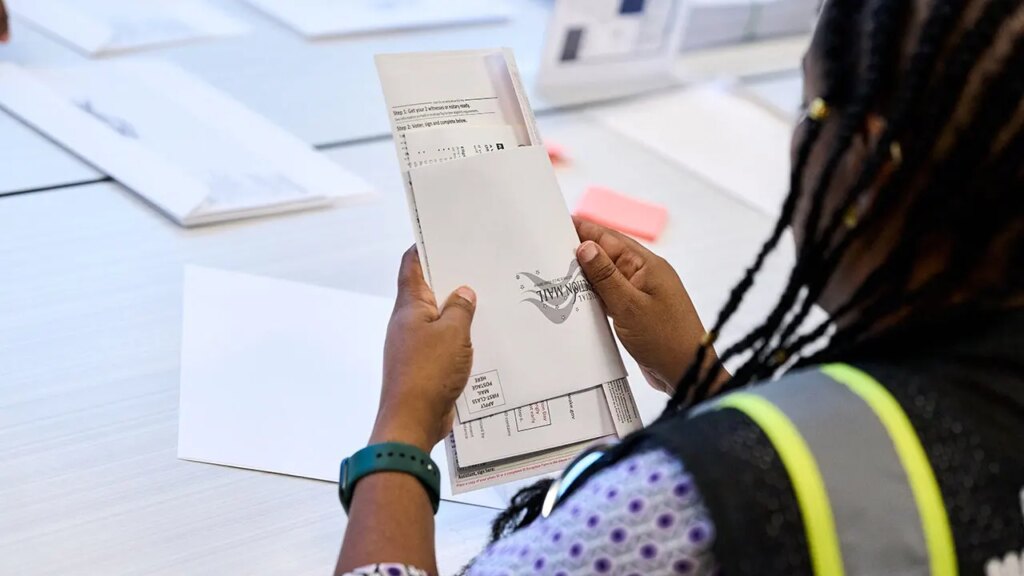
In a significant legal battle regarding mail-in voting rules, 24 states and Washington, D.C., have filed lawsuits against the United States Postal Service (USPS). This comes just ahead of the pivotal midterm elections. The Trump administration’s latest appeal to the Supreme Court seeks to enforce controversial mail-in ballot requirements that many argue complicate the voting process. The outcome of this dispute could significantly affect voter access and the efficiency of mail-in voting as states begin to send out ballots.
| Article Subheadings |
|---|
| 1) Background of the Legal Disputes |
| 2) Details of the Administration’s Appeal |
| 3) Impact of the Injunction on Ballot Mailing |
| 4) Responses from State Officials and Democrats |
| 5) Consequences for the Midterm Elections |
Background of the Legal Disputes
The conflicts surrounding mail-in voting in the United States have been escalating, especially in the lead-up to the midterm elections. Various states have expressed concerns regarding the ability to properly manage mail-in ballots, given the torrent of changes imposed by the Trump administration. To address these concerns, 24 states, alongside Washington, D.C., have opted to take legal action against the USPS, arguing that the new mailing requirements undermine the integrity and accessibility of voting.
As ballot preparation begins across the nation, the situation has become increasingly urgent. Postal officials claim the changes they wish to impose are aimed at enhancing the reliability of mail-in voting and minimizing the potential for voter fraud, while critics see them as unnecessary and restrictive. This legal tussle encapsulates a broader struggle over voting rights and accessibility, especially amid ongoing debates about the legitimacy of mail-in ballots.
Details of the Administration’s Appeal
Amid ongoing disputes, the Trump administration has lodged an appeal with the Supreme Court addressing a preliminary injunction issued by U.S. District Court Judge Indira Talwani. This injunction prohibits the USPS from implementing new requirements regarding mail-in ballots for the upcoming elections. The administration argues that the injunction creates confusion regarding the mailing of ballots and hinders states from efficiently conducting their voting processes.
In the appeal, Solicitor General John Sauer outlined how many states have already begun mailing ballots. He insisted that the injunction jeopardizes their ability to adhere to federal regulations. Sauer emphasized, “Once those ballot envelopes enter the mailstream, there is no retrieving them.” The administration contends that their regulations represent a legitimate exercise of authority intended to ensure that mail-in ballots are processed efficiently.
Impact of the Injunction on Ballot Mailing
The preliminary injunction has significant implications on the ballots being mailed out across the United States. States like North Carolina have begun sending ballots already, with others scheduled to follow suit. The injunction has been justified by concerns over the USPS’s ability to handle the expected influx of mail-in votes under the newly proposed regulations, which would require envelopes to have official Election Mail logos, automation compliance, and tracking barcodes.
Election officials express worry that the adaptations needed to follow these new rules might not be completed in time for the elections, given their complexity and the limited time frame. If the injunction remains in effect, it could lead to disorganization as states have to navigate the existing protocols to ensure voters can participate effectively in the election.
Responses from State Officials and Democrats
Democratic leaders and voting rights advocates have responded strongly against the USPS’s proposed changes, arguing that these regulations are unconstitutional and strive to undermine the voting process comprehensively. Many state election officials have voiced that there isn’t ample time to adjust to these changes before the elections, thereby threatening voter turnout and overall electoral integrity.
Critics of the administration’s rules have raised alarms over the perceived intent behind the regulations, suggesting that it is part of a larger agenda to suppress voter access to mail-in ballots, a method increasingly favored by voters, particularly during the pandemic. The ongoing debate around these changes reveals deeper implications for partisan politics in the United States and the future of voting rights.
Consequences for the Midterm Elections
With the stakes of the midterm elections rising, the ramifications of this legal battle are expected to be profound. Nearly one-third of U.S. voters historically utilize mail-in ballots to participate in elections. As the control of Congress hangs in the balance, the ability of voters to access mail-in voting could dramatically shape electoral outcomes.
The Supreme Court’s forthcoming decisions regarding these appeals and injunctions could set critical precedents for future voting rights cases and how mail-in voting is conducted across the country. As states continue to navigate these waters and prepare for the elections, the interplay between state and federal authority on election standards will undeniably evolve.
| No. | Key Points |
|---|---|
| 1 | 24 states and Washington, D.C. have filed lawsuits against the USPS regarding mail-in voting rules. |
| 2 | The Trump administration has appealed a preliminary injunction that prevents new USPS requirements from being enforced. |
| 3 | Critics argue the new regulations pose significant challenges to mail-in voting accessibility. |
| 4 | Democratic leaders and voting rights groups contend the changes are unconstitutional and suppress voter turnout. |
| 5 | The outcome of this dispute has critical implications for the upcoming midterm elections and voter access nationwide. |
Summary
The battles surrounding mail-in voting regulations and the ongoing court disputes represent a pivotal moment for U.S. electoral integrity and accessibility. With the midterms fast approaching, the actions of the Supreme Court will play an instrumental role in shaping the landscape of voter rights and mail-in voting protocols. How this situation unfolds may very well determine not only voter turnout but also the balance of power in Congress, underscoring the importance of ensuring that every eligible voter can participate in the democratic process.
Frequently Asked Questions
Question: Why are states suing the USPS?
States are suing the USPS over new mail-in voting requirements that they argue complicate the voting process and potentially restrict access to mail-in ballots.
Question: What did the preliminary injunction entail?
The preliminary injunction issued by Judge Indira Talwani prevents the USPS from enforcing new requirements for ballot envelopes during the election period.
Question: What are the implications of the appeal by the Trump administration?
The appeal seeks to allow the USPS to implement its new rules, which could impact how ballots are handled and increase the potential for confusion among voters as elections approach.