
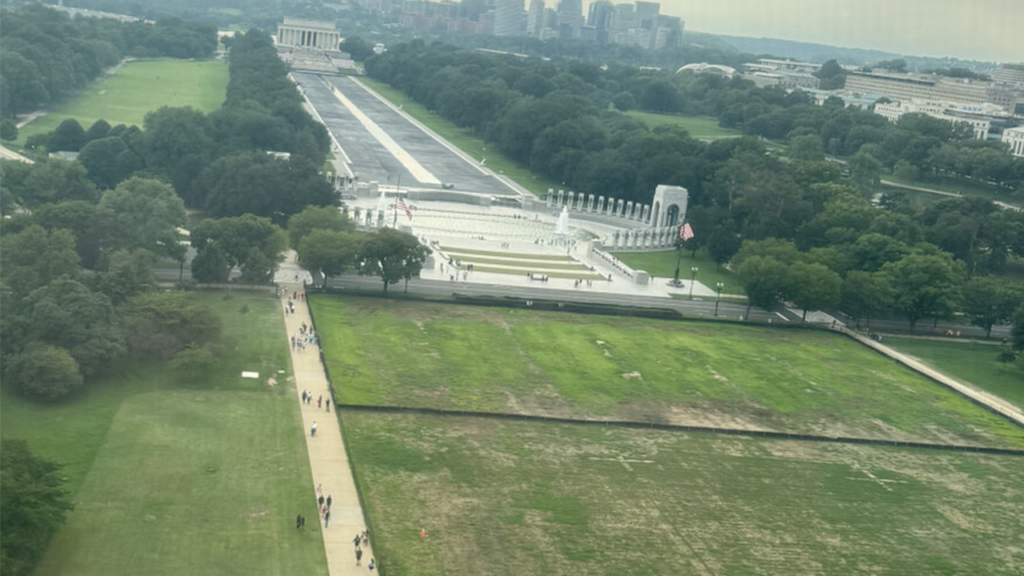
The National Mall in Washington, D.C., is currently under scrutiny as significant vandalism incidents have raised concerns among officials. Interior Secretary Doug Burgum recently highlighted ongoing restoration efforts at key sites like the Lincoln Memorial Reflecting Pool, where damage has occurred. At the same time, former President Donald Trump claimed that vandals were responsible for extensive damage to the grass near the World War II Memorial, a charge he made without substantial evidence, sparking further debate regarding security and accountability in national landmarks.
| Article Subheadings |
|---|
| 1) Overview of Vandalism Incidents |
| 2) Trump’s Claims and Evidence |
| 3) Ongoing Restoration Efforts at the National Mall |
| 4) Arrests Related to Vandalism |
| 5) The Broader Implications of the Vandalism |
Overview of Vandalism Incidents
The National Mall has recently experienced a disturbing trend in vandalism that has drawn the attention of both local and national officials. Billowing smoke and bubbling fountains have become a part of a larger narrative concerning the integrity of America’s historical sites. Specifically, areas like the Lincoln Memorial and its Reflecting Pool have suffered significant damage. Reports indicate that this destruction is not an isolated incident, but rather a pattern that threatens the very essence of these monuments as markers of historical significance and national pride.
In this ongoing saga, Interior Secretary Doug Burgum has articulated the Ministry of the Interior’s commitment to restoring these important sites, viewing vandalism as a direct affront to national heritage. With various challenges arising in the realm of security and preservation, the necessity of effective law enforcement and rapid response systems has become increasingly clear. This commentary sets the stage for a complex dialogue about how we protect America’s legacy while managing public spaces.
Trump’s Claims and Evidence
In the wake of the vandalism, former President Donald Trump made headlines by attributing the damage to vandals, claiming responsibility for the large patches of dead grass near the World War II Memorial. Trump shared a photo on social media that depicted the area covered in what seemed to be brown, damaged grass, contrasting sharply against the lush landscaping typically associated with the Memorial.
“Look what VANDALS did to the grass connecting the vandalized World War II Monument and the vandalized Reflecting Pool, which will be opened again, and better than ever, shortly,”
the former president wrote, expressing his outrage over what he perceives as a decline in respect for national monuments. Trump’s accusations, however, were met with skepticism as he did not provide substantive evidence to support his claims.
Critics point out that Trump’s assertions lack a basis in confirmed evidence, particularly when juxtaposed with photographs showing that the affected lawn was heavily utilized during the Independence Day celebrations he had hosted just weeks prior. The contrast between justified concerns about vandalism and mere speculation raises important questions about the accountability of officials in addressing damage in such prominent public spaces.
Ongoing Restoration Efforts at the National Mall
Amidst the allegations and counterclaims, long-term restoration efforts at the National Mall remain a priority for the federal government. Secretary Burgum has made it clear that repairing the damage wrought by vandalism is just one facet of an overarching strategy aimed at preserving the integrity of the National Mall. Various teams have been deployed to evaluate damage and begin restoration operations where necessary. The tactics employed by these teams vary from physical repairs to resource allocation in preserving these historic sites against future acts of vandalism.
Moreover, the restoration of the Lincoln Memorial Reflecting Pool, which suffered severe damage, is of particular interest. Federal officials are emphasizing rapid action, aiming to restore the Reflecting Pool to its original glory as a site not only for reflection but for national pride and memory. The relationship between ongoing restoration and preventative measures speaks to a larger narrative regarding the protection of cultural heritage in the face of increasing threats, whether they arise from natural wear-and-tear or deliberate acts of destruction.
Arrests Related to Vandalism
In connection with the vandalism incidents, law enforcement has begun making arrests, with one of the most notable cases involving Melissa Farris, who has been charged following the discovery of graffiti and other forms of vandalism at the World War II Memorial. The words “Clean hands dirty $” were found painted on the monument, sparking further investigations into the motivations behind such acts. Authorities have indicated that while this specific act of vandalism received immediate attention, it may not encompass the full scale of damages attributed to recent events across the National Mall.
Legal proceedings against Farris are set to unfold, with felony charges being pursued. The developments in this case underscore the increasing seriousness with which authorities are treating vandalism of national monuments, and they prompt broader considerations about the perpetrators and the motivations behind these acts. It remains to be seen how these legal challenges will shape public perceptions of vandalism in national spaces and whether they will inspire greater protective measures.
The Broader Implications of the Vandalism
The implications of vandalism at sites like the National Mall extend beyond the immediate damage. They serve as a critical reflection of our societal values and priorities regarding the preservation of historical and cultural symbols. For many, these sites symbolize national unity and pride, and their degradation can evoke a strong emotional response. As public discourse continues to evolve around these symbols, calls for enhanced security and stricter penalties for vandals are becoming more prominent.
In a time of heightened polarization, these incidents may also reflect deeper societal divides that can manifest in public spaces. The polarized conversation surrounding former President Trump’s allegations further complicates the narrative by intertwining political rhetoric with national pride and historical preservation. Moving forward, it becomes crucial for government officials, organizations, and the public to engage in constructive dialogue aimed at collaboratively developing solutions to better protect national landmarks from vandalism and neglect.
| No. | Key Points |
|---|---|
| 1 | Vandalism incidents on the National Mall have raised serious concerns about the preservation of historical sites. |
| 2 | Former President Trump has claimed vandals are responsible for the damage to the grass near the World War II Memorial without substantial evidence. |
| 3 | Interior Secretary Doug Burgum is leading restoration efforts for damaged areas in the National Mall. |
| 4 | Arrests are being made concerning vandalism, highlighting the increased seriousness of such crimes against national monuments. |
| 5 | The societal implications of vandalism at national sites prompt discussions about values, protection, and accountability. |
Summary
The recent events surrounding the vandalism at the National Mall underscore a significant tension between cultural preservation and public responsibility. As officials work to secure and restore these vital landmarks, it remains imperative for communities and leaders to come together to foster an environment of respect for national heritage. Recognizing the importance of these sites not just as tourist destinations but as symbolic representations of collective memory can help frame future efforts aimed at safeguarding them from similar threats. This situation calls for proactive engagement in discussions about the integrity of national monuments and the societal values they embody.
Frequently Asked Questions
Question: What are the most notable vandalism incidents mentioned in the article?
The article highlights vandalism at significant sites on the National Mall, including the Lincoln Memorial Reflecting Pool and the World War II Memorial, where damage has been visually confirmed.
Question: What actions have been taken in response to the vandalism?
In response to the vandalism, Interior Secretary Doug Burgum has announced ongoing restoration efforts, while law enforcement is actively making arrests relating to these incidents, such as the recent arrest of Melissa Farris.
Question: What is the broader significance of these vandalism incidents?
The vandalism incidents serve as a reflection of societal values and raise concerns about the preservation of national heritage, highlighting the importance of protecting historical sites from negligence and disrespect.