
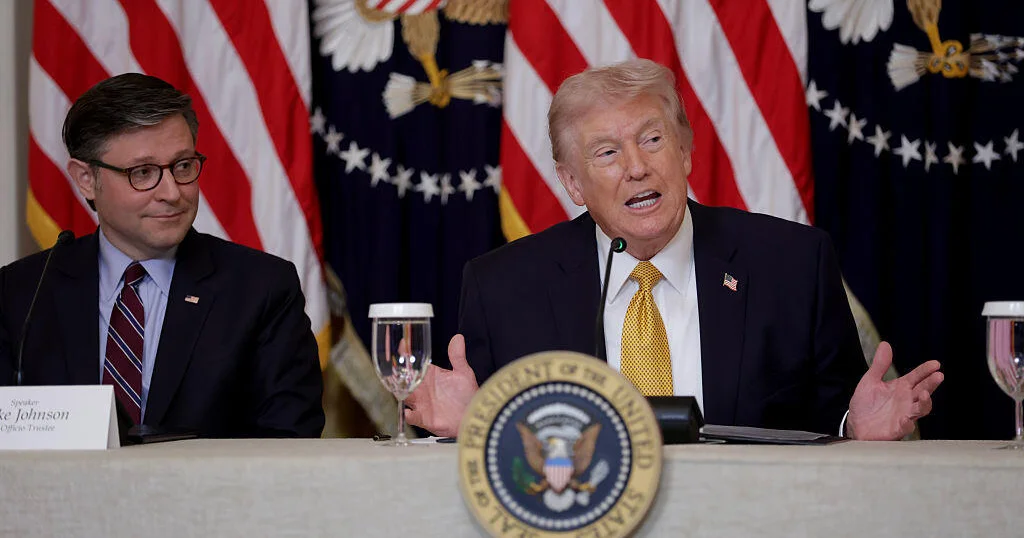
In a significant meeting set for Tuesday, President Trump and House Speaker Mike Johnson will engage with executives from leading artificial intelligence (AI) companies at the White House. This discussion comes amid growing concerns regarding the rapid advancements in AI technology, which some experts warn could pose serious risks to society. Attendees are expected to include high-profile executives from Anthropic, OpenAI, Google, and Meta, among others, all seeking to find a balance between innovation and necessary regulation.
| Article Subheadings |
|---|
| 1) Meeting Agenda and Key Participants |
| 2) Regulatory Balance: Innovation vs. Security |
| 3) Perspectives on AI Advancement |
| 4) Legislative Context and Broader Implications |
| 5) Upcoming Events and Future Discussions |
Meeting Agenda and Key Participants
The upcoming meeting at the White House is scheduled for 12:30 p.m. in the East Room, marking a pivotal moment for discussions on the future of artificial intelligence in America. High-profile executives such as Dario Amodei, CEO of Anthropic, will be in attendance, alongside Greg Brockman from OpenAI, Sundar Pichai of Google, Alex Karp from Palantir, Mark Zuckerberg of Meta, and Jensen Huang from Nvidia. This diverse group of leaders in the tech sector highlights the extensive reach and influence of AI technologies today.
The meeting aims to address the intersection of technological advancement and regulatory measures. Participants are expected to articulate their views on AI development, its implications for various sectors, and the need for appropriate checks and balances. With the presence of high-profile figures, the meeting is likely to draw significant media attention and set the tone for policy direction regarding AI in the United States.
Regulatory Balance: Innovation vs. Security
House Speaker Mike Johnson has emphasized the need for a balanced approach to regulation, warning against the imposition of heavy restrictions that could stifle innovation. In comments made to the press, he stated, “Instead of just smothering this with red tape, which is always the government’s reflex, and I think would be wrong and frankly dangerous to national security if we did it here, we want to continue the innovation.” This sentiment underscores a key theme of the meeting: the understanding that regulation should not impede the growth of vital technologies.
Johnson expressed optimism that the conversation would facilitate a productive outcome for both innovation and safety. The issue at hand is how the government can establish a framework that allows for AI advancement while simultaneously addressing public safety concerns. This dual focus is essential in a landscape where technological advancement is accelerating at an unprecedented rate.
Perspectives on AI Advancement
As various stakeholders come together to discuss AI, opinions diverge significantly. Executives like Dario Amodei advocate for limits on the pace of AI development, stressing the necessity of implementing safeguards to mitigate potential risks. This viewpoint aligns with a growing movement among technology leaders who believe that unchecked AI growth could lead to detrimental consequences.
Conversely, some industry leaders argue against strict regulatory measures. For instance, Jensen Huang has remarked that fears surrounding AI might be exaggerated and that imposing guardrails could hinder the competitive edge the United States holds over global peers, especially China. This divide presents a complex challenge for regulators, who must navigate these contrasting perspectives while crafting policy that addresses safety without hampering innovation.
Legislative Context and Broader Implications
The meeting also occurs within a larger legislative context. Lawmakers have become increasingly aware of the profound implications that AI holds for the economy, national security, and social dynamics. As AI technologies become more integrated into various sectors, from healthcare to finance, legislators are faced with the pressing question of how to govern this rapidly evolving landscape.
Senate Majority Leader John Thune, despite not attending the meeting, expressed hopes for its productivity and indicated he would be engaging with relevant stakeholders later in the week. Such developments reflect a growing acknowledgment among lawmakers that collaboration with industry leaders is essential to inform effective policy making. The broader discussion surrounding AI regulation is not isolated to this single meeting but is part of an ongoing national conversation about the future of technology in America.
Upcoming Events and Future Discussions
In addition to the meeting at the White House, several tech executives are slated to participate in another event on the same day, focusing on AI and other technology issues. Reports indicate that President Trump is expected to deliver remarks at this event, which may further outline his administration’s stance on technological innovation and regulation. A White House official has mentioned that Trump’s remarks could include the unveiling of a new online portal aimed at improving access to federal government services.
This multi-faceted approach by the administration indicates a concerted effort to engage with technological developments while seeking to balance risks and benefits. The outcomes of these discussions will be closely monitored, not only by industry stakeholders but also by the general public, as AI continues to permeate various facets of life.
| No. | Key Points |
|---|---|
| 1 | The White House meeting will gather top AI executives to discuss regulation and innovation. |
| 2 | House Speaker Mike Johnson emphasizes a balanced regulatory approach beyond bureaucratic limitations. |
| 3 | Divergent perspectives on the necessity and scope of AI regulation exist among industry leaders. |
| 4 | Legislators are increasingly aware of AI’s potential impact on various sectors and the need for sound policies. |
| 5 | Additional tech events on AI are set for the same day, marking a key moment for discussions in Washington. |
Summary
The upcoming meeting at the White House represents a critical moment in the evolving conversation surrounding artificial intelligence. With industry leaders gathering to discuss regulatory frameworks, the outcomes will likely influence the direction of AI policy across the nation. As the clash of perspectives between regulation and innovation continues, the decisions made during these discussions could shape the future of technology in America, with implications far beyond the realm of government and industry.
Frequently Asked Questions
Question: What is the main purpose of the upcoming meeting at the White House?
The main purpose of the meeting is to bring together key executives from leading AI companies to discuss the regulation of artificial intelligence, seeking a balance between fostering innovation while ensuring public safety.
Question: Who are some of the notable participants in this meeting?
Notable participants include CEOs from prominent AI companies such as Dario Amodei of Anthropic, Greg Brockman of OpenAI, Sundar Pichai of Google, and Mark Zuckerberg of Meta.
Question: What challenges do lawmakers face regarding AI regulation?
Lawmakers face the challenge of creating regulatory policies that address the potential risks associated with AI while not stifling innovation necessary for economic growth and technological advancement.