
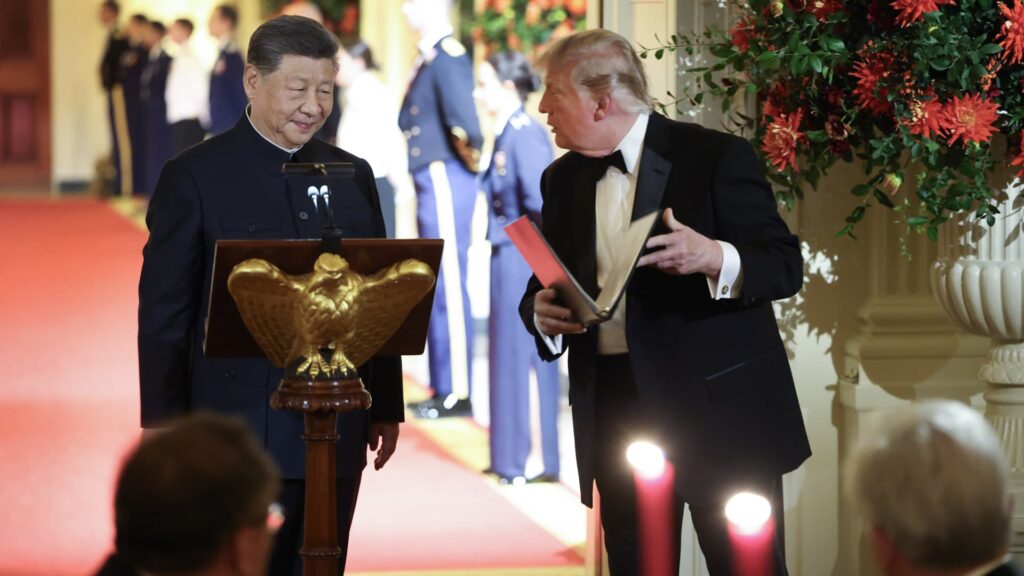
In a recent high-profile summit, U.S. President Donald Trump and Chinese President Xi Jinping demonstrated their commitment to ongoing dialogue amid a backdrop of unresolved tensions. The meeting, held from September 21 to 23, 2026, in Washington, D.C., marked Xi’s second official visit to the United States since 2015. Although the gathering attracted significant attention and a lavish state dinner attended by over 100 guests, the outcomes were described as lacking in substantial advancements, highlighting the delicate balance of diplomatic efforts between the two global powers.
| Article Subheadings |
|---|
| 1) Overview of the Summit |
| 2) Key Discussions and Agreements |
| 3) Historical Context of U.S.-China Relations |
| 4) Trade and Investment Implications |
| 5) Future Prospects of Bilateral Relations |
Overview of the Summit
The summit, held from September 21 to 23, brought together two of the world’s most powerful leaders. President Trump welcomed President Xi at the airport, a rare gesture that underscored the importance of this meeting. Held in the East Room of the White House, the summit featured a lavish state dinner attended by over 100 guests, primarily from government and business sectors. Despite the ceremonial significance, the talks yielded few significant breakthroughs, including a somewhat anticlimactic two-month extension of a previously established trade truce.
Political analysts have pointed out that the lack of tangible outcomes raises concerns about the sustainability of the diplomatic engagement between the two nations. In recent years, U.S.-China relations have become increasingly fraught, and while this summit aimed to promote bilateral cooperation, the absence of a united front in the statements released post-meeting indicates underlying tensions and a need for clarity in their future interactions.
Key Discussions and Agreements
During the summit, Trump and Xi reached a few points of agreement that may lay the groundwork for future dialogues. Both leaders announced intentions to attend the upcoming APEC meeting in Shenzhen in November and the G20 summit in Miami in December, signaling a commitment to maintaining official channels of communication. Additionally, the two countries agreed to hold discussions focused on artificial intelligence (AI), with plans to establish a communication channel specifically designed to address incidents related to AI technologies.
However, discrepancies emerged in how both nations articulated AI-related advancements. While the U.S. referred to “Super Intelligence,” China continued to use the more general term “AI” in its summary of discussions, reflecting potential differences in how each country perceives and prioritizes technological advancements.
The summit also touched on collaborative historical references, with both leaders acknowledging the commonalities forged during World War II, thereby hinting at the potential for cooperation in addressing current geopolitical challenges. This discussion, which emphasized their past alliance against Japan, was interpreted as a diplomatic maneuver to foster goodwill in the face of contemporary tensions related to economic competition and territorial disputes.
Historical Context of U.S.-China Relations
Reference to World War II served a dual purpose during the summit, highlighting the historical alliances between the U.S. and China while addressing contemporary issues that continue to evoke friction between the two countries. Notably, during the welcoming ceremony, Trump mentioned the Flying Tigers, a group of American pilots who fought alongside Chinese forces against Japanese aggressors during the conflict. In contrast, Xi’s toast specifically invoked the shared sacrifices of the two nations, potentially symbolizing an effort to reinforce cooperative ties.
However, contrasting sentiments also emerged, particularly regarding Japan. A social media account known as “Chairman Rabbit,” which is believed to provide insights into Beijing’s perspectives, criticized the Japanese government’s stance on Taiwan, suggesting that Japan suffered the most significant loss from the summit’s discussions. This highlights the interconnectedness of regional politics, particularly concerning China’s position on Taiwan, a self-governing territory beheld by Beijing as part of its sovereign territory.
The emphasis on historical cooperation serves a practical purpose as both nations grapple with the legacy of former alliances while navigating modern tensions, including territorial ambitions in the Asia-Pacific region.
Trade and Investment Implications
In terms of trade, the summit resulted in the formalization of plans regarding the establishment of a Board of Trade and a Board of Investment. Both nations committed to reducing tariffs on approximately $30 billion worth of goods exchanged between them. However, the details surrounding the specific products affected remain ambiguous, with China’s Commerce Ministry indicating intentions to increase coal imports from the United States but withholding further clarification on the volume and timeline.
Experts in the field of international commerce have described the outcomes of the summit as tentative and cautious. Despite the fanfare surrounding the meeting, the fact sheets released by the two sides reflect a mutual wariness. According to the senior advisor at a prominent U.S. think tank, the outcomes on key areas such as trade, rare earth elements, refined oil, and investment were quite limited, suggesting that while discussions occurred, substantial progress on critical issues remains elusive.
In a related development, both sides agreed to initiate discussions on agricultural trade before the end of 2026, a move that aims to address one of the more contentious aspects of their economic relationship. However, implementation timelines for these agreements are still under scrutiny, and analysts warn that without decisive action, the ambitions outlined in the summit could falter.
Future Prospects of Bilateral Relations
Looking ahead, the relationship between the U.S. and China remains complex and fraught with challenges. Analysts remain concerned that while both leaders have expressed a desire for cooperation, existing diplomatic efforts may lack the substance necessary to effect meaningful change. The presence of unresolved strategic issues—ranging from trade imbalances to territorial disputes in the South China Sea—demonstrates that extensive work remains before a sustainable alliance can be established.
Furthermore, the divergent discussions around AI and technology underscore the broader competition for global leadership in these crucial areas. As the world watches, the focus will likely turn to the forthcoming APEC and G20 meetings, where both leaders will have another opportunity to demonstrate their commitment to engagement and dialogue.
The recent arrival of two giant pandas in the U.S., purportedly as a gesture of goodwill coinciding with Xi’s visit, echoes hopes for a softer side of this politically charged relationship. While symbolic gestures such as this can bolster public sentiment, they do little to address the foundational conflicts that define the bilateral relationship.
| No. | Key Points |
|---|---|
| 1 | The U.S. and China committed to ongoing dialogues addressing trade and technological issues during the recent summit. |
| 2 | Significant historical references during the meeting served to underscore the potential for cooperation. |
| 3 | Limited agreements were reached on trade tariffs, revealing cautious diplomatic engagement. |
| 4 | Future meetings, including APEC and G20, may provide opportunities for further discussions. |
| 5 | Public gestures of goodwill may not fundamentally resolve the underlying tensions between the two nations. |
Summary
The summit between U.S. President Donald Trump and Chinese President Xi Jinping illustrates a pivotal moment in the ongoing dialogue between the two nations. While ceremonial gestures and historical references served to highlight potential cooperation, the lack of substantive breakthroughs emphasizes the complexities and challenges that persist in their bilateral relationship. Analysts caution that without effective implementation of agreements and concrete outcomes, the delicate detente established during this meeting may not hold. Attention now turns to forthcoming diplomatic engagements that may further illuminate the prospects for collaboration.
Frequently Asked Questions
Question: What was the main outcome of the recent U.S.-China summit?
The main outcome centered on the commitment to continue dialogues addressing trade and technological issues, although substantial breakthroughs were minimal.
Question: Why do historical references matter in U.S.-China relations?
Historical references serve to reinforce common ground and may facilitate collaboration by recalling shared experiences, particularly those stemming from World War II.
Question: What are the implications of the announced plans for agricultural trade discussions?
The announcement reflects a willingness to engage on contentious issues in trade, signaling potential for negotiation in sectors critical to both economies.