
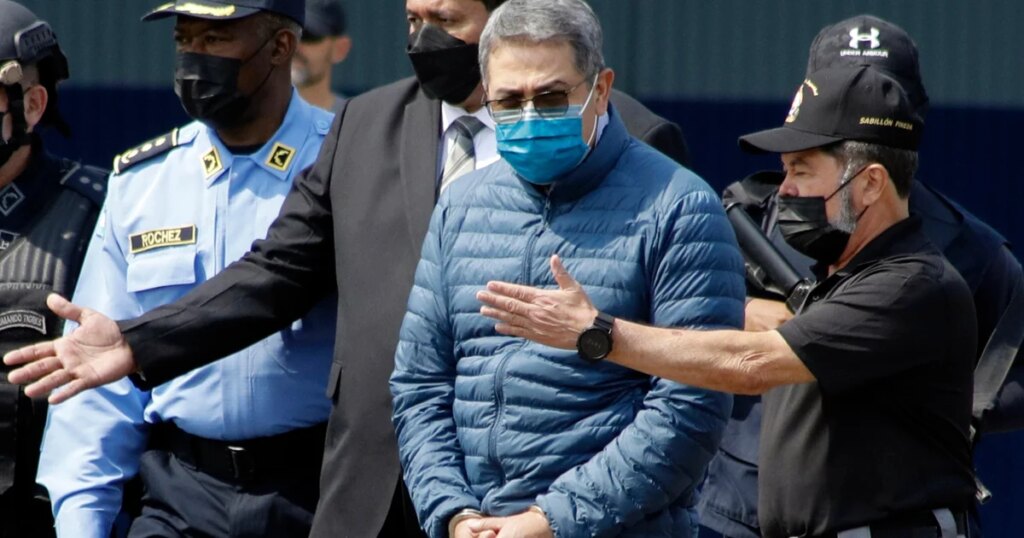
In a dramatic political move, President Trump announced on Friday that he intends to pardon former Honduran President Juan Orlando Hernandez, who was recently convicted and sentenced to 45 years in prison for drug trafficking and weapons charges. This decision, made public via social media, has sparked widespread debate and expressions of gratitude from Hernandez’s family and legal representatives. Hernandez, now serving his time at a federal facility in West Virginia, has consistently maintained his innocence while appealing the conviction, which many supporters claim was politically motivated.
| Article Subheadings |
|---|
| 1) Background on Hernandez’s Conviction |
| 2) Trump’s Justification for the Pardon |
| 3) Reactions from Hernandez’s Family and Supporters |
| 4) Political Implications of the Pardon |
| 5) Future of Honduran Politics and U.S. Relations |
Background on Hernandez’s Conviction
Former President Juan Orlando Hernandez of Honduras was convicted in March 2023 on serious charges of drug trafficking and weapons offenses. His conviction came after extensive testimony in a New York court, where prosecutors argued that he had conspired to facilitate the importation of cocaine into the United States. The prosecution made a case that traced drug trafficking operations back to Hernandez’s time in office, alleging that his presidency coincided with significant increases in drug-related activities throughout Central America. Following a contentious trial that captivated both U.S. and Honduran audiences, Hernandez was sentenced to 45 years in prison, igniting controversy regarding the motivations and integrity of the judicial process.
Trump’s Justification for the Pardon
In announcing his intention to pardon Hernandez, President Trump claimed that multiple respected individuals had informed him that the former president had been treated “very harshly and unfairly.” Trump defended his decision during a press briefing aboard Air Force One, asserting that Hernandez’s conviction was part of a political conspiracy, suggestively orchestrated by adversaries within the United States. “Many of the people of Honduras said it was a Biden setup,” Trump stated, adding that holding Hernandez accountable—which he framed as the president’s wrongful imprisonment—was indicative of overreach within the Justice Department.
Critics of this justification have raised questions about the credibility of Trump’s claims and whether they align with the fact-based judicial proceedings that led to Hernandez’s sentencing. Furthermore, Trump’s reasoning provoked a counter-narrative arguing that pardoning a foreign leader convicted of drug trafficking sends a dangerous message about U.S. commitment to combating organized crime.
Reactions from Hernandez’s Family and Supporters
The response from Hernandez’s family has been overwhelmingly positive. Following the announcement, his wife and children gathered for a heartfelt prayer on the steps of their home in Tegucigalpa, Honduras, expressing gratitude for the possible return of their loved one after nearly four years apart. García, a family spokesperson, conveyed that they had just spoken with Hernandez after the news broke and that he was overwhelmed with emotion upon hearing about the potential for his pardon, stating, “His voice broke with emotion.”
Legal representatives for Hernandez, including attorney Renato C. Stabile, also expressed their gratitude to Trump, proclaiming that “a great injustice has been righted.” This sentiment was echoed by other supporters who believe that Hernandez’s prosecution was a targeted attack led by drug traffickers and political adversaries seeking revenge. However, skepticism remains, particularly among Republican legislators who have criticized the rationale behind the pardon, suggesting it undermines U.S. efforts against drug trafficking.
Political Implications of the Pardon
The implications surrounding the pardon of Hernandez stretch beyond the immediate legal context. Republican Senator Bill Cassidy openly questioned Trump’s decision, drawing parallels between Hernandez’s pardon and ongoing attempts to prosecute other world leaders accused of drug trafficking—such as Venezuelan President Nicolás Maduro. Cassidy tweeted, “Why would we pardon [Hernandez] and then go after Maduro for running drugs into the United States?” Critics argue that such pardons could erode the integrity of U.S. foreign policy, undermining its credibility in advocating for justice and anti-drug initiatives.
Additionally, Trump has linked Hernandez’s situation to larger geopolitical tensions, framing the upcoming Honduran election as a critical moment for the region’s democratic integrity. In a separate message, Trump emphasized the dire consequences should the wrong candidate win, indicating a willingness on the part of the U.S. to directly influence the political landscape in Central America while framing it as a defense against leftist influence.
Future of Honduran Politics and U.S. Relations
As Honduras prepares for elections, the political climate remains fragile. Key political figures, such as Tito Asfura, who represents the conservative National Party, have emerged as frontrunners. Asfura’s campaign has centered around addressing critical infrastructure needs, although his past has been marred by accusations of embezzlement—claims he vehemently denies. Other notable candidates include Rixi Moncada from the incumbent democratic socialist Libre party, and Salvador Nasralla, a former television personality seeking a return to the presidency after several unsuccessful bids.
The outcome of these elections will have significant ramifications for U.S.-Honduras relations. A loss for Asfura could lead Honduras down a path similar to that of Venezuela, a scenario Trump warns against with frequent rhetoric. The unique geopolitical dynamics at play raise questions about the future of international cooperation, especially as outgoing President Xiomara Castro maintains a leftist stance while navigating complex relations with the U.S.
| No. | Key Points |
|---|---|
| 1 | President Trump has announced plans to pardon former Honduran President Juan Orlando Hernandez. |
| 2 | Hernandez was convicted of drug trafficking and is currently serving a 45-year sentence. |
| 3 | The decision to pardon has sparked mixed reactions from political figures and the public. |
| 4 | Supporters argue Hernandez’s conviction was politically motivated. |
| 5 | The future of Honduran politics remains uncertain with significant elections on the horizon. |
Summary
The impending pardon of former Honduran President Juan Orlando Hernandez by President Trump has incited a range of responses reflecting the complex interplay of politics, justice, and diplomacy. As Hernandez navigates the challenges of a criminal conviction marked by serious allegations, the broader implications for U.S.-Honduras relations and upcoming elections could shape the future of governance in Central America. The pardon decision could potentially set a precedent that influences the global perception of U.S. foreign policy and its commitment to combatting drug trafficking.
Frequently Asked Questions
Question: Why was Juan Orlando Hernandez convicted?
Juan Orlando Hernandez was convicted in March 2023 for drug trafficking and weapons charges related to conspiring to import cocaine into the United States during his presidency.
Question: What are the political implications of Trump’s pardon?
Trump’s decision to pardon Hernandez may have significant political ramifications, including debates on U.S. integrity in foreign policy and the perception of drug trafficking enforcement.
Question: What challenges does Honduras face in the upcoming elections?
Honduras is facing critical decisions regarding its political leadership, with candidates like Tito Asfura and Rixi Moncada vying for the presidency amid heightened social and economic issues, which could affect U.S.-Honduras relations.