
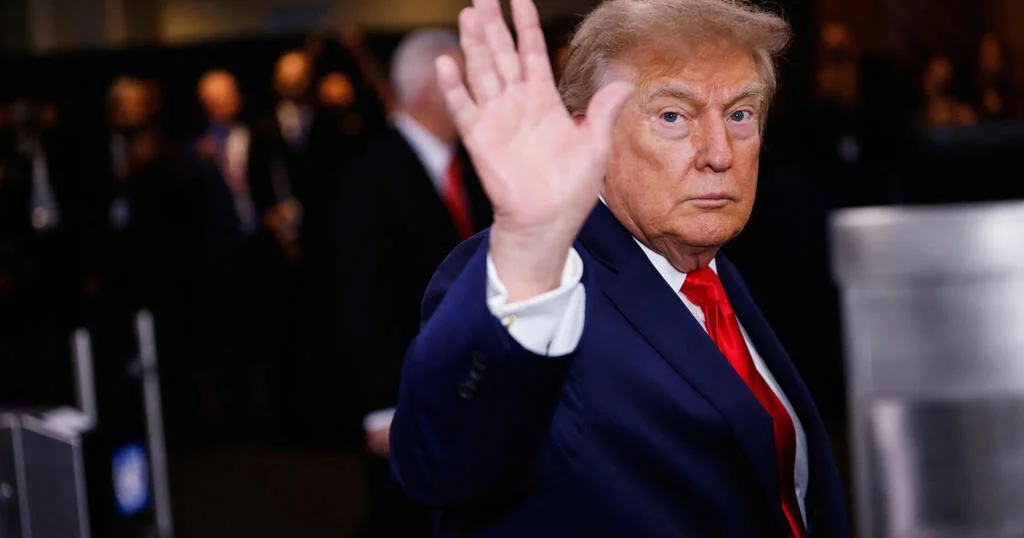
In a move that has sparked controversy and drawn bipartisan criticism, the Trump administration has announced plans to cancel nearly $1 billion in funding that Congress had previously approved. This action, described by some lawmakers as potentially illegal, involves the rescission of funds designated for a variety of programs, including those supporting refugees and educational grants. The administration aims to utilize a rarely employed budget maneuver known as “pocket rescission,” an approach that has faced scrutiny and opposition from both sides of the aisle.
| Article Subheadings |
|---|
| 1) Overview of the Rescission Plan |
| 2) Mechanism of Pocket Rescission |
| 3) Bipartisan Backlash Against the Decision |
| 4) Legal Implications and Challenges |
| 5) Future of Government Spending Under the Trump Administration |
Overview of the Rescission Plan
The Trump administration has formally announced its intention to rescind $967 million of appropriated funds initially designated by Congress for various programs. Among these funding cuts, the Department of Health and Human Services will see a significant reduction of $567 million aimed at services for refugees and other migrants, alongside additional cuts of $50 million for programs benefitting immigrants, $70 million for international education grants, and $56 million earmarked for Housing and Urban Development initiatives. The announcement has raised questions about government accountability and fiscal responsibility.
The White House justifies this drastic measure by emphasizing a commitment to cut what it deems “wasteful and harmful government spending.” This announcement represents a continuation of the administration’s strategy to reassess and potentially repurpose funds based on policy priorities that align with its agenda.
Mechanism of Pocket Rescission
The process employed by the Trump administration to carry out these rescissions is known as a “pocket rescission.” This tactic involves notifying Congress close to the fiscal year’s end regarding the intent to not use appropriated funds. According to the Impoundment Control Act, although the president is afforded the authority to propose budget cuts, Congress retains the power to disapprove these proposals within 45 legislative days. However, the timing of these announcements can indeed prevent proper legislative review, effectively allowing for the funds to expire if not acted upon sufficiently quickly.
The fiscal year is approaching its conclusion, and these late-stage notifications have led to criticism regarding the legitimacy and ethics of the administration’s actions. In this instance, the approach raises concerns regarding whether such rescissions serve the public interest or if they disregard the legislative process altogether for political expediency.
Bipartisan Backlash Against the Decision
Lawmakers from both political parties have voiced strong opposition to the recent funding cuts, casting doubt on the legality of the rescission process. Notably, Republican Senator Susan Collins of Maine, who chairs the Senate Appropriations Committee, condemned the administration’s lack of communication, referring to the announcement of $810 million in pocket rescissions as being made “without warning or consultation.” This sentiment captures a growing fracture in bipartisan trust surrounding the administration’s budgetary choices.
Senator Collins issued a pointed statement, criticizing what she perceives as a violation of the law, reiterating that the Government Accountability Office has indicated that pocket rescissions may not hold legal ground. In her view, any attempt to rescind funds already approved by Congress constitutes a significant infringement upon legislative authority.
Democrat Representative Rosa DeLauro of Connecticut echoed the sentiment, describing the administration’s maneuvers as attempts to “steal” funding that was promised to essential community programs nationwide. This characterization emphasizes the broader concerns among lawmakers regarding potential impacts on social services and community initiatives.
Legal Implications and Challenges
The legal implications surrounding the recent pocket rescission are profound, particularly given the precedent set by similar actions in the previous year. The Trump administration had employed the same strategy last fiscal year, leading to the cancellation of nearly $4.9 billion in foreign aid funds. This particular rescission effort was challenged legally, culminating in a Supreme Court decision that ultimately sided with the administration, albeit without making a definitive ruling on the merits of the case.
The controversy surrounding these budget actions may lead to further legal challenges. If organizations reliant on the rescinded funds pursue litigation, it could set off additional legal disputes, compelling courts to grapple with the boundaries of executive fiscal authority and legislative responsibility. Furthermore, several lawmakers are now expressing intentions to introduce measures aimed at preventing such unilateral actions in the future, seeking to solidify the legislative process in budgetary decisions.
Future of Government Spending Under the Trump Administration
Looking ahead, the ongoing funding cuts may foreshadow a broader shift in government spending priorities under the Trump administration. With a firm commitment toward reducing expenditures related to immigration services and international programs, it remains to be seen how these changes will impact various sectors within the country. Community services vital to migrant populations could experience significant strain as funding shortages take hold.
As the administration continues to navigate its constitutional authority versus congressional appropriations, the potential for further conflicts remains high. Efforts to redefine fiscal priorities not only shape the immediate landscape of funding but also set far-reaching implications for future budgetary decisions under subsequent administrations.
| No. | Key Points |
|---|---|
| 1 | The Trump administration plans to cancel nearly $1 billion in appropriated funds. |
| 2 | The administration is utilizing the pocket rescission process to execute these cuts. |
| 3 | There is significant bipartisan backlash among lawmakers against the rescission strategy. |
| 4 | The legal implications of pocket rescissions may lead to further challenges and potential reforms. |
| 5 | Future government spending priorities may continue to shift under this administration’s approach. |
Summary
The decision of the Trump administration to rescind nearly $1 billion in funding demonstrates an assertive approach towards reshaping fiscal priorities, drawing significant criticism and legal considerations. With a process that may undermine legislative authority and face scrutiny from various sectors, the administration’s strategy opens discussions on governmental spending and accountability. As congressional leaders respond to potential violations of legislative processes, the implications for both immediate community services and overall governance remain to be seen.
Frequently Asked Questions
Question: What is a pocket rescission?
A pocket rescission is a budget maneuver wherein the president notifies Congress of the intent to not spend appropriated funds. This action can prevent funds from being utilized effectively during the fiscal year unless Congress acts quickly enough to approve or disapprove the rescission.
Question: Why have lawmakers criticized the recent funding cuts?
Lawmakers have criticized the funding cuts as potentially illegal actions taken without sufficient consultation. Many believe such rescissions infringe upon congressional authority and violate legislative processes, undermining the bipartisan agreement originally reached when these funds were allocated.
Question: What might be the consequences of these funding rescissions?
The rescission of funding may lead to significant impacts on community services reliant on these funds, particularly those aiding refugees and immigrants. Additionally, these actions could lead to increased legal disputes as affected organizations challenge the administration’s authority, prompting potential changes in future government spending practices.