
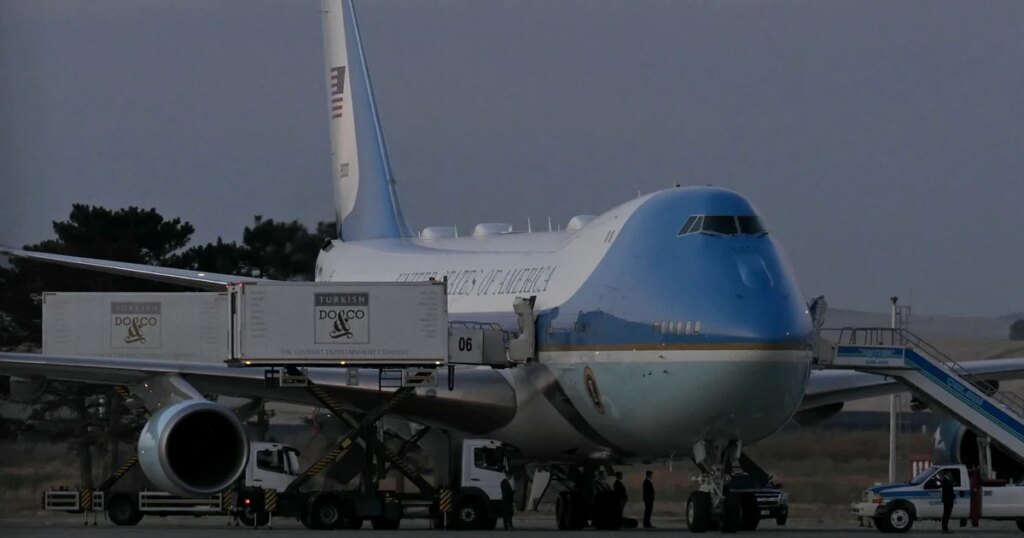
A recent security maneuver involving President Donald Trump has come to light, revealing a covert plane-switching operation at the Ankara airport during last month’s NATO summit. As intelligence indicated a credible missile threat from Iran, members of the Trump administration executed a precautionary strategy that involved a sudden, discreet transfer from Air Force One to a separate aircraft. This incident underscores the complexities and heightened risks associated with presidential travel amidst geopolitical tensions.
| Article Subheadings |
|---|
| 1) Background of the NATO Summit and its Importance |
| 2) Details of the Plane-Switching Operation |
| 3) Implications of Security Leaks |
| 4) Official Responses and Reactions |
| 5) Future Considerations for Presidential Security |
Background of the NATO Summit and its Importance
The recent NATO summit held in Ankara, Turkey, was a critical gathering involving multiple world leaders discussing pressing global security issues, particularly concerning Russia and its military actions. Donald Trump attended this summit amidst rising tensions between the U.S. and Iran, with both nations engaged in a series of aggressive statements and military posturing.
In this geopolitical context, the summit served not just as a platform for dialogue but also as a stage for showcasing unity among NATO allies. The leaders exchanged views on cooperative defense initiatives and strategies to counter threats from hostile states. However, while discussions flowed, intelligence officials in the U.S. were on high alert regarding the potential dangers that could arise from adversarial nations during the summit.
Given the delicate situation with Iran, where heightened military activities have been noted, the meeting risked becoming a flashpoint. Hence, Donald Trump was briefed on the threats and expressed his belief that he had become “Iran’s number one target,” elevating the necessity for heightened security measures during his travels.
Details of the Plane-Switching Operation
The decision to switch planes was made just before Trump was set to depart from Turkey. Intelligence agencies had alerted the administration to a credible plot aimed at targeting his aircraft. As a result, the U.S. Secret Service orchestrated a plan utilizing a catering truck to facilitate the covert movement of the president. This last-minute ruse involved him boarding an Air Force C-32A, all while the main press and presidential staff believed they were still on the original Air Force One.
Footage captured by reporters showed the apparent ease of the plot, allowing Trump to ascend the staircase of Air Force One before directly entering a vehicle that apparently masked his transport. Observers on the ground later confirmed that the catering truck, utilized in the execution of this maneuver, skillfully concealed the true nature of the flight arrangement as it drove away from the tarmac.
This operation not only reflects the lengths to which government officials will go to ensure the president’s safety but also elucidates the gravity of the threats faced during such high-profile events. Upon reaching the United Kingdom, the president seamlessly switched back to using the newer Air Force One, a stylish aircraft newly fitted with cutting-edge security features, thus continuing his journey.
Implications of Security Leaks
In the wake of the operation’s revelation, various officials expressed concern over the exposure of highly classified strategies that protect the President. The leak of information regarding the plane-switching measures jeopardizes similar tactics in the future, as potential adversaries gain insight into the operational security methods used by the U.S. government.
Critics within the Trump administration voiced frustration over the public exposure and asserted that it could limit their operational flexibility in safely transporting current and future presidents. They argue that maintaining the integrity of security methods is crucial to safeguarding the highest office in the land.
The ramifications of such leaks extend beyond immediate security concerns; they also intersect with ongoing discussions about national intelligence and operational transparency. The administration’s struggle to deal with the aftermath of such disclosures highlights the complex balance of openness and secrecy in government operations.
Official Responses and Reactions
In light of the revelations, the White House officials reaffirmed their commitment to utilizing state-of-the-art security for presidential transportation. Steven Cheung, the White House communications director, emphasized the importance of advanced security measures in ongoing statements, remarking that “the new Air Force One is a state-of-the-art aircraft that has been fitted with high-level security protocols.”
Cheung’s comments represent an effort to assure the public that the administration is taking threats seriously while also maintaining a level of operational security. Furthermore, the Air Force has echoed these sentiments, assuring that the current fleet of presidential planes is equipped with the latest technologies necessary for ensuring stability and safety during all flights.
This public messaging aims to mitigate concerns regarding vulnerabilities in presidential travel, serving both to reassure the public and to fortify the administration’s narrative amidst backlash over prior operational decisions.
Future Considerations for Presidential Security
The events surrounding the NATO summit have undoubtedly added a layer of complexity to how presidential security will be handled moving forward. The increasing sophistication of threats necessitates that security protocols adapt rapidly to evolving circumstances to ensure the safety of officials. As geopolitical tensions continue to rise, specifically with adversaries like Iran, the need for robust protection strategies will only intensify.
Looking ahead, it will be vital for the U.S. government to prioritize improved communication among security agencies to respond to threats effectively. More than ever, it will require a collaborative approach between the Secret Service, military intelligence, and the diplomatic corps to create comprehensive plans that address potential vulnerabilities and passive threats.
The necessity for careful operational security must also resonate within the media landscape, as leaks can undermine these efforts. Thus, protections must extend not only to the physical realm but also to information dissemination across the media and other platforms.
| No. | Key Points |
|---|---|
| 1 | President Donald Trump undertook a covert plane-switching operation at Ankara’s airport due to a credible missile threat. |
| 2 | The switch involved a catering truck to facilitate the transfer to a separate Air Force C-32A aircraft. |
| 3 | Reports exposing the method used sparked concerns regarding future leaks affecting presidential security protocols. |
| 4 | The White House has reaffirmed its commitment to high-level security measures in response to ongoing threats. |
| 5 | Future considerations for presidential travel will require enhanced coordination among all security entities. |
Summary
The covert operation to switch President Trump’s plane during the NATO summit illustrates the heightened risks and complexities of presidential travel in the contemporary geopolitical landscape. With ongoing threats from adversaries such as Iran, maintaining strict security protocols is paramount. The revealing details of this incident not only underscore the importance of operational security for presidential movements but also raise concerns regarding leaks that can compromise future protocols. As tensions persist, the evolution of security measures is essential in ensuring safe passage for the nation’s leaders.
Frequently Asked Questions
Question: What prompted the plane-switching operation in Ankara?
The operation was prompted by credible intelligence that indicated a potential missile threat from Iran, necessitating heightened security measures for President Trump during his travel.
Question: How did the transfer from Air Force One take place?
The transfer involved employing a catering truck to discreetly transport the president from Air Force One to an Air Force C-32A, allowing him to bypass normal checks in a stealthy manner.
Question: What are the implications of security leaks for presidential safety?
Security leaks can expose methods and protocols that protect presidential travel, potentially compromising future operations and making it easier for adversaries to plan targeted attacks.