
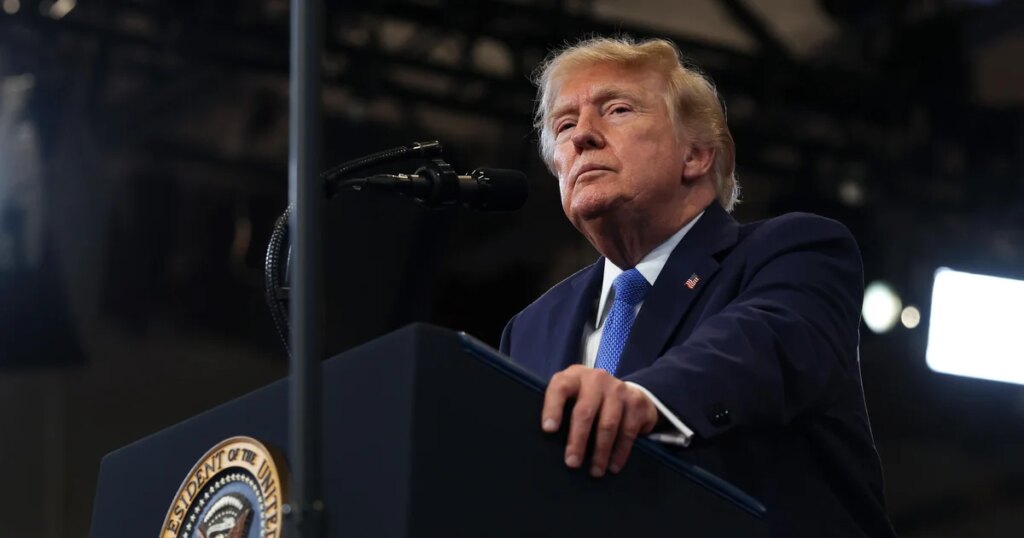
In a significant announcement, President Trump revealed a pivotal deal that grants the United States majority control over approximately 60 billion barrels of proven oil reserves in Venezuela. This agreement comes as part of the administration’s broader efforts to encourage oil companies to return to the country following a military operation that resulted in a change of leadership earlier this year. The deal has been touted as a potential boon for both U.S. oil supply and Venezuela’s struggling economy, although questions about long-term viability remain.
| Article Subheadings |
|---|
| 1) The Details of the Oil Agreement with Venezuela |
| 2) Implications for the U.S. and Venezuelan Economies |
| 3) Challenges in Venezuela’s Oil Industry |
| 4) Historical Context: The U.S. and Venezuela Relations |
| 5) Industry Reactions and Future Prospects |
The Details of the Oil Agreement with Venezuela
President Trump’s administration announced a groundbreaking deal that grants the United States a 55% stake in a joint venture controlling Venezuela’s extensive oil fields, which are estimated to hold approximately 65 billion barrels of proven oil reserves. This partnership is expected to last 100 years and involves private companies working alongside the U.S. government. According to a U.S. official, this venture may emerge as the second-largest corporate owner of proven oil reserves globally, following Saudi Aramco.
Trump emphasized that the deal was made “at no cost to the American taxpayer,” suggesting a favorable arrangement between the government and private entities. This statement hints at the strategy to revitalize both the U.S. oil sector and Venezuela’s economy through this partnership. Although no specific companies have been disclosed as partners in the venture, the landscape of foreign companies still operating in Venezuela is limited, primarily consisting of U.S.-based Chevron, Spain’s Repsol, and Italy’s Eni.
Implications for the U.S. and Venezuelan Economies
This deal not only aims to bolster American oil reserves but is also projected to have a significant impact on the Venezuelan economy. Secretary of State Marco Rubio indicated that the agreement is expected to attract nearly $100 billion in private investments, supporting thousands of high-paying jobs and contributing to the reconstruction of Venezuela’s economy. Venezuelan President Delcy Rodriguez affirmed that the deal constitutes a “historic agreement” that could result in over $209 billion in tax revenue for the Venezuelan government, thus reviving its battered economy.
The dual focus on economic stimulation for both nations is compelling, particularly since rising oil production could lead to decreased gas prices across the United States. However, how quickly these benefits materialize depends on various factors, including the speed of investment flows and regulatory challenges that may arise.
Challenges in Venezuela’s Oil Industry
Despite the enticing prospects of this deal, the Venezuelan oil industry has faced significant challenges over the years. Historically, the nation has the largest proven oil reserves in the world—over 300 billion barrels—yet its oil sector has been plagued by underinvestment, outdated infrastructure, and stringent sanctions. Most major oil companies like ConocoPhillips and ExxonMobil departed from Venezuela when former President Hugo Chávez nationalized their assets in the early 2000s, and this has fostered a climate of distrust towards foreign investments.
These structural issues pose risks for potential investors who may be wary of entering a market with a history of government intervention and expropriation. For example, ExxonMobil’s CEO Darren Woods previously stated that while there is an opportunity, the historical context makes Venezuela “uninvestable” without significant systemic changes.
Historical Context: The U.S. and Venezuela Relations
The relationship between the United States and Venezuela has been fraught with tension, particularly since the rise of Hugo Chávez in 1999. As Chávez nationalized oil assets and prioritized socialist policies, numerous U.S.-based firms exited the country, leading to a historical decline in cooperative business ventures. The turning point came earlier this year when U.S. military forces captured Chávez’s successor, Nicolás Maduro, leading to the ascension of interim leader Delcy Rodriguez.
Since Rodriguez assumed power, the U.S. administration has made concerted efforts to engage with her government to foster economic relations. This aligns with a broader strategy to alleviate the crippling impact of sanctions on both countries, countering global oil price fluctuations through greater oil production.
Industry Reactions and Future Prospects
Reactions from the oil industry have been mixed following the announcement of this historic deal. Some independent firms have demonstrated a willingness to engage in negotiations, with reports indicating that Hunt Oil Company was in discussions with the state-run Petróleos de Venezuela, S.A. earlier this month. Conversely, large corporations continue to express hesitance, citing the uncertain laws and political climate surrounding the Venezuelan oil industry.
The challenges faced by these firms extend beyond domestic factors, as international oil prices and geopolitical tensions continue to shift. Companies such as ExxonMobil are cautiously monitoring the landscape. Woods reiterated the need for “significant changes” before committing further resources to Venezuela, emphasizing that the previous history of asset seizures remains a significant concern for potential investors.
| No. | Key Points |
|---|---|
| 1 | The deal grants the U.S. majority control of 60 billion barrels of Venezuelan oil reserves. |
| 2 | It aims to stimulate both the U.S. oil industry and the Venezuelan economy. |
| 3 | The U.S. government will have a 55% stake in a private joint venture. |
| 4 | Venezuela’s oil industry has been historically troubled, causing investor apprehension. |
| 5 | Reactions from industry players include cautious optimism and concerns about legal uncertainties. |
Summary
The newly announced deal between the United States and Venezuela to control a substantial portion of Venezuelan oil reserves reflects a complex interplay of political, economic, and historical factors. While the agreement promises to enhance oil supply and potentially lower prices for Americans, the execution is fraught with challenges stemming from Venezuela’s tumultuous oil industry and its legacy of expropriation. Moving forward, successful cooperation will hinge on rebuilding trust between foreign investors and the Venezuelan government, along with navigating the legal landscape that continues to evolve.
Frequently Asked Questions
Question: Why is the U.S. interested in Venezuelan oil reserves?
The U.S. seeks to bolster its oil supply, reduce gas prices for consumers, and invest in the Venezuelan economy, which has been severely impacted by years of mismanagement and sanctions.
Question: What challenges does the Venezuelan oil industry face?
Venezuela’s oil industry has struggled with underinvestment, outdated infrastructure, and a lack of trust from foreign investors due to historical asset seizures and political instability.
Question: What does the joint venture mean for oil prices in the U.S.?
The joint venture may lead to increased production of oil, thereby potentially lowering gas prices for American consumers over time, while also stimulating Venezuela’s economy.