
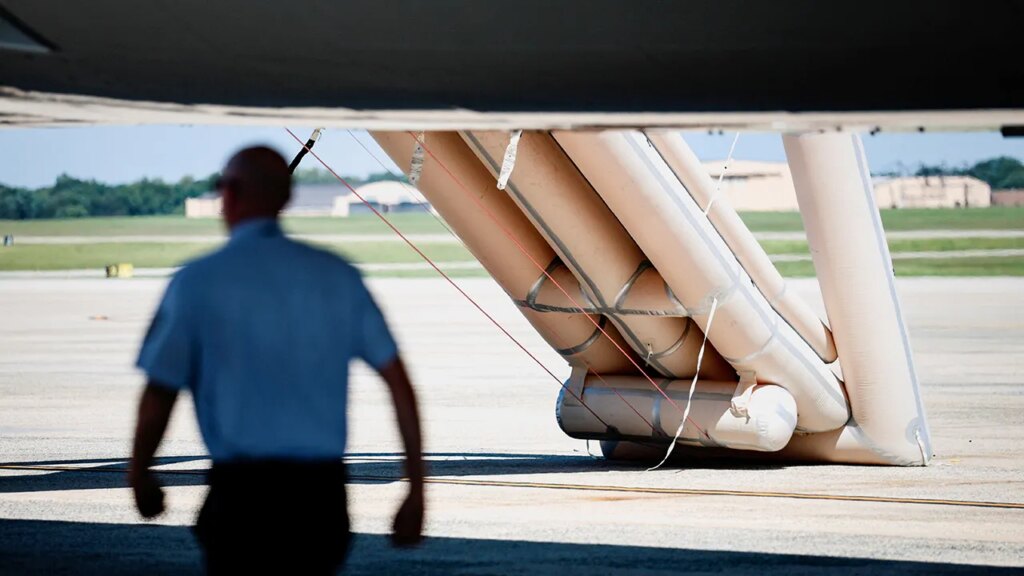
An unusual scene unfolded at Joint Base Andrews when an inflatable emergency slide from Air Force One was deployed, causing curiosity and concern among onlookers. President Donald Trump, who was present at the location, later clarified that the deployment was a standard safety check and not an emergency situation. This incident reveals the complexities and rigorous safety protocols associated with presidential travel and highlights ongoing discussions about the logistics of the presidential aircraft.
| Article Subheadings |
|---|
| 1) Overview of the Incident |
| 2) President Trump’s Response |
| 3) Safety Protocols for Air Force One |
| 4) Implications for Presidential Travel |
| 5) Future of Air Force One Operations |
Overview of the Incident
On Wednesday, an emergency slide was unexpectedly deployed from the Qatari-gifted Air Force One at Joint Base Andrews, raising eyebrows among spectators, especially since it occurred during the preparation for President Donald Trump‘s travel. The incident commenced shortly after the president disembarked from Marine One, the helicopter that transports the president to and from Air Force One. This deployment was distinctly visible to the assembled media and personnel on the tarmac.
As the inflatable slide extended from the aircraft, it sparked immediate questions about the reasons behind such an unusual event. Typically, emergency slides are tested during regular maintenance checks; however, their deployment in public view raised concerns regarding the aircraft’s readiness or possible safety issues. Witnesses described the scene as chaotic, as the aircraft’s crew quickly assessed the situation.
The incident is uncommon but not entirely unprecedented, as emergency protocols are an integral part of aircraft operations. While the focus on the slide may have temporarily shifted attention away from the president’s activities, it also provided a glimpse into the rigorous safety measures surrounding presidential travel.
President Trump’s Response
Once the dust settled and Trump addressed the media, he sought to dispel any notions that the slide’s deployment was a cause for alarm. Standing on the tarmac near Marine One, he informed reporters that the deployment was a proactive measure. “They were checking it before, and they just wanted to make sure,” he stated. This statement underscored the importance of maintaining safety standards and verifying aircraft functionality.
The president expressed appreciation for the diligence of the Air Force personnel, who routinely ensure that all equipment is fully operational before flight. Though the deployment raised initial concerns, Trump reassured the public that it was a precautionary action rather than a response to any emergent issue. His emphasis on ensuring that everything works “perfectly” indicates an understanding of how such incidents could be interpreted by the public and the media.
Safety Protocols for Air Force One
Aircraft safety protocols are stringent, especially for a plane designated for the president of the United States. Air Force One operates under strict maintenance guidelines that include regular inspections, routine checks, and emergency drills, ensuring the highest preparedness level at all times. The deployment of emergency slides is part of this safety framework, designed to equip the aircraft for any potential emergencies.
Typically, emergency slide tests are part of pre-flight checks, where the crew verifies that all emergency equipment is functioning properly. Highlighting these procedures is vital in illustrating the immense responsibility resting on the shoulders of those managing presidential travel logistics. It serves as a reminder that while political events may dominate headlines, the associated safety measures operate behind the scenes, ensuring that no stone is left unturned in safeguarding the president and the crew.
Implications for Presidential Travel
The deployment incident not only brings to light the standard operating procedures concerning Air Force One but also provides a window into the potential challenges of presidential travel. Any disruption, no matter how minor, can lead to cascading events affecting the president’s schedule and public appearances. The logistics involved exceed beyond just taking off and landing; they require seamless coordination among multiple agencies, including the Secret Service, Air Force personnel, and the White House communications team.
In this scenario, it initially remained unclear whether the slide deployment would postpone or alter the president’s planned travels, illustrating the intricate relationship between safety and operational efficiency. When protocols are visibly activated, it can lead to speculation that diverts attention from political agendas, underscoring the ever-present need for measures that preserve national security while facilitating executive operations.
Future of Air Force One Operations
Looking ahead, the operations surrounding Air Force One and its accompanying safety protocols are poised to evolve continually. As the fleet of presidential aircraft prepares for modernization, officials are exploring enhancements that incorporate newer technology, addressing not only the demands for greater safety but also the evolving nature of air travel and security threats. Notably, attention will likely remain on integrating up-to-date tracking systems, advanced communication technologies, and enhanced security features indispensable for flights carrying the president.
The recent deployment incident serves as an important case study for military and aviation authorities to evaluate existing protocols and make necessary adjustments. Ensuring that Air Force One remains a symbol of safety, security, and American leadership is paramount, necessitating constant improvement in operational practices. As protocols adapt to new challenges, the commitment to maintaining a flawless operational standard remains unwavering.
| No. | Key Points |
|---|---|
| 1 | An emergency slide was deployed from Air Force One, raising questions about safety procedures. |
| 2 | President Trump clarified that the deployment was part of routine safety checks. |
| 3 | Safety protocols for presidential travel include regular inspections and emergency drills. |
| 4 | The incident underscores the complexity and challenges of presidential travel logistics. |
| 5 | Future operations are expected to integrate advanced technology to enhance safety measures. |
Summary
The incident involving the deployment of an emergency slide from Air Force One has shed light on the rigorous safety checks and protocols essential for presidential air travel. President Donald Trump reassured the public that the action was routine, emphasizing the commitment to safety and operational readiness. As the evolution of Air Force One continues, this incident illustrates the ongoing need for vigilance and adaptation in the face of changing security dynamics.
Frequently Asked Questions
Question: What triggered the emergency slide deployment on Air Force One?
The deployment was part of a routine safety check conducted to ensure all equipment was functioning properly before the plane’s next flight.
Question: How does the deployment of safety protocols affect presidential schedules?
While emergency equipment checks like slide deployments are essential for safety, they can temporarily disrupt the logistics involved in presidential travel, potentially affecting scheduled events.
Question: What steps are being taken for the future operations of Air Force One?
Future operations will incorporate advanced technologies and enhanced security features to improve safety and operational efficiency while adapting to evolving threats.