
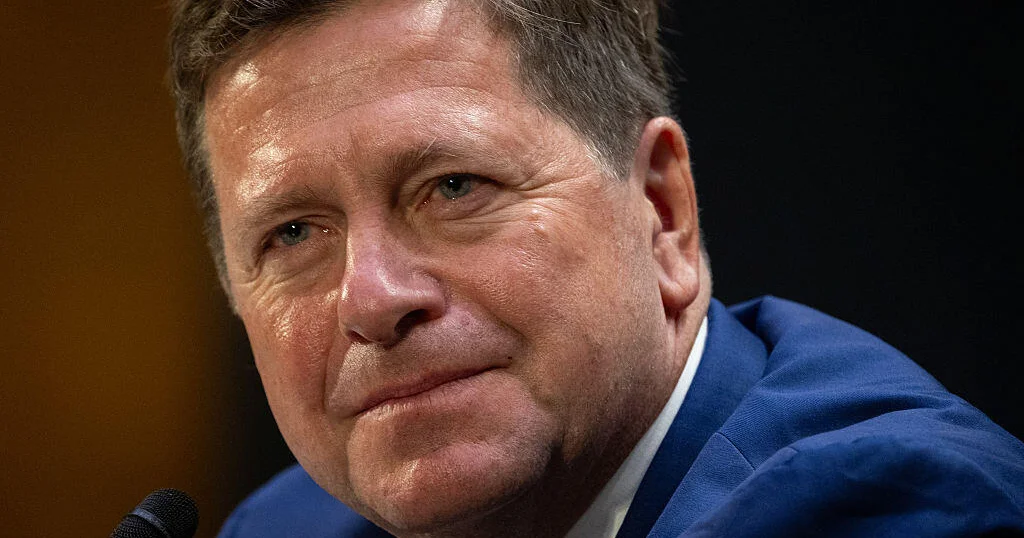
In a significant move for the U.S. government, former Securities and Exchange Commission chairman Jay Clayton is poised to be appointed as the White House’s AI czar. This development comes amidst ongoing discussions about the oversight of artificial intelligence technology, a subject of increasing importance given its rapid advancement and potential implications. President Donald Trump is expected to finalize this decision soon, prompting conversations about regulatory frameworks as industry leaders converge on approaches for ensuring AI safety.
| Article Subheadings |
|---|
| 1) The Appointment of Jay Clayton as AI Czar |
| 2) The Role of the AI Czar in a Changing Landscape |
| 3) Industry Perspectives on AI Regulations |
| 4) The White House Summit on AI Safety |
| 5) Summary of the AI Regulatory Environment |
The Appointment of Jay Clayton as AI Czar
The likelihood of Jay Clayton being named the AI czar stems from his extensive experience in law and governance, particularly as he served as the director of national intelligence prior to this consideration. His confirmation as director was solidified by the Senate in July, and he has earned a reputation as a trustworthy and capable leader. President Trump previously hinted at Clayton’s appointment on social media, indicating a desire for individuals of high intelligence to lead in the management of AI technologies. This announcement is critical as it points to the administration’s recognition of the importance of having a dedicated figure to oversee developments and regulations regarding AI.
The Role of the AI Czar in a Changing Landscape
As the AI czar, Clayton will assume a pivotal role in navigating the complexities associated with AI regulation. His responsibilities will likely include advising on governmental policies and fostering communication between government and key industry stakeholders. This position is not just a bureaucratic appointment; it signifies a commitment to understanding the fast-paced evolution of AI technologies. As discussions evolve, Clayton will be expected to advocate for strategies that balance innovation and regulation, whilst addressing the potential risks and benefits of AI on society.
Industry Perspectives on AI Regulations
The conversation surrounding AI regulation involves various industry leaders and experts, each bringing their perspective to the table. For instance, Dario Amodei, CEO of Anthropic, and Sam Altman, CEO of OpenAI, have underscored the necessity of creating a framework aimed at “pacing the frontier” of AI development. Their focus is on ensuring that advancements in AI are met with adequate safety measures to mitigate risks. Conversely, prominent figures such as David Sacks, former crypto and AI czar, and Jensen Huang, CEO of Nvidia, contend that many concerns regarding AI’s threats may be exaggerated.
This evolving debate highlights the divide in attitudes towards AI regulation; some advocate for preemptive legislation to protect the public, while others urge caution against stifling innovation. This dichotomy points to the broader challenges faced by policymakers: how to regulate a sector that is rapidly changing and integral to future economic growth. The imminent appointment of Clayton is intended to help bridge this divide and create effective dialogue between the government and technology firms.
The White House Summit on AI Safety
A recent summit at the White House brought together leaders from major AI organizations, including OpenAI, Google, Meta, and SpaceXAI, to discuss the safety and ethical implications of AI technologies. During this meeting, the leaders committed to implementing various internal controls and external audits to ensure the responsible functioning of their AI models. President Trump characterized this commitment as “morally binding” and likened it to a foundational document or constitution meant to govern the principles of AI development.
This summit illustrated the administration’s proactive approach towards regulating AI technologies. Through collaboration with industry leaders, the government seeks to instill confidence in the responsible development of AI while emphasizing that self-regulation can yield effective results. Trump emphasized the importance of addressing the public’s concerns while recognizing the sector’s economic potential, reiterating that federal law enforcement should handle any potential misuse of AI instead of imposing strict regulations.
Summary of the AI Regulatory Environment
The U.S. government’s strategy on AI regulation is still evolving but indicates a clear intent to monitor and guide the development of this transformative technology. With Jay Clayton‘s anticipated appointment as the AI czar, there is a strong signal that the administration prioritizes a balanced approach—driven by the twin goals of innovation and safety. As discussions unfold, it will be essential for industry leaders and policymakers to work collaboratively to foster an environment where AI can thrive without compromising public safety.
| No. | Key Points |
|---|---|
| 1 | Former SEC chairman Jay Clayton is likely to be appointed as the AI czar to oversee the regulation of artificial intelligence. |
| 2 | The role underscores the administration’s commitment to understanding and managing the impacts and risks associated with rapid AI advancements. |
| 3 | Industry leaders are divided on AI regulations, with some advocating for immediate safeguards while others warn against excessive control. |
| 4 | The recent White House summit focused on creating voluntary safety standards through collaboration between the government and industry leaders. |
| 5 | The emerging regulatory landscape highlights the need for dialogue and innovative policy solutions that empower technological growth and protect the public. |
Summary
The appointment of Jay Clayton as the AI czar is poised to play a crucial role in the regulation and development of artificial intelligence in the United States. With President Trump emphasizing the role of innovation, this strategic move aims to address public concerns regarding AI’s implications while harnessing its potential benefits. As the regulatory environment continues to evolve, the collaboration between government officials and industry leaders will be essential to facilitate responsible growth in this dynamic field.
Frequently Asked Questions
Question: What is the role of the AI czar?
The AI czar’s role includes guiding the development of artificial intelligence within government frameworks, consulting with industry leaders, and ensuring the safe integration of AI technologies into society.
Question: Why is AI regulation important?
AI regulation is important to mitigate risks associated with artificial intelligence, protect public safety, and ensure ethical practices are maintained in the development and deployment of AI technologies.
Question: What are industry leaders’ perspectives on AI safety?
Industry leaders are divided, with some advocating for proactive regulations to ensure safety and others arguing that such regulations could hinder technological advancements.