
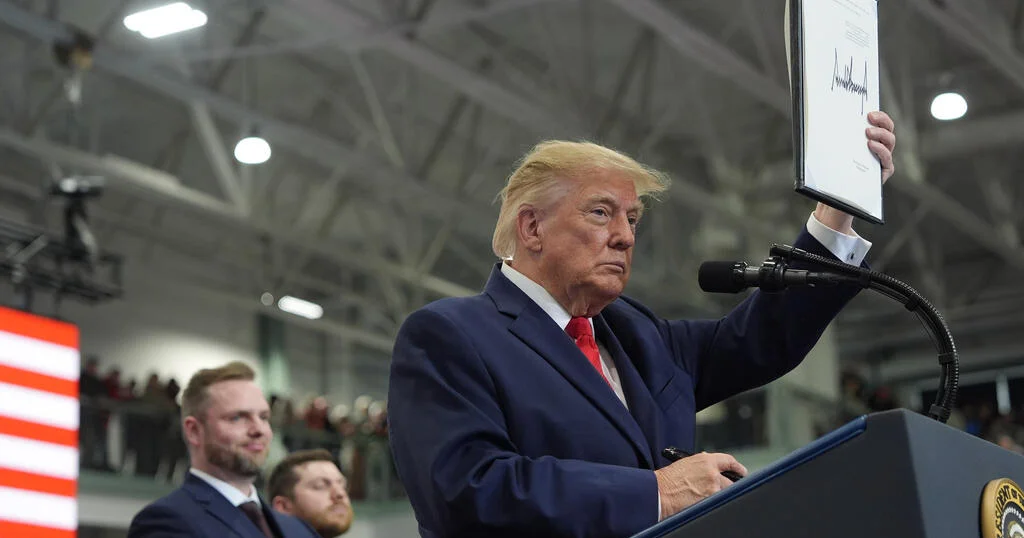
In a fervent political rally held in Wasilla, Alaska, President Trump granted onstage pardons to two local auto shop owners, Zachary Czubak and Patrick Fleming, who previously pleaded guilty to violating the Clean Air Act. This public display of clemency has been interpreted as a comment on the Biden administration’s environmental regulations. The president characterized the actions against the pair as part of a broader campaign by federal authorities to suppress Alaska’s economic practices, particularly those involving diesel vehicles.
| Article Subheadings |
|---|
| 1) Overview of the Clean Air Act Violations |
| 2) The Presidential Rally and Public Pardons |
| 3) Responses from the Pardoned Individuals |
| 4) Political Implications and Reactions |
| 5) The Future of Environmental Regulations |
Overview of the Clean Air Act Violations
The Clean Air Act is a comprehensive federal law regulating air emissions from stationary and mobile sources. In 2022, Zachary Czubak, Patrick Fleming, and another individual, Michael Hanzuk, who collectively operated an auto shop named Arm Rippin Toys, faced legal action for violating this Act. According to court documents, the trio allegedly engaged in operations that involved the illegal modification of diesel vehicles. They marketed these modifications as a solution to improve vehicle performance. It was claimed that they offered to remove emissions control systems from customers’ vehicles for fees ranging from $1,140 to $5,445, effectively allowing the vehicles to emit more pollutants without triggering onboard diagnostic systems.
All three men pleaded guilty to conspiracy charges related to the Clean Air Act. The consequences of their actions included five years of probation, a fine amounting to $66,000 each, and mandated community service. The case stirred significant controversy, highlighting the tension between regulatory agencies and local businesses operating under different conditions, particularly in regions with harsh climates.
The Presidential Rally and Public Pardons
During a pre-midterm election rally on Tuesday, President Trump took the unprecedented step of granting pardons to Czubak and Fleming in front of a cheering crowd. The rally in Wasilla, Alaska, brought together supporters who celebrated the president’s controversial stance on environmental regulations. Trump, describing the duo as wrongly charged, suggested that they were victims of the Biden administration’s overreach. He made a public appeal to the spectators, encouraging them to view the charges against the two men as an attack on their way of life.
The spectacle of his actions drew applause from thousands who had gathered, showcasing the popularity of Trump’s narrative among his base regarding the perceived injustices faced by Alaskans. While signing the pardons live, the president held up the documents, stating that they signified that the pardoned individuals were “as clean as a newborn baby’s ass,” eliciting laughter and cheers from the audience.
Responses from the Pardoned Individuals
Both Czubak and Fleming expressed gratitude towards the president during their brief remarks at the rally. Fleming described the ordeal they went through, stating, “The charges against us really did destroy us.” He asserted their innocence, claiming that their intention was never to harm anyone but rather to assist Alaskans who rely on diesel vehicles. His statement reflected a sentiment shared by many in the audience, expressing skepticism regarding the charges brought against them.
Their perspective resonates with a vocal segment of the Alaska population that feels under siege by federal regulations perceived as unjust or disproportionate to the realities of the local economy. The rally became not only a moment of personal vindication for the two men but also a broader rallying cry against federal oversight perceived as intrusive.
Political Implications and Reactions
The legal issues surrounding Czubak, Fleming, and Hanzuk have larger political ramifications. The case against them was cited as part of a pattern of what supporters of the president describe as “overzealous federal prosecutions.” In fact, earlier this year, Trump also granted clemency to another mechanic, Mac Spurlock, who faced similar charges related to the Clean Air Act. In Alaska, local political figures, including Republican Senator Dan Sullivan, have voiced their support for the mechanics, portraying them as victims of federal agencies. Sullivan suggested there should be modifications to EPA regulations that consider the peculiarities of operating in harsh weather conditions.
Thus, the rally served as a platform not only for the pardons but also for the senator’s campaign against his Democratic challenger, Mary Peltola. The backdrop of the ongoing midterm elections provided a strategic dimension, as local candidates align themselves with Trump’s messaging to galvanize support among constituents who feel marginalized by the federal policy.
The Future of Environmental Regulations
The outcome of these pardons and the public sentiments expressed during the rally may have lasting implications for the enforcement of environmental laws in Alaska and beyond. In January, the Justice Department signaled a shift in their enforcement priorities under the Biden administration, announcing plans to reduce the pursuit of criminal charges related to the Clean Air Act for emissions tampering. This potential easing of restrictions reflects broader ideological differences between administrations regarding environmental protections and the regulatory burden on businesses.
In recent years, Trump’s administration faced significant criticism for relaxing various environmental regulations, including fuel economy standards and practices that grant credits for car manufacturers. Critics argue that these rollbacks may prioritize economic interests over environmental health, which could lead to detrimental consequences in the long run. As discussions on climate change and pollution continue to evolve, the stance of political leaders will significantly influence the regulatory landscape and public perception of environmental stewardship in the U.S.
| No. | Key Points |
|---|---|
| 1 | President Trump granted pardons to two Alaskan auto shop owners convicted of Clean Air Act violations. |
| 2 | The pardons were announced during a rally in Wasilla, Alaska, with a strong focus on local sentiments against federal regulations. |
| 3 | The pardoned men claimed innocence and described their charges as damaging to their livelihoods and reputations. |
| 4 | The event had political implications as local candidates align with Trump against federal regulations. |
| 5 | Questions surrounding the future of environmental regulations under shifting political administrations remain poignant. |
Summary
The public pardons granted by President Trump serve as a significant reflection of the ongoing tension between localized economic practices and federal environmental regulations. The rally in Wasilla was not only a political event but also underscored the pivotal role that local sentiment plays in shaping regulatory perspectives. As the midterm elections draw near, the narrative surrounding these pardons and the individuals involved will likely persist, revealing deeper divides in the conversation about environmental responsibility and economic livelihood in Alaska.
Frequently Asked Questions
Question: What is the significance of the Clean Air Act in the context of this story?
The Clean Air Act is a federal law designed to regulate air emissions from various sources to protect public health and the environment. The case involving the auto shop owners highlights tensions between federal regulations and local business practices, particularly in industries reliant on older technologies like diesel vehicles.
Question: Why did President Trump choose to grant these pardons publicly?
Trump’s decision to grant pardons on stage at a rally reflects his strategy to connect with supporters by showcasing his willingness to challenge federal regulations he perceives as unjust, thus reinforcing his political base’s sentiments against perceived governmental overreach.
Question: How have local political figures reacted to the actions against the auto shop owners?
Local political figures, especially Republicans like Senator Dan Sullivan, have expressed support for the auto shop owners, framing them as victims of excessive federal prosecution. This support illustrates a broader alignment with Trump’s pushback against federal regulatory policies in Alaska.