
In a dramatic escalation of tensions between the United States and Venezuela, President Donald Trump has ordered a total blockade of oil tankers entering or leaving Venezuela. This bold move follows the designation of the Nicolás Maduro regime as a foreign terrorist organization. Trump accused the Maduro administration of leveraging stolen U.S. assets to fund criminal activities, including drug trafficking and murder. The situation has raised concerns about potential impacts on global oil markets and U.S.-Venezuela relations.
| Article Subheadings |
|---|
| 1) Background of U.S. Sanctions on Venezuela |
| 2) Trump’s Statements and Justifications |
| 3) The Seizure of the Oil Tanker ‘Skipper’ |
| 4) Possible Economic Impacts |
| 5) International Reactions and Future Implications |
Background of U.S. Sanctions on Venezuela
The United States has imposed a series of pervasive sanctions on Venezuela over the past years, targeting individuals and sectors, particularly its oil industry. These sanctions aim to cripple the Maduro government’s revenue streams while trying to alleviate humanitarian crises caused by economic mismanagement. Venezuela, once a rich oil-producing nation, has seen its economy decline dramatically, leading to shortages of basic goods and widespread poverty. The U.S. government argues that its sanctions are necessary to foster a regime change that would restore democracy and ensure the welfare of the Venezuelan people.
Trump’s Statements and Justifications
In a series of pointed statements broadcasted via social media, President Donald Trump articulated his motivations behind the blockade and designation of the Venezuelan government. He claimed that the Maduro regime has exploited resources belonging to the U.S. and its allies to support terrorism and crime. “Venezuela is completely surrounded by the largest Armada ever assembled in the History of South America,” Trump stated, underlining the seriousness of the naval blockade. He also emphasized the importance of recovering U.S. assets, echoing a stance he has taken throughout his presidency regarding protecting American interests abroad.
The Seizure of the Oil Tanker ‘Skipper’
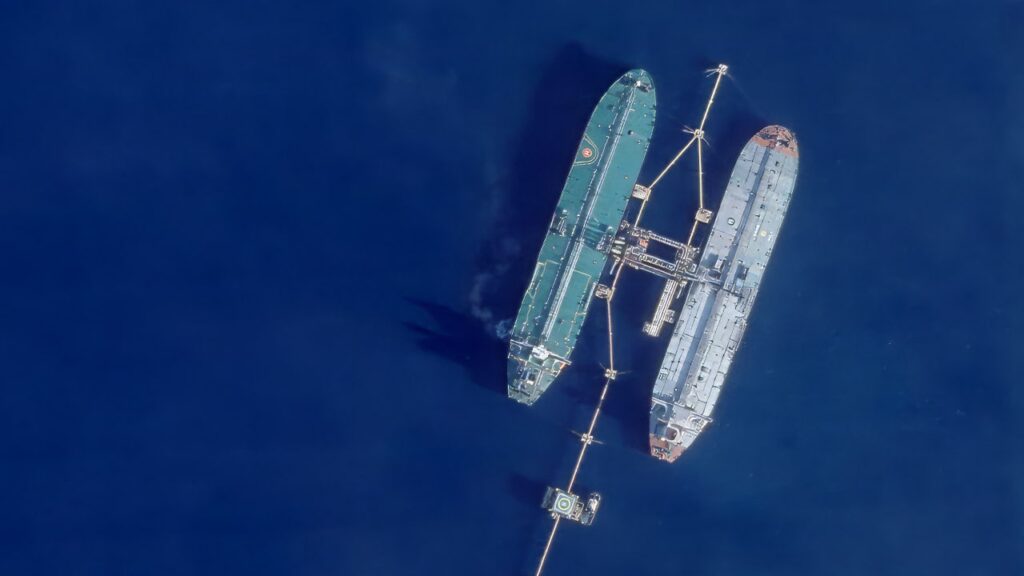
On the heels of these declarations, the U.S. military intercepted an oil tanker named the “Skipper,” which was allegedly involved in transporting sanctioned oil from Venezuela and Iran. This seizure marks a significant escalation in U.S. efforts to thwart oil shipments originating from these countries. The tanker was reportedly loaded with approximately 1.8 million barrels of oil, making it a lucrative target for U.S. authorities concerned about unlawful oil trade. The seizure of the “Skipper” underscores the growing tensions between the two nations and the U.S. commitment to enforcing sanctions against Venezuela.
Possible Economic Impacts
The blockade may have widespread implications for global oil prices and markets. Analysts are concerned that further restrictions on Venezuela’s oil exports could lead to price surges across the globe as supplies tighten. Venezuela has long been known for its vast oil reserves, and any disruptions in its production could create ripple effects in other oil-dependent economies. In addition, with an estimated worth of $60 million to over $100 million, the oil carried by the “Skipper” represents a significant financial loss for the Maduro government.
International Reactions and Future Implications
The international community is closely monitoring these developments, with various countries expressing concerns about the escalation of conflict. Some nations view the U.S. blockade as a breach of international law, advocating for a diplomatic resolution to the crisis instead. As the situation unfolds, the potential for conflict not only affects U.S.-Venezuela relations but also has the capability of straining relationships between the U.S. and other global powers involved in oil trade. The stakes are high, and both the Trump administration and the Maduro regime seem prepared for a protracted confrontation.
| No. | Key Points |
|---|---|
| 1 | Trump has ordered a complete blockade of Venezuelan oil tankers. |
| 2 | Venezuela has been designated a foreign terrorist organization by the U.S. government. |
| 3 | The oil tanker “Skipper” was seized for allegedly transporting sanctioned oil. |
| 4 | Analysts warn that the blockade could lead to increased global oil prices. |
| 5 | International reactions are mixed, with some nations criticizing the U.S. actions. |
Summary
The recent actions taken by President Donald Trump against Venezuela mark a notable escalation in U.S. foreign policy and emphasize the administration’s commitment to combating what it frames as terrorism and criminal activity associated with the Maduro regime. The blockade aims not only to curb oil exports but also serves as a strategic maneuver to reclaim U.S. assets, significantly heightening tensions in the region and prompting a complex interplay of international responses. As the situation continues to evolve, the potential ramifications for both global oil markets and U.S. foreign relations are substantial.
Frequently Asked Questions
Question: Why has the U.S. government declared Venezuela a foreign terrorist organization?
The U.S. government has labeled Venezuela a foreign terrorist organization due to allegations that the Maduro regime engages in activities such as drug trafficking, human trafficking, and the use of stolen assets to finance terrorism.
Question: What is the significance of the blockade ordered by Trump?
The blockade signifies a dramatic escalation in the U.S.’s efforts to isolate the Maduro regime economically and politically, aiming to curb its oil exports which are vital for its economy.
Question: How could the seizure of the “Skipper” affect oil prices?
The seizure of the “Skipper” and the blockade could lead to potential tightness in oil supply, which may result in rising prices in the global oil market due to reduced availability from Venezuela.