
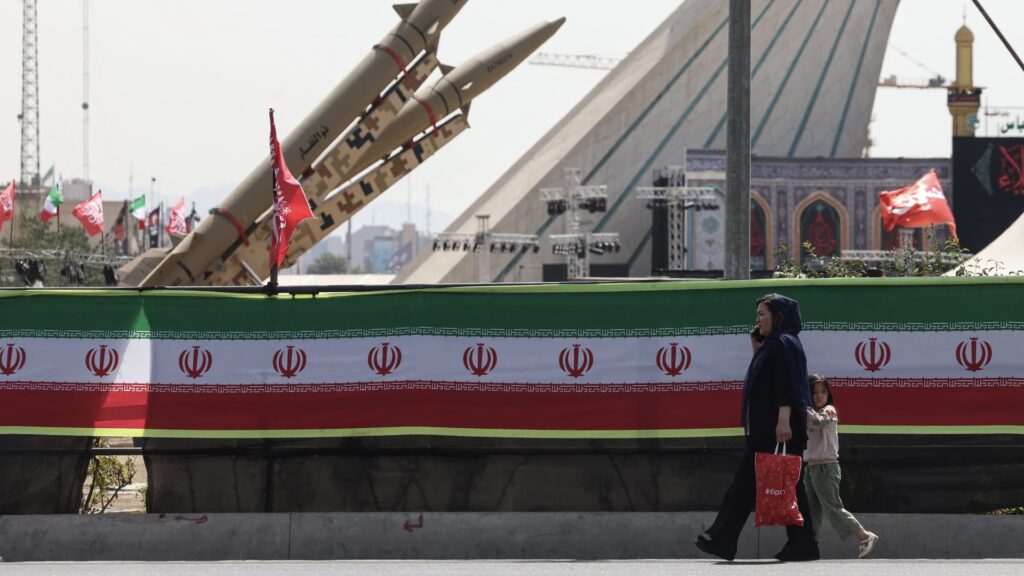
Tensions between the United States and Iran have reached a critical juncture as President Donald Trump emphasizes the necessity for diplomatic negotiations to resolve a five-month-long conflict. Despite Trump’s assertions of ongoing discussions at the request of multiple global actors, Tehran denies any direct negotiations are taking place. As military actions escalate, economic factors like fluctuating oil prices reflect the uncertainty surrounding these diplomatic efforts.
| Article Subheadings |
|---|
| 1) Diplomatic Efforts Amidst Tension |
| 2) Iran’s Stance on Negotiations |
| 3) Economic Implications of the Conflict |
| 4) Military Movements and Responses |
| 5) Broader Regional Impact |
Diplomatic Efforts Amidst Tension
In a press briefing held in the Oval Office, President Donald Trump described the latest round of negotiations with Iran as a “last chance” to end the ongoing conflict that has persisted for five months. Trump communicated to reporters that the discussions are currently underway at the request of various nations, including Iran, Saudi Arabia, the UAE, Qatar, and others. The urgency of these talks indicates a significant diplomatic effort aimed at stabilizing relations and easing tensions in the region.
During this high-stakes moment, the President emphasized that failure to reach a satisfactory conclusion could have dire consequences. “This is a last chance for them to sign a good document,” Trump stated. The implications of these discussions extend beyond U.S.-Iran relations, touching upon international security dynamics and energy markets. As several global players are invested in a peaceful resolution, the involvement of multiple countries suggests a coordinated approach to addressing potential threats.
Iran’s Stance on Negotiations
Amid these claims of negotiations, Iran’s officials have made it clear that they are denying any direct talks with the United States. Iranian President Masoud Pezeshkian reaffirmed that Tehran will steadfastly defend its borders and clarified that the nation does not desire to escalate the conflict further. According to reports from state media, Tehran feels justified in its position and is unwilling to compromise unless its interests are adequately secured.
Ilan’s foreign ministry spokesperson, Esmail Baghaei, specifically called out any notion of direct negotiations with the U.S. and emphasized that the focus remains solely on dialogue with Oman regarding the Strait of Hormuz. The contradiction between U.S. claims and Iran’s denial signifies a complicated and fraught diplomatic landscape, further complicating any potential pathways to peace. The Iranian leadership’s insistence on their sovereignty signals a cautious approach to negotiations, likely stemming from historical grievances and a desire to maintain national pride.
Economic Implications of the Conflict
The ongoing conflict and uncertainty surrounding diplomatic efforts have considerable economic ramifications, particularly in the oil markets. Following discussions about potential military actions, oil prices experienced fluctuations, demonstrating how geopolitical tensions can impact global markets. On Tuesday, oil prices ticked higher amid an apparent lack of clarity regarding diplomatic solutions, reflecting trader apprehensions about the future.
West Texas Intermediate futures saw a modest increase of 1.29%, reaching $81.38 per barrel, while Brent crude climbed by 1.73%, hitting $85.23 per barrel. These fluctuations indicate that investors remain cautious as they closely monitor developments in the ongoing conflict, which has already disrupted energy supply chains. The economic implications could escalate if the situation remains unresolved, leading to heightened prices and potential market instability.
Military Movements and Responses
In tandem with diplomatic efforts, military actions continue to unfold. The U.S. Central Command announced that it has redirected 44 commercial vessels as part of its ongoing blockade of the strategic Strait of Hormuz. These actions include disabling and boarding a couple of vessels, reinforcing the U.S. military’s presence in the region amid rising tensions. Such maneuvers indicate an aggressive posture designed to secure U.S. interests while discouraging hostile actions from Iran.
Additionally, separate reports have emerged from Iraqi pro-militia outlets about an explosion occurring in Kuwait, heard in Basrah Province. This adds another layer of complexity to the already fragile situation, potentially complicating the military landscape and affecting regional stability. The responses from various nation-states to these developments will likely play a critical role in shaping the conflict’s trajectory.
Broader Regional Impact
As the U.S.-Iran conflict continues to develop, its effects ripple across the broader Middle East. The tension has escalated concerns among neighboring countries regarding their security and economic interests. The involvement of nations like Saudi Arabia, the UAE, and Qatar highlights that the stakes are high not only for the U.S. and Iran but also for other regional players who may find themselves caught in the crossfire.
The precarious nature of the situation reveals how much interconnectedness exists in international relations. A failure to resolve tensions could result in broader military conflicts, destabilizing regional markets and threatening energy supplies. As other countries advocate for peace, the international community’s response will significantly affect the outcome.
| No. | Key Points |
|---|---|
| 1 | Trump emphasized that ongoing negotiations with Iran are a “last chance” for resolution. |
| 2 | Iran denies any direct negotiations with the U.S., insisting they only discuss matters with Oman. |
| 3 | Oil prices have been impacted by the conflict, with fluctuations signaling market uncertainty. |
| 4 | U.S. Central Command has redirected vessels to enforce a blockade in the Strait of Hormuz. |
| 5 | The conflict’s escalation affects broader regional stability and security dynamics. |
Summary
The current geopolitical situation between the U.S. and Iran presents a significant challenge to both nations and the larger international community. As tensions escalate and military actions unfold, the prospects for successful diplomatic negotiations remain in doubt. Various economic indicators, particularly in the oil sector, further illustrate the pervasive impact of these events. The implications are wide-ranging, as regional stability hangs in the balance, necessitating urgent and effective dialogue.
Frequently Asked Questions
Question: What are the current diplomatic efforts between the U.S. and Iran?
President Trump has indicated that negotiations are ongoing, referring to them as a “last chance” for resolution, although Iran has denied any direct discussions.
Question: How is the conflict affecting oil prices?
The uncertainty surrounding the U.S.-Iran situation has led to fluctuations in oil prices, with recent increases reflecting market apprehensions about potential conflict escalation.
Question: What military actions have been taken in the region?
The U.S. Central Command has redirected commercial vessels as part of its blockade of the Strait of Hormuz, with reports of disabling and boarding operation indications of heightened military readiness.