
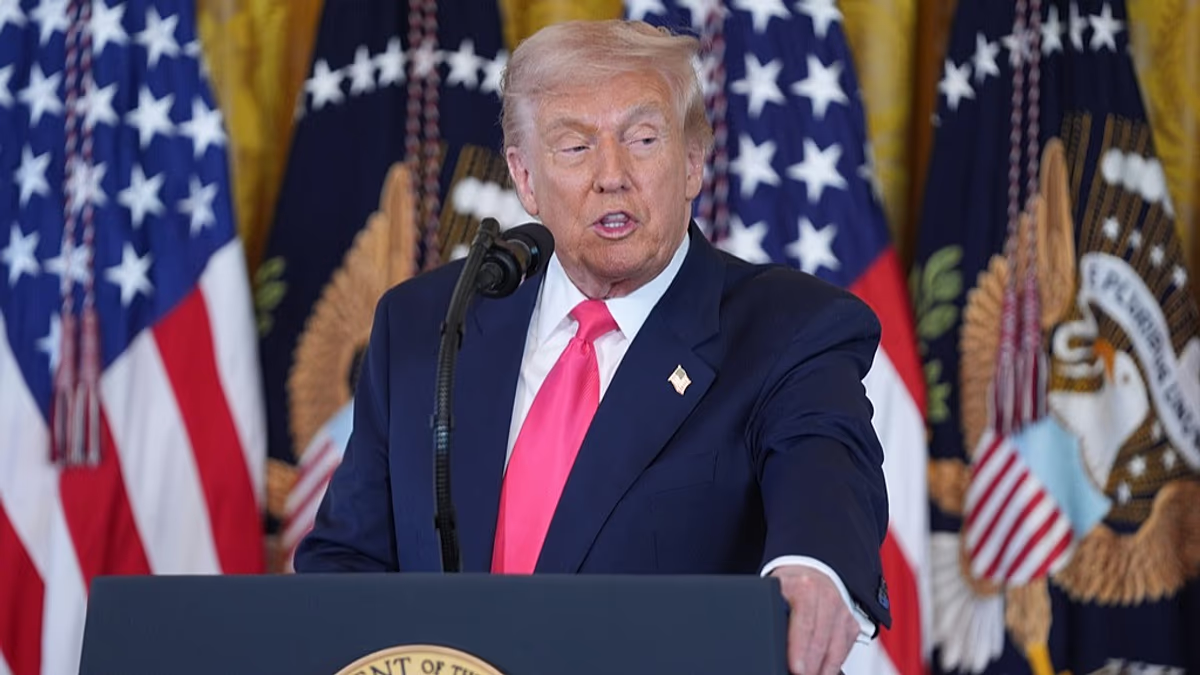
The recent directive from US President Donald Trump to the Justice Department has ignited controversy over convicted sex offender Jeffrey Epstein and his connections with prominent figures, including former President Bill Clinton. In an announcement made on social media, Trump accused the Democratic Party of attempting to shift the narrative surrounding Epstein’s ties with notable banks and lawmakers, amid ongoing scrutiny. The unfolding investigation raises questions about the implications for those associated with Epstein and the broader political landscape.
| Article Subheadings |
|---|
| 1) Investigation Ordered by the President |
| 2) Epstein’s Connections: Key Figures |
| 3) Response from Clinton and Financial Institutions |
| 4) The Legislative Context of the Investigation |
| 5) Political Implications and Reactions |
Investigation Ordered by the President
On Friday, President Donald Trump publicly declared his intention to direct Pam Bondi, the US Attorney General, to initiate an investigation regarding Jeffrey Epstein’s affiliations with key Democratic figures, particularly Bill Clinton and Democratic donor Reid Hoffman. This announcement comes at a time when the House of Representatives is deliberating over the release of files related to Epstein’s past activities. The President expressed frustration, claiming Democrats are trying to redirect blame for their own failings while implicating Republicans.
In a rallying cry on social media, Trump stated, “I will be asking A.G. Pam Bondi, and the Department of Justice… to investigate Jeffrey Epstein’s relationship with Bill Clinton… to determine what was going on with them.” His comments highlight the competitive and often tumultuous political environment leading up to the investigation. Such a high-profile investigation emphasizes the pervasive issue of accountability among influential political figures.
Epstein’s Connections: Key Figures
The emails recently unveiled by the US House Oversight Committee shed light on Jeffrey Epstein‘s network, including his interactions with prominent individuals and lawmakers. This exposure has put a spotlight on the questionable nature of these relationships, especially with figures like Bill Clinton, who has consistently denied any wrongdoing regarding his association with Epstein.
Epstein, a convicted sex offender, had maintained relationships with a variety of wealthy and influential people, raising questions about the nature of these connections and the potential implications for those involved. Trump issued a pointed reminder that the investigation aims to clarify the extent of these alliances, asserting that they largely fall within the Democratic sphere. By focusing on Epstein’s Democratic ties, he hopes to emphasize a narrative that positions these connections as a liability for the party.
Response from Clinton and Financial Institutions
In light of the ongoing investigation, Bill Clinton and financial institutions like J.P. Morgan Chase have taken steps to distance themselves from Epstein. Clinton has firmly denied any knowledge of Epstein’s illicit activities, while Patricia Wexler, spokesperson for J.P. Morgan Chase, stated, “We regret any association we had with the man, but did not help him commit his heinous acts.” This public disavowal reflects a broader attempt to avoid fallout from Epstein’s notorious past.
Moreover, the bank’s official stance underscores the sensitivity surrounding Epstein’s reputation and the potential ramifications for those associated with him. The investigation may further probe these connections, leaving a cloud of uncertainty over the reputations of high-profile individuals who have interacted with Epstein, thus affecting public perception and trust.
The Legislative Context of the Investigation
The President’s directive arrives just a week before a crucial vote in the US House of Representatives regarding the potential release of Justice Department files related to Epstein. Lawmakers are divided on the importance of unveiling these documents, with figures like Republican Congresswoman Marjorie Taylor Greene advocating for transparency. Greene underscored that failing to release the files would represent a significant political miscalculation for Trump, potentially affecting his standing among House Republicans.
This context illustrates the interplay between legislative actions and executive oversight, highlighting how the investigation may influence future policy. As pressure mounts on lawmakers to address the Epstein case head-on, the outcome may set a precedent for handling similar controversies in the future, deepening the political divide in a fraught environment.
Political Implications and Reactions
The public reaction to Trump’s order has been a blend of support and skepticism. While some see it as a necessary step toward accountability, others view it as a political maneuver intended to shift focus away from current issues facing the administration. This dual narrative complicates the political landscape, where allegations and investigations serve as tools for opposing factions.
Critics argue that the investigation may serve more as a distraction than a genuine pursuit of justice. By framing the issue as a Democratic problem, the administration hopes to reinforce partisan divisions. The responses from involved parties, particularly Clinton and other prominent Democrats, will likely play a crucial role in shaping public opinion as the investigation progresses.
Ultimately, the political ramifications of this investigation could affect both parties, shaping future interactions and defining the narrative leading up to the upcoming elections. As the investigation unfolds, the conversations around ethics, accountability, and the conduct of powerful individuals will continue to dominate public discourse.
| No. | Key Points |
|---|---|
| 1 | President Trump orders an investigation into Epstein’s ties with Democratic figures. |
| 2 | Emails suggest Epstein had connections with influential lawmakers and entrepreneurs. |
| 3 | Clinton and J.P. Morgan Chase deny wrongdoing related to Epstein. |
| 4 | The investigation coincides with a House vote regarding Epstein-related files. |
| 5 | Political reactions reflect deepening partisan divisions surrounding the issue. |
Summary
The investigation ordered by President Trump into Jeffrey Epstein’s connections with prominent Democratic figures symbolizes a significant point of contention in the current political climate. As powerful individuals scramble to define their legacies amid a complex web of allegations and scrutiny, the implications of this probe extend beyond individual reputations. With the House of Representatives poised to vote on Epstein-related documents, the forthcoming weeks will determine how this narrative unfolds, potentially affecting political dynamics and public trust across party lines.
Frequently Asked Questions
Question: Who is Jeffrey Epstein?
Jeffrey Epstein was a financier and convicted sex offender infamous for trafficking crimes involving minors.
Question: What prompted Trump’s investigation order?
The investigation was ordered in response to Epstein’s connections with major Democratic figures, especially amidst ongoing scrutiny and political tensions.
Question: How have political figures responded to the investigation?
Responses have varied, with some, such as Clinton and financial institutions, denying wrongdoing, while others, including Trump, frame it as part of broader political accountability.