
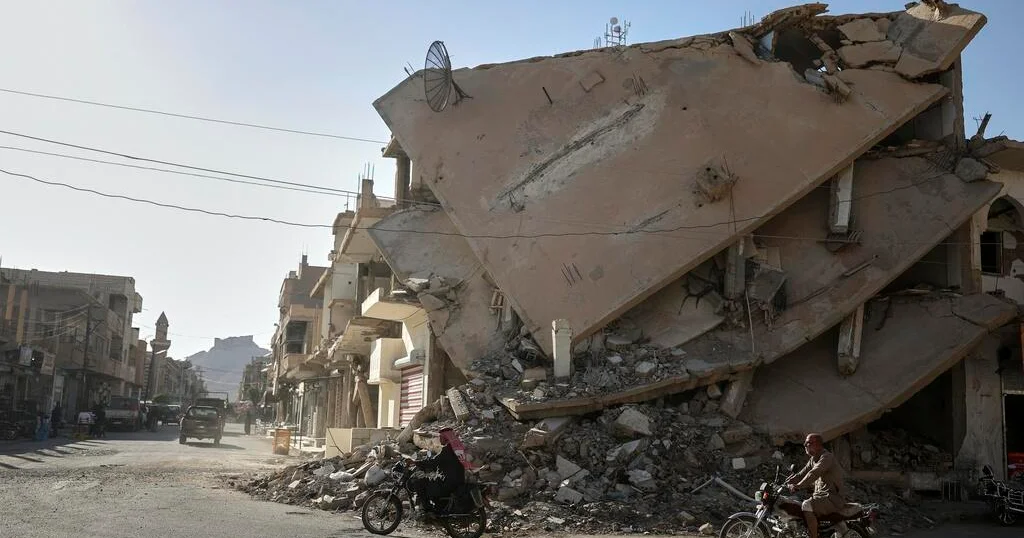
On a tragic Saturday, two U.S. Army soldiers and a civilian interpreter were killed in Syria during an ambush by an ISIS gunman. This incident occurred near Palmyra as U.S. forces were engaged in counter-terrorism operations. President Trump has vowed serious retaliation against this attack, emphasizing its implications for U.S. military actions in the region.
| Article Subheadings |
|---|
| 1) Details of the Attack |
| 2) Official Reactions |
| 3) U.S.-Syria Relations |
| 4) The Status of ISIS |
| 5) Future Implications |
Details of the Attack
The deadly ambush occurred as U.S. soldiers were initiating a “key leader engagement” in the vicinity of Palmyra, a historical town significant for its ancient ruins but also a hotspot for terrorist activities. Official reports confirmed that a lone ISIS gunman opened fire on the forces, resulting in the tragic death of two U.S. Army soldiers and a civilian interpreter who was assisting them. In addition, three other service members sustained injuries during the incident.
The attack has sparked a substantial amount of concern and discussions among military officials regarding the safety of U.S. forces operating in a region still fraught with instability and terrorist threat. U.S. Central Command quickly identified the attack as an ambush resulting from effective planning by the terrorist, who was subsequently engaged and killed. Further investigation into the incident is currently underway.
Official Reactions
Minutes after the attack, President Trump issued a statement on his social media platform, asserting, “This was an ISIS attack against the U.S., and Syria, in a very dangerous part of Syria.” He voiced that the President of Syria, Ahmed al-Sharaa, is disturbed by the event and promised that there would be “very serious retaliation.” This statement highlights the ongoing complexities in U.S. military involvement in the region.
U.S. Secretary of Defense Pete Hegseth echoed a similar sentiment in a post, informing that the “savage who perpetrated this attack was killed by partner forces.” He warned that any attack on American personnel would be met with significant consequences. Tom Barrack, the U.S. Ambassador to Turkey, also condemned the act, labeling it a “cowardly terrorist ambush.” Such strong rhetoric indicates a unified stance among U.S. officials that terrorist actions against American forces will not be tolerated.
U.S.-Syria Relations
The unintended consequence of this attack raises issues regarding U.S.-Syria relations, which have been slowly improving since the fall of longstanding President Bashar al-Assad. With the interim President Ahmed al-Sharaa visiting Washington last month, there were hopes of fostering a cooperative approach against mutual threats like ISIS. However, this incident could strain these budding diplomatic relations as both sides grapple with the loss of life.
Historically, U.S. diplomatic relations with Syria have been tense, especially under the Assad regime. Now, as Syria joins the international coalition against ISIS, this ambush complicates the narrative. The U.S. has approximately hundreds of troops in eastern Syria, primarily focused on training local forces and combating terrorism. Yet, the resurgence of hostility acts as a reminder that much remains to be accomplished in stabilizing the region.
The Status of ISIS
Despite ISIS being declared defeated in Syria in 2019, the group continues to pose a significant threat through sleeper cells that actively execute deadly attacks in the region. Estimates by the United Nations indicate that there are still between 5,000 to 7,000 ISIS fighters operating in Syria and Iraq, demonstrating that the fight against terrorism is far from over.
The U.S. military presence in Syria is part of an ongoing strategy to combat these remnants of ISIS. The Al-Tanf military garrison in the central province of Homs serves as a critical site for training local forces and maintaining operational capabilities against terrorist factions. Past attacks on U.S. troops, including a notable incident in 2019 in Manbij, underscore the risks involved in this ongoing military engagement.
Future Implications
The ramifications of this ambush extend beyond the immediate loss of personnel. It risks escalating U.S. military operations in Syria, potentially leading to increased retaliatory measures against ISIS and their allied groups. As President Trump and other top officials promise retaliation, one can anticipate a shift in military tactics aimed at mounting a more robust response against threats to American lives.
Moreover, the nature of U.S. involvement in Syria may require renewed consideration of military strategies. With regional relations at a delicate juncture, allowing for cooperative efforts among international partners could be vital in addressing terrorist activities while maintaining a focus on diplomatic solutions. This ambush serves as a stark reminder about the persistent risks involved in military interventions across complicated geopolitical landscapes.
| No. | Key Points |
|---|---|
| 1 | Two U.S. soldiers and a civilian interpreter were killed in an ISIS ambush in Syria. |
| 2 | President Trump has vowed serious retaliation against the attackers. |
| 3 | The attack has raised concerns regarding the safety of U.S. forces in the region. |
| 4 | ISIS continues to be a significant threat, despite declaring defeat in 2019. |
| 5 | The incident may complicate emerging U.S.-Syria diplomatic relations. |
Summary
The ambush of U.S. soldiers and personnel in Syria represents a critical event that not only results in loss of life but also escalates the complex relationship between the U.S. and Middle Eastern dynamics in counter-terrorism efforts. The reaction from U.S. officials indicates a resolve to confront such acts with serious military responses, which may shape the future of U.S. operations overseas.
Frequently Asked Questions
Question: What measures is the U.S. taking in Syria against ISIS?
The U.S. maintains a military presence in Syria aimed at training local forces and conducting counter-terrorism operations against ISIS remnants.
Question: How has President Trump responded to this attack?
President Trump has promised serious retaliation against the attackers and emphasized that the U.S. will not tolerate attacks on American personnel abroad.
Question: What is the current status of ISIS in the region?
Despite being declared defeated in 2019, ISIS is believed to still have between 5,000 to 7,000 fighters active in Syria and Iraq, continuing to execute attacks.