
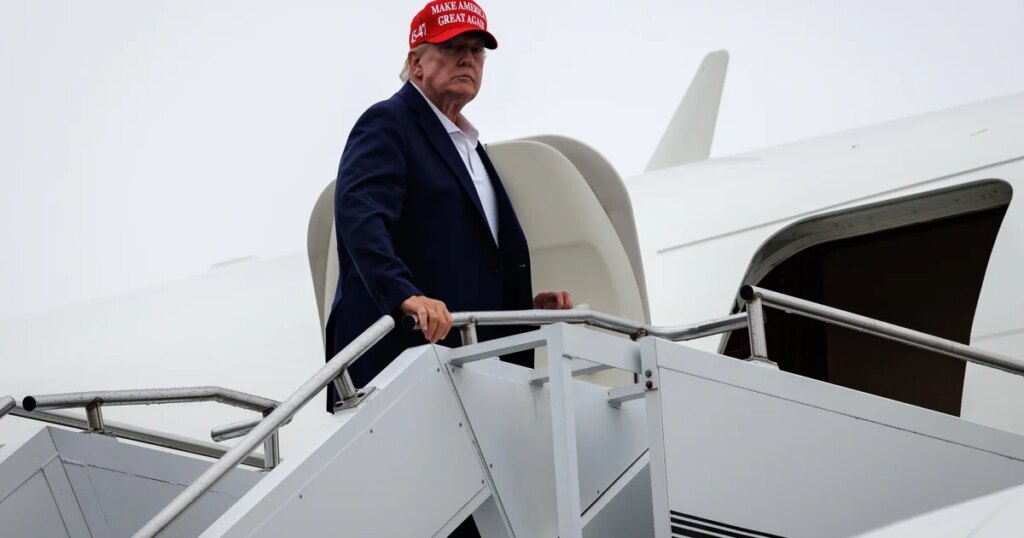
In a major development in U.S.-South Korean relations, President Donald Trump has announced a significant reduction in joint military exercises with South Korea, citing the nation’s reluctance to collaborate on denuclearizing Iran. The President expressed concerns over the perception these drills create towards North Korea, which he claims has been “unthreatening and respectful” during his presidency. This decision follows a series of warnings from North Korea, amplifying regional tensions amidst ongoing military demonstrations from the U.S. and its allies.
| Article Subheadings |
|---|
| 1) President Trump’s Announcement on Military Exercises |
| 2) South Korea’s Response and Ongoing Dialogue |
| 3) The Nature of the Joint Military Exercises |
| 4) North Korea’s Reaction to U.S.-South Korean Drills |
| 5) Historical Context of U.S.-North Korea Relations |
President Trump’s Announcement on Military Exercises
On a recent Sunday, President Donald Trump declared his directive to scale back joint military exercises with South Korea, underscoring his position on the matter through a message on his social media platform, Truth Social. The President voiced his belief that these exercises are not only financially burdensome but also send an inappropriate and hostile message to North Korea. His remarks come alongside a historical context where he has long sought to reshape U.S. military engagement in the region.
Reflecting on his relationship with North Korean leader Kim Jong Un, President Trump stated that he was unhappy with continuing U.S. participation in the military exercises that were established long before his administration. He instructed Defense Secretary Pete Hegseth to “substantially reduce” these military affairs, even though he acknowledged that the cancellation of such exercises was no longer an option.
South Korea’s Response and Ongoing Dialogue
In light of President Trump’s announcement, South Korea’s government issued a statement regarding its close monitoring of the situation. The presidential office expressed the hope that meaningful communication would continue between the two nations. South Korean officials outlined their commitment to pursuing diplomatic channels and reinforcing security cooperation amidst fluctuating military engagements.
This dialogue has become increasingly crucial as threats from North Korea intensify and regional stability remains in question. The South Korean government has historically relied on close military cooperation with the United States as a deterrent against North Korean provocations. Consequently, South Korea aims to navigate this evolving military landscape carefully and avoid any potential isolation in negotiations regarding North Korea’s nuclear aspirations.
The Nature of the Joint Military Exercises
The U.S. and South Korea have usually engaged in extensive military exercises designed to enhance readiness against North Korean threats. In the specific context highlighted, the exercises involved approximately 18,000 South Korean soldiers and a range of tactical operations aimed at preparing forces for a variety of conflict scenarios. The exercises were intended to bolster joint operational capabilities, including live-fire drills, complex maneuvers, and tests of precision targeting strategies.
These military operations play a critical role in shaping the United States and South Korea’s defense posture against adversarial actions from North Korea. U.S. military officials have characterized such exercises as vital for reaffirming the alliance’s commitment to maintaining regional stability and ensuring the security of both nations.
North Korea’s Reaction to U.S.-South Korean Drills
North Korea has consistently reacted to U.S.-South Korean military drills with verbal threats and warnings. Recent statements from North Korean officials have characterized these exercises as “provocative” and have framed them as rehearsals for aggressive military action. Such rhetoric is not new; it often occurs in tandem with major military collaborations between the U.S. and South Korea, which North Korea views as direct threats to its national sovereignty.
North Korea’s threats have frequently included the promise of “stern steps” against the U.S. and its southern neighbor, heightening the stakes surrounding these military operations. Experts suggest that North Korea often uses these retaliatory threats as a strategy to consolidate internal support and justify its own weapons testing initiatives. This cycle of military drills and subsequent threats fuels ongoing tensions in an already volatile region.
Historical Context of U.S.-North Korea Relations
The history of U.S.-North Korea relations is fraught with tensions stemming from North Korea’s nuclear ambitions and the corresponding response from the United States and its allies. President Trump has emphasized throughout his administration the potential for productive negotiations with North Korea, having held three meetings with Kim Jong Un during his first term. Trump’s approach marked a departure from more conventional diplomatic practices, attempting to establish personal ties with the reclusive leader.
While these summits were initially received with optimism, the lack of substantive progress on denuclearization has led to continued skepticism about North Korea’s intentions. President Trump’s latest decision to reduce military exercises aligns with a broader strategy aimed at engaging North Korea through dialogue rather than confrontation. Such dynamics encapsulate the complex interplay of diplomacy and military readiness that has characterized this geopolitical landscape.
| No. | Key Points |
|---|---|
| 1 | President Trump orders a reduction in joint military exercises with South Korea. |
| 2 | South Korea expresses hope for ongoing diplomatic dialogue following the announcement. |
| 3 | The joint military exercises were designed to enhance readiness against North Korean threats. |
| 4 | North Korea responds with threats, labeling the drills as provocative actions. |
| 5 | The decision reflects a broader strategy of engaging North Korea through dialogue. |
Summary
The reduction of joint military exercises by President Trump signals a pivotal shift in U.S.-South Korean relations, raising questions about future military cooperation and diplomatic engagement with North Korea. The announcement not only illuminates the complexities of military readiness in the region but also reflects the ongoing efforts to navigate the intricate dynamics of international relations and peace-building in Northeast Asia. As North Korean threats persist, the implications of these changes will be closely monitored by regional and global stakeholders.
Frequently Asked Questions
Question: What prompted President Trump to reduce military exercises with South Korea?
President Trump cited South Korea’s lack of interest in collaborating on denuclearizing Iran as a factor while also expressing concerns about the exercises being costly and sending a hostile message to North Korea.
Question: How did South Korea react to Trump’s announcement?
The South Korean government indicated that it was closely monitoring the situation and expressed hopes for meaningful dialogue between the two countries, emphasizing the importance of ongoing communication amid changing military dynamics.
Question: What are the consequences of these military exercises for North Korea?
North Korea often perceives U.S.-South Korean military drills as provocative threats, leading to heightened tensions and rhetorical threats against both nations. These exercises are utilized by North Korea as justification for its own military advancements.