
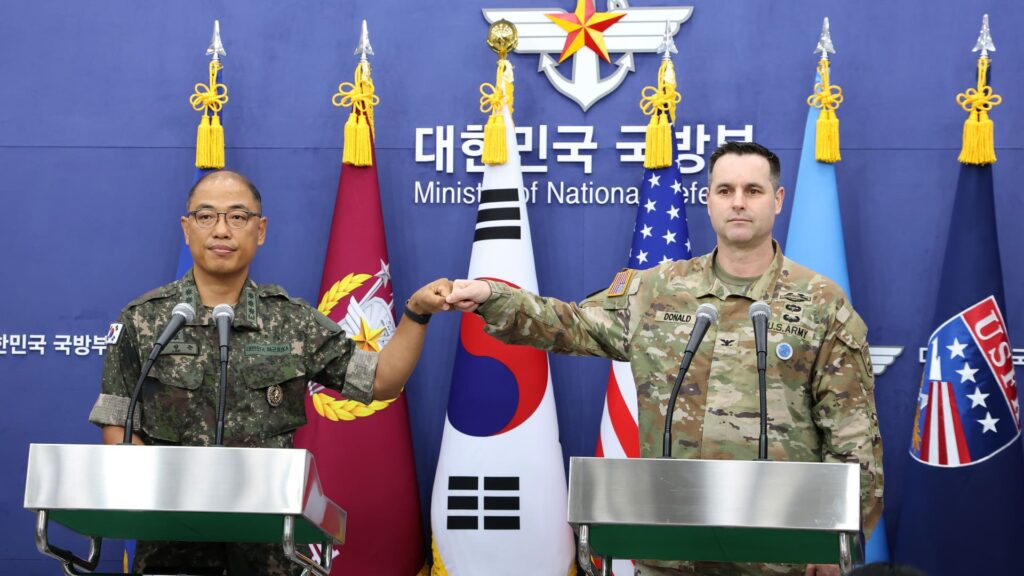
In recent developments concerning U.S.-South Korean military exercises, the Ulchi Freedom Shield training, scheduled from August 17 to August 27, has been significantly curtailed. This change stems from directives issued by the Trump administration, aimed at reducing joint exercises to facilitate negotiations with North Korea. Such adjustments evoke concerns over military readiness and the credibility of the U.S. security commitment to its alliances, especially amidst increasing military activity from North Korea.
| Article Subheadings |
|---|
| 1) The Reshaping of Joint Military Exercises |
| 2) Analyzing the Impact on Military Readiness |
| 3) Credibility and Commitment to Alliances |
| 4) Perspectives on Military De-escalation |
| 5) Future Implications and North Korea’s Response |
The Reshaping of Joint Military Exercises
The Ulchi Freedom Shield exercise has long been a staple in U.S.-South Korean military training, designed to enhance cooperation and readiness in facing potential threats, particularly from North Korea. Scheduled to run for 11 days, this year’s exercise will conclude earlier than planned due to directives from the Trump administration aimed at reducing military activities. The alteration has raised eyebrows both domestically within South Korea and amongst international observers, who note that this decision comes as North Korea enhances its military capabilities.
These adjustments were announced following President Trump’s instruction to Defense Secretary Pete Hegseth, emphasizing a need to avoid moving forward with drills that could be interpreted as aggressive toward North Korea. As a result, military officials in South Korea and the U.S. will need to navigate a complex landscape, balancing the necessity for readiness against the backdrop of evolving diplomatic relations.
Analyzing the Impact on Military Readiness
Former Lieutenant General Chun In-Bum has voiced strong concerns regarding the implications of reduced exercises on military preparedness. He argues that as North Korean forces engage in operational training—including combat experience gained in Ukraine—timely and comprehensive military exercises are essential for maintaining tactical proficiency among U.S. and South Korean troops. Chun warns that diminishing these drills could create a significant operational disconnect, jeopardizing the alliance’s capacity to respond effectively in crisis situations.
Moreover, the reduction in military drills impacts how both nations can evaluate changes in adversarial tactics, especially given North Korea’s advancements in drone warfare and integrated artillery strategies. Experts argue that routine exercises provide not merely a means of preparation but also an arena for stress-testing systems in response to evolving threats. The decision to scale back training could unambiguously undermine coalition strategies crucial for American and South Korean defense.
Credibility and Commitment to Alliances
The credibility of U.S. security commitments in the region has come under scrutiny following the announcement of reduced exercises. As articulated by analysts, including Lami Kim from the International Institute for Strategic Studies, the move may further undermine confidence in U.S. commitments at a time when skepticism among allies is at a high. These changes prompt serious reflections on whether the U.S. can be counted on as a reliable partner in security matters, particularly in the face of mounting threats in Asia.
Former U.S. diplomat Henry Haggard echoed similar sentiments, noting that this strategic shift may raise concerns about the reliability of U.S. guarantees amidst fluctuating geopolitical tensions with Russia, North Korea, and China. Experts on alliances suggest that such a drastic shift could have long-lasting implications for U.S. partnerships and strategic autonomy in global security contexts.
Perspectives on Military De-escalation
Despite the concerning implications of reduced drills, some experts perceive potential benefits in decreasing military tensions through fewer exercises. A more measured approach may alleviate pressures that provoke escalation among regional adversaries such as China and North Korea. Jennifer Kavanagh, a seasoned analyst at Defense Priorities, noted that reducing military demonstrations may result in a more stable environment for both the U.S. and South Korea, thereby reducing adversarial military posturing in response.
Kavanagh suggests that these changes could allow for an initial thawing of hostilities through diplomatic engagement—a strategic play that, while fraught with risk, might yield a less hostile regional atmosphere. Some analysts argue that maintaining open lines of communication through de-escalation could enhance the prospects for long-term diplomatic resolution, despite the inherent unpredictability of North Korean actions.
Future Implications and North Korea’s Response
The decision to significantly scale back military drills has, however, elicited a tepid response from North Korea. Kim Yo Jong, the influential sister of North Korean leader Kim Jong Un, has dismissed the intent behind the reduced exercises, suggesting that North Korea perceives the modifications as unconvincing and an extension of longstanding hostilities. In her statements, she characterized the reduction as part of a tactical maneuver rather than a genuine de-escalation.
She contended that North Korea remains cautiously observant of such changes, focusing more on actual military engagement rather than proposed reductions. The broader context of military engagements and statements from North Korean officials reveals an intricate chess game where each move is evaluated in light of potential threats to national security. This evolving narrative underscores the complexities surrounding the U.S.-South Korean alliance, and the implications of military exercises that could either reinforce cooperative strategies or provoke adversarial responses.
| No. | Key Points |
|---|---|
| 1 | The Ulchi Freedom Shield exercise has been curtailed, raising concerns over U.S.-South Korean military readiness. |
| 2 | Military officials warn that reduced drills could foster operational disconnects amid rising North Korean capabilities. |
| 3 | The credibility of U.S. security commitments is under scrutiny, raising questions among allies about the reliability of support. |
| 4 | Some experts advocate for reduced military activities as a way to decrease regional tensions and foster stability. |
| 5 | North Korea has expressed skepticism regarding the intent behind the reduction, viewing it as a tactical maneuver rather than genuine de-escalation. |
Summary
The curtailing of the Ulchi Freedom Shield exercise raises significant questions regarding the readiness of U.S. and South Korean forces and could undermine their joint response capabilities amid increasing North Korean military activity. As the geopolitical landscape shifts, experts express concern over the ramifications for alliances and strategic credibility. Whether the reduction is a prudent diplomatic gesture or a risky retreat remains a critical discussion point, highlighting the delicate balance of power in East Asia.
Frequently Asked Questions
Question: What impacts does the reduction of military exercises have on U.S. and South Korean forces?
The reduction of military exercises primarily affects the preparedness and readiness of U.S. and South Korean forces, potentially leading to operational disconnects and diminished tactical proficiency in facing threats from North Korea.
Question: How does this move influence U.S. credibility with its allies?
The decision to scale back military drills raises questions about the reliability and commitment of U.S. security guarantees, which may cause concern among allies about the predictability of U.S. support in crises.
Question: Are there any perceived benefits to reducing military drills?
Some analysts see benefits in decreased military activities as a means to reduce regional tensions, suggesting that a less aggressive military posture may lead to a more stable and less hostile environment for diplomacy.