
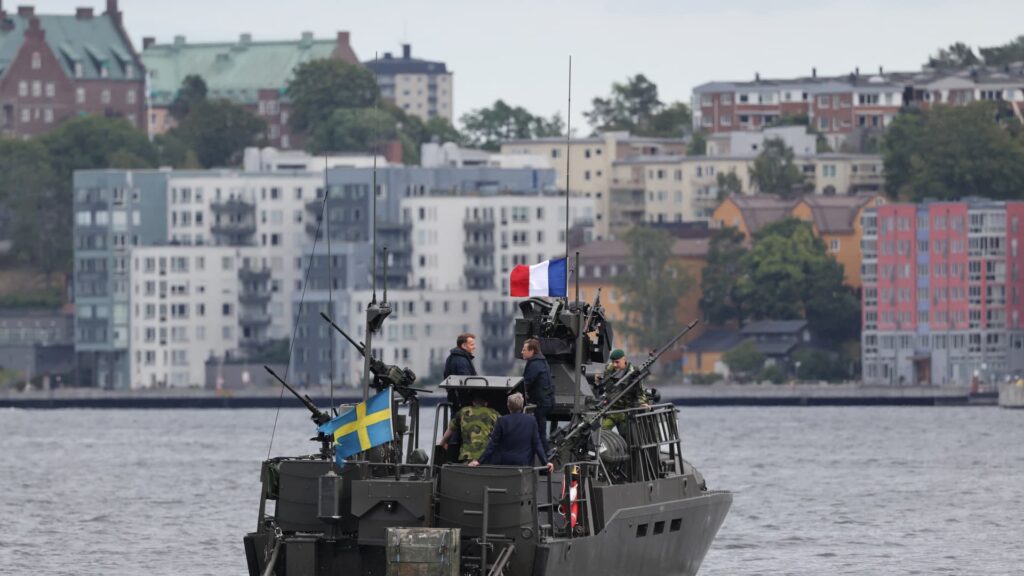
Sweden’s upcoming general election poses significant challenges for the prospective government, as voters grapple with pressing domestic concerns while facing unprecedented fiscal pressures. With the backdrop of ongoing geopolitical tension, particularly due to Russia’s war in Ukraine, candidates must navigate the dual demands of escalating defense expenditures and an ever-burgeoning welfare state. The intertwining complexities of budgetary constraints and public expectations suggest that the winning party will confront a formidable balancing act in governance.
Article Subheadings
| Article Subheadings |
|---|
| 1) A Changed Security Environment |
| 2) Russia and Trump |
| 3) Limited Fiscal Headroom |
| 4) Domestic Concerns Dominate Voter Sentiment |
| 5) The Aftermath: Expectations Versus Reality |
A Changed Security Environment
The backdrop of Sweden’s general election is deeply intertwined with a transformed security landscape in Europe, largely influenced by external factors such as Russia’s ongoing military actions. Sweden’s decision to join NATO in March 2024 marked a significant departure from over 200 years of military non-alignment, necessitated by heightened threats following Russia’s full-scale invasion of Ukraine. The move has since reshaped Sweden’s defense posture, with NATO members collectively committing to augment defense spending to 3.5% of GDP by 2035, alongside an additional 1.5% for defense and security-related expenditures.
According to data from the Stockholm International Peace Research Institute, Sweden’s military outlays have seen a notable increase between 2022 and 2025. This military rearmament initiative is a direct response to the evolving geopolitical climate. However, discussions around these crucial foreign policy matters have largely been relegated to the background during this election cycle. Political analysts attribute this oversight not to a decreased emphasis on security, but rather to broad consensus among the major political parties regarding their stance towards Russia and support for NATO.
The prevailing view suggests that voters will need to adapt to a persistent increase in defense-related expenditures as a core component of the national budget. As Jonas Tallberg, a political science professor at Stockholm University, noted, the conversation has shifted from whether Sweden should bolster its defense capabilities to how these expenditures will be financed within the constraints of the national budget.
Russia and Trump
The specter of Russia stands as the principal driver behind Sweden’s defense build-up; however, the impact of former President Donald Trump’s policies on NATO has injected an additional layer of complexity. European nations, including Sweden, are tasked with enhancing their military capabilities to deter Russian aggression, all while simultaneously bracing for possible expectations of increased self-reliance in security matters. This raises questions about the extent to which Sweden’s military investments are motivated solely by its own national interests versus broader NATO obligations.
While Trump’s unpredictable approach to NATO has influenced Swedish foreign policy, analysts like Jens Magnusson caution against attributing the entirety of Sweden’s defense increase to his rhetoric. He emphasizes that the geopolitical realities following Russia’s actions would have necessitated increased defense funding regardless, although pressure from the U.S. has certainly accelerated that shift. Trump’s trade policies have also introduced uncertainties for Sweden’s export-driven economy, but the anticipated effects have so far proven less alarming than originally feared. Enthusiasm around the election, however, remains focused on domestic issues rather than on the international stage.
Limited Fiscal Headroom
Although Sweden enters the election from a robust fiscal standpoint—with government debt projected at 35% of GDP in 2025—analysts are warning that the next administration’s capacity for unfunded reforms will face significant constraints. The Swedish economy remains resilient, with household disposable incomes holding steady despite broader inflation concerns. Nonetheless, the prospects for expansive domestic spending may be significantly restricted.
Financial experts at both SEB and Swedbank predict that the government will have less flexibility to fund additional reforms in the near future. In an attempt to address pressing needs, the current government has already committed sizable funds—approximately 80 billion Swedish kronor (around $8.3 billion) in unfunded reforms, plus an additional 45 to 50 billion kronor toward defense and support for Ukraine. While this strategy has temporarily alleviated pressures, it is viewed as unsustainable long term.
With defense spending likely to remain a structural norm over the next five to ten years, major decisions regarding taxation and public expenditure will arise. Senior economists anticipate that meeting defense spending needs will require critical trade-offs, suggesting that higher taxes, reduced welfare spending, or increased national debt may be needed to balance the budget moving forward.
Domestic Concerns Dominate Voter Sentiment
Despite the heightened focus on international security, the electoral campaign has largely been shaped by domestic issues, with voters expressing significant concern regarding healthcare, education, and economic stability. According to political scientist Jan Teorell, social welfare issues have gained newfound prominence, shifting the election discourse towards ensuring the economic well-being of households. This comes as economic indicators point to strong fiscal health, which stands in contrast to the prevailing voter sentiment about economic insecurity.
With traditional non-security topics taking center stage, migration, and law and order also remain critical to voters. However, as the government has undertaken various measures to mitigate the adverse effects of external economic shocks, such as those stemming from geopolitical tensions, public sentiment has evolved. Voters find themselves grappling with inflationary perceptions that often exceed actual economic conditions, further complicating the narrative surrounding the election.
The expectations set forth by different political parties during the campaign highlight a fundamental disconnect with the fiscal realities waiting post-election. Many economists advise that the ambitious promises being made may not align with the upcoming government’s financial ability to deliver meaningfully.
The Aftermath: Expectations Versus Reality
As the election looms, there is a collective understanding that the winning party will need to confront the reality of delivering on their promises in the face of stringent budget constraints. The coming government will have to prioritize defense and welfare in a manner that balances public expectations with fiscal responsibility. Analysts caution that the promises being peddled during the campaign may fall victim to the challenges posed by the country’s evolving economic landscape.
Ultimately, regardless of who emerges victorious from this election, a hard reckoning awaits them. As Jens Magnusson put it, “I think they will all have to be somewhat moderated after the election,” signifying the impending clash between elective enthusiasm and fiscal pragmatism.
| No. | Key Points |
|---|---|
| 1 | Sweden’s new government faces challenges balancing increased defense spending with social welfare commitments amid domestic voter concerns. |
| 2 | The decision to join NATO represents a pivotal shift in Sweden’s foreign policy, prompted by the geopolitical fallout from Russia’s invasion of Ukraine. |
| 3 | Despite a strong fiscal position, the next administration is likely to experience significant constraints on unfunded reforms and public spending. |
| 4 | Domestic issues such as healthcare, education, and economic stability dominate election discourse, overshadowing foreign policy debates. |
| 5 | Voter expectations set during the election campaign may confront financial realities post-election, complicating governance for the winning party. |
Summary
As Sweden approaches its general election, the incoming government will be tasked with navigating a complex landscape characterized by heightened defense needs and pressing social welfare demands. The electorate’s focus on domestic issues juxtaposed against the necessity of increased military investment presents a formidable challenge. The interplay between these elements will shape governance in the coming years, necessitating careful planning and prioritization to meet both fiscal realities and public expectations.
Frequently Asked Questions
Question: Why is defense spending a primary concern in the upcoming Swedish election?
Defense spending has become a top priority due to Russia’s aggressive military actions and Sweden’s recent entry into NATO, necessitating an increase in military capabilities to ensure national security.
Question: How does the economic outlook affect the election?
Despite a strong fiscal position, economic concerns regarding inflation and household finances dominate voter sentiment, with candidates promising various reforms amidst budgetary constraints.
Question: What implications does NATO membership have on Swedish politics?
Joining NATO has transformed Sweden’s defense strategy, compelling political parties to come together on security issues, albeit while voters continue to prioritize domestic welfare concerns.