
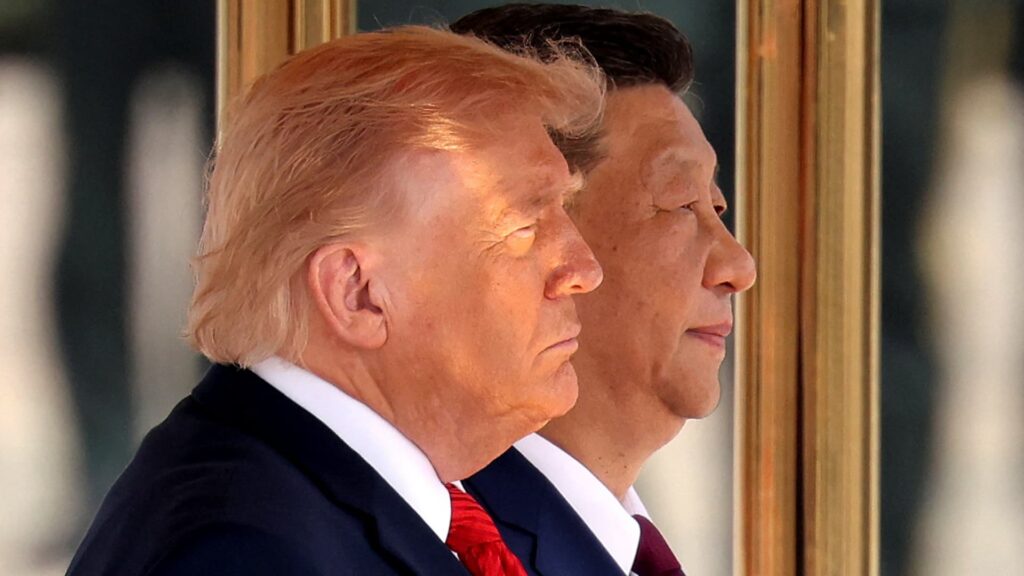
As President Donald Trump prepares to meet with Chinese President Xi Jinping this week, concerns are mounting among U.S. politicians and the automotive industry regarding the potential entry of Chinese automakers into the American market. This follows remarks from Trump suggesting he might be open to allowing Chinese manufacturers in, provided they produce vehicles domestically. A significant coalition, including major auto trade groups and bipartisan lawmakers, is urging the president to reconsider this stance, emphasizing the implications for American manufacturing and competition.
| Article Subheadings |
|---|
| 1) Concerns Over Chinese Automakers’ Entry |
| 2) Key Figures in the Upcoming Meeting |
| 3) The Rising Global Influence of Chinese Automakers |
| 4) The Challenge Facing U.S. Auto Manufacturers |
| 5) Summary of the Situation |
Concerns Over Chinese Automakers’ Entry
U.S. lawmakers and industry leaders are increasingly apprehensive about President Trump’s willingness to permit Chinese automakers entry into the American market. During discussions leading up to Trump’s meeting with President Xi, he suggested that Chinese manufacturers could be allowed to operate domestically, a move that has unsettled significant sectors of the U.S. automotive landscape. This viewpoint has provoked a unified response from auto trade groups, which represent all facets of the American automotive industry, urging Trump to maintain existing restrictions on Chinese firms, citing the long-term impacts on U.S. manufacturing and competition.
Key voices, including legislators like Senator Elissa Slotkin of Michigan, have emphasized that the issue transcends political lines. Slotkin stated, “It’s about whether we want to make cars in America and whether we want a manufacturing base that can pivot when we need it.” The assembly of both Democratic lawmakers and industry representatives showcases a rare consensus, reflecting deep-rooted concerns about the implications of such a policy shift on American jobs and market stability.
Key Figures in the Upcoming Meeting
As the high-stakes meeting draws near, President Trump is expected to host key figures from China, including President Xi and industry leaders like Wang Chuanfu, the head of BYD, along with Robin Zeng, founder of CATL, a global leader in electric vehicle batteries. Their presence underscores the meeting’s significance, as discussions will likely revolve around trade policies, technological collaboration, and the future landscape of the automotive industry.
Notably, top executives from major U.S. automotive companies are anticipated to attend. Mary Barra, CEO of General Motors, and Elon Musk, CEO of Tesla, are among those reportedly scheduled to participate in Trump’s state dinner for Xi. As they engage in conversations around potential collaborations and competitive strategies, the outcomes of these talks could alter the trajectory of U.S.-China trade relations in the automotive sector.
The Rising Global Influence of Chinese Automakers
The influence of Chinese automakers has surged in recent years, with their market share experiencing exponential growth. According to recent market research, the global market share for Chinese automotive brands saw a jump of nearly 70% from 2020 to 2025. In Europe, where Chinese brands previously held almost no stake, their share rose to 12% just last year, showcasing their rapid expansion outside of domestic confines.
This significant growth can be attributed to aggressive government backing for Chinese automotive companies, alongside a culture of innovation that fosters speedy product development and deployment. Even though the domestic Chinese market is witnessing a slowdown, industry insiders suggest that this has fueled the expansion of Chinese automakers in search of more lucrative opportunities, particularly in untapped markets such as Europe and parts of South America.
Experts warn that access to the U.S. market represents a “giant tank of life-saving oxygen” for these companies as they navigate fierce competition back home. Michael Dunne, a noted expert on the automotive sector, cautioned that the influx of Chinese automakers into the U.S. could drastically disrupt the existing market dynamics.
The Challenge Facing U.S. Auto Manufacturers
The prospect of Chinese automakers entering the U.S. market presents formidable challenges for domestic manufacturers. Industry figures like Christian Meunier, chairman of Nissan Motor’s Americas group, describe contending with Chinese companies as a “hell of a challenge,” primarily due to their aggressive pricing strategies, which are often subsidized by the Chinese government. This leads to fears among U.S. manufacturers of potential disruptions in pricing and market shares.
Furthermore, the bipartisan push in Congress to restrict Chinese automakers’ access to U.S. market signals a deepening concern shared across political lines about maintaining a robust domestic manufacturing base. As manufacturers such as Ford and Stellantis navigate this political and economic landscape, their collaborations with Chinese firms have garnered scrutiny, particularly regarding the implications for national security and economic independence.
Amid these concerns, the American automotive industry is under tremendous pressure to adapt and innovate in order to remain competitive. Experts believe that a proactive approach, focusing on efficiency and cost reduction, is essential to counter the rapid advancements made by Chinese automakers.
Summary of the Situation
As the dialogue unfolds regarding the future of Chinese automakers in the U.S., the implications are complex and multifaceted. The current landscape reveals a significant divide between lawmakers and automakers regarding access policies, reflecting broader apprehensions about economic dependency and national competitiveness. While President Trump’s meeting with President Xi and accompanying industry leaders might pave the way for dialogue, the long-term effects of policy decisions made during this period could reshape the automotive landscape for years to come.
| No. | Key Points |
|---|---|
| 1 | Bipartisan concerns are growing among U.S. lawmakers regarding the potential entry of Chinese automakers into the American market. |
| 2 | Key figures attending the upcoming meeting include President Xi, BYD’s Wang Chuanfu, and Tesla’s Elon Musk. |
| 3 | Chinese automakers are rapidly increasing their global market presence, significantly impacting domestic competitors’ market shares. |
| 4 | U.S. automotive companies face challenges from heavily subsidized Chinese competitors in terms of pricing and market strategy. |
| 5 | The outcomes of the Trump-Xi meeting may influence the future regulatory landscape for U.S.-China automotive trade. |
Summary
In conclusion, the ongoing discussions surrounding the entry of Chinese automakers into the U.S. market signal a pivotal moment for the American automotive industry. As both lawmakers and industry leaders grapple with the implications of such a move, the pressure to protect domestic manufacturing capabilities while fostering economic relations with China becomes increasingly palpable. The outcome of this diplomatic meeting could have lasting repercussions, not just for the automotive sector, but for the broader U.S.-China trade relationship.
Frequently Asked Questions
Question: Why are U.S. lawmakers concerned about Chinese automakers?
U.S. lawmakers are worried that allowing Chinese automakers into the U.S. market could undermine domestic manufacturing, jeopardize American jobs, and lead to increased competition from companies that benefit from government subsidies.
Question: Who are some key players attending the meeting between Trump and Xi?
Among the attendees are President Xi, Wang Chuanfu from BYD, and Elon Musk, CEO of Tesla, as top industry executives gather to engage in discussions around trade policies.
Question: What impact might the meeting have on the automotive industry?
The outcomes of the meeting could significantly affect U.S.-China trade relations in the automotive sector, influencing future regulations and market access for Chinese manufacturers in the U.S.