
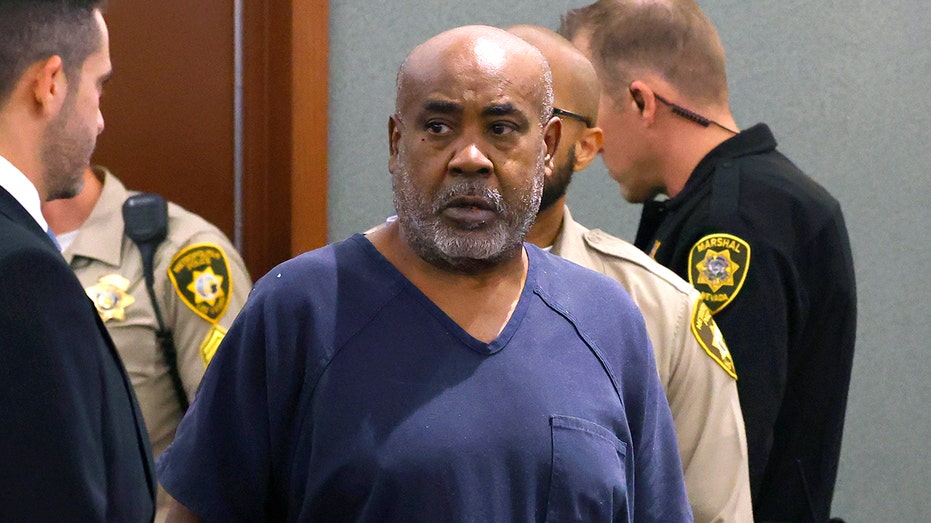
The first week of the long-awaited trial over the 1996 killing of Tupac Shakur highlighted the difficulties of prosecuting a case nearly three decades after the rapper’s death. Prosecutors presented testimony about gang rivalries, the beating of Orlando “Baby Lane” Anderson and statements allegedly made by defendant Duane “Keffe D” Davis. Several key figures are dead or unwilling to cooperate, leaving Davis’ own words at the center of the case. The trial is expected to last four to five weeks.
Davis, 63, is accused of obtaining and supplying the gun used in the Las Vegas drive-by shooting that killed Shakur and wounded Marion “Suge” Knight. Prosecutors do not allege that Davis personally fired the shots.
| 1) | The prosecution’s revenge theory |
| 2) | Davis’ statements become central evidence |
| 3) | Reluctant witnesses reflect gang-code tensions |
| 4) | Early testimony traces the investigation |
| 5) | The defense challenges the prosecution’s account |
The prosecution’s revenge theory
Prosecutors told jurors that the shooting followed a confrontation at the MGM Grand in Las Vegas on September 7, 1996. They allege that members of Knight’s entourage assaulted Anderson, Davis’ nephew, after a Mike Tyson boxing match. According to the state’s theory, Davis helped obtain a firearm, joined the search for Shakur and passed the weapon into the rear seat of a Cadillac before someone opened fire.
Shakur was fatally wounded in the shooting, while Knight survived. The three other men prosecutors believe were in the vehicle are dead, including Anderson. Davis’ alleged role is therefore being examined through testimony, recorded interviews and other statements rather than through testimony from the suspected shooter.
Davis’ statements become central evidence
Former FBI special agent Wade Lee testified that Davis began cooperating with investigators after a 1998 drug-trafficking arrest. Prosecutors said Davis later gave multiple interviews, appeared in a television documentary and described the killing in a memoir.
On Thursday, jurors heard hours of a 2008 police interview. In the recording, Davis said he was inside the Cadillac, initially possessed the gun and passed it toward the back seat. He identified Anderson as the person who ultimately fired at Shakur and Knight. Chief Deputy District Attorney Binu Palal told jurors they would learn the prosecution’s account from Davis himself.
Reluctant witnesses reflect gang-code tensions
The trial has also exposed the challenge of relying on witnesses connected to the rival South Side Compton Crips and Mob Piru Bloods. James “Mob James” McDonald, a former Mob Piru associate, asked the court to treat him as a hostile witness. He later told Davis, “I don’t want to send you to prison.”
Former FBI official Chris Swecker, who worked on gang investigations, testified that the culture discouraged cooperation with police. He said that reluctance helps explain why no one was originally charged in the killing, despite the public nature of the case.
“The need to brag and the need to get street cred sort of overrode caution,” Swecker said.
Early testimony traces the investigation
Jurors viewed MGM surveillance footage showing the initial fight involving Knight’s entourage and Anderson. Thomas Kern, a former Las Vegas crime scene analyst, testified that he attended Shakur’s autopsy. The forensic pathologist determined that Shakur died from multiple gunshot wounds to the chest and abdomen, with the death classified as a homicide.
More than a dozen witnesses had testified by Friday, including photographer Leonard Jefferson, who took one of the last known photographs of Shakur alive. Former LAPD detective Daryn Dupree also described a statement in which Davis allegedly said, “we did the other one,” after being asked about the killing of rapper Christopher Wallace, known as the Notorious B.I.G.
The defense challenges the prosecution’s account
Defense attorney Michael Sanft argues that Davis exaggerated or invented stories for attention and book sales. He told jurors that prosecutors were presenting fiction as fact and said they must decide which claims are supported by evidence.
Sanft also argued that investigators failed to corroborate Davis’ account while other suspected participants were still alive. The defense position is that Davis was not involved in the murder and that his later statements should not be treated as reliable proof. Sean “Diddy” Combs was mentioned during testimony concerning an alleged payment, but he has not been charged in the deaths of Shakur or Wallace.
| Number | Key Point |
| 1) | Davis is accused of supplying the weapon, not firing the shots. |
| 2) | Prosecutors rely heavily on Davis’ interviews and recorded statements. |
| 3) | Witness cooperation remains difficult because several central figures are dead or unwilling to testify. |
| 4) | The defense disputes the accuracy and reliability of Davis’ accounts. |
Summary
The opening week established the competing narratives that will shape the trial. Prosecutors describe a retaliation shooting rooted in a gang dispute and supported by Davis’ own words, while the defense portrays those statements as embellished stories that were never properly corroborated. With the case proceeding decades after the killing, the jury must weigh aging evidence, reluctant witnesses and disputed interpretations of Davis’ history.
Frequently Asked Questions
What is Duane Davis accused of doing?
Davis is accused of helping obtain and supply the firearm used in the shooting that killed Tupac Shakur. Prosecutors do not accuse him of being the shooter.
What evidence is central to the prosecution’s case?
The prosecution is relying heavily on Davis’ police interviews, other public statements and testimony about the events preceding the shooting.
Why has the case taken so long to reach trial?
The killing remained unresolved for decades, and several people believed to have knowledge of the shooting are dead or have declined to cooperate with investigators.