
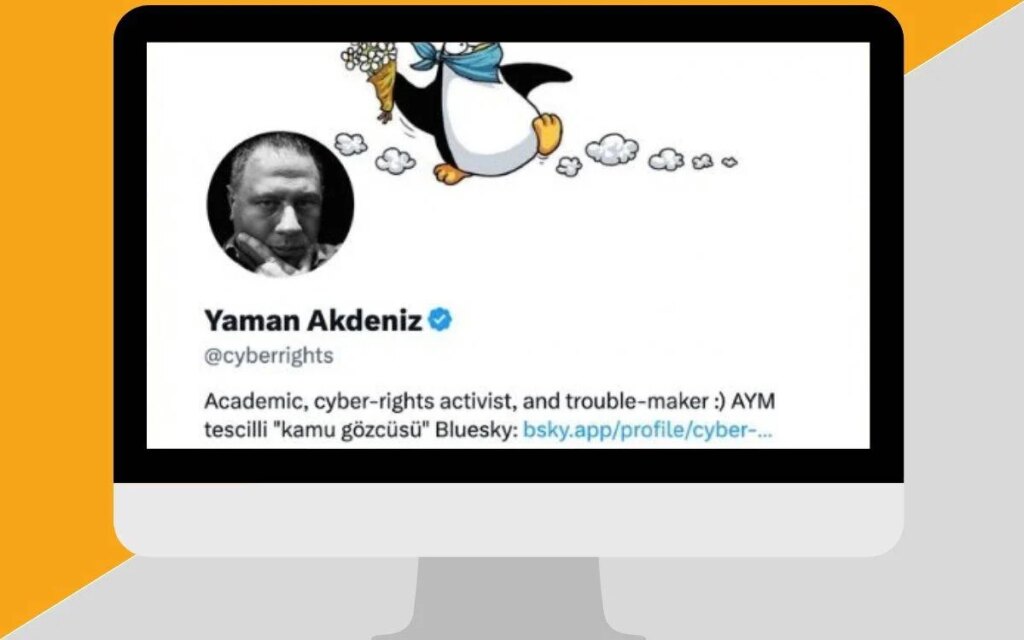
In a significant move highlighting ongoing tensions regarding freedom of expression in Turkey, authorities have blocked the X account of human rights advocate Yaman Akdeniz. Initially celebrated for his efforts in monitoring online censorship, Akdeniz now finds himself a victim of the very issues he advocates against. This restriction stems from Article 8/A of Turkey’s Internet Law No. 5651, which has been increasingly employed since a recent court ruling that invalidated other provisions related to online freedoms.
| Article Subheadings |
|---|
| 1) Background on Internet Law 5651 and Article 8/A |
| 2) Details of the Account Blockade |
| 3) Implications of Recent Restrictions |
| 4) The Broader Context of Censorship in Turkey |
| 5) Looking Ahead: The Future of Online Freedoms |
Background on Internet Law 5651 and Article 8/A
Turkey’s Internet Law No. 5651, enacted in 2007, has undergone significant scrutiny over the years, particularly concerning its capacity for limiting freedoms related to online expression. This law was created to combat issues such as cybercrime and online defamation but has since evolved into a powerful tool for restricting access. Article 8/A specifically allows authorities to block content on various grounds, including the necessity to protect national security, public order, and the rights of others.
The application of this article intensified after a decision by Turkey’s Constitutional Court that struck down Article 9, which originally protected rights related to personal freedoms. Following this ruling, there has been a noticeable increase in the restriction of online accounts, particularly targeting journalists, activists, and organizations advocating for rights. Following the court’s action, officials have even started to enact these measures with alarming speed and without sufficient notice to the affected individuals.
Details of the Account Blockade
In a recent development, Yaman Akdeniz, a prominent law professor and human rights lawyer, had his X account blocked under the provisions of Article 8/A. Publicly speaking about the issue, Akdeniz stated,
“I have become the subject of the issue I constantly raise. As a lawyer and a law professor, I do not know under which decision and on what grounds my account was blocked.”
His account was reportedly rendered invisible with little explanation from the authorities, hampering his efforts to address or challenge the blockade effectively. Without being formally notified of this decision, he highlights an essential aspect of this censorship issue—the lack of transparency and due process regarding such fundamental restrictions on freedom of expression.
Implications of Recent Restrictions
The blockade of Akdeniz’s account has broader implications than just an individual case of censorship. This situation points to a worrying trend where many social media accounts belonging to journalists and rights organizations have faced similar fates. Recent reports indicate that over 400 such accounts have been blocked, indicating an escalation of censorship tactics deployed against voices critical of the government.
Organizations like the Mor Çatı Women’s Shelter Foundation and Lambdaistanbul have also seen their accounts restricted under the same legislative framework. In line with Akdeniz’s observations, these acts have stoked fears within the civil society about the increasingly hostile environment for dissenting voices. It raises critical concerns about the health of democracy in Turkey, as the blocking of accounts represents a strategy to suppress dissent and silence opposition.
The Broader Context of Censorship in Turkey
Freedom of expression in Turkey has faced continual challenges, especially in light of recent socio-political changes. The current administration has been accused of utilizing legal and administrative tools to control media narratives and silence critics. Activists have pointed out that these tactics commonly involve accusations of terrorism or disorder when addressing critical viewpoints.
With international human rights organizations expressing concern over these practices, Turkey continues to receive significant attention from the global community. However, despite international pressure, the government has remained steadfast in limiting expression and curbing dissent. The blockade of Akdeniz’s account is a symptomatic representation of these broader trends, subtly reinforcing the notion that online freedoms are continuously eroding.
Looking Ahead: The Future of Online Freedoms
Moving forward, the future of online freedoms in Turkey remains uncertain. Advocacy groups continue to fight for more transparent and accountable governance mechanisms, emphasizing the need for legal reforms that protect, rather than stifle, freedom of expression. Akdeniz himself remains committed to his role, stating he would continue his work against censorship, despite the personal implications of such a stance.
The outcome of ongoing dialogues surrounding this issue may significantly shape the landscape of digital expression in Turkey. As activism intensifies, particularly among youth and civil society organizations, there remains hope that a renewed commitment to safeguarding human rights will emerge, which acknowledges the significant role freedom of expression plays in a democratic society.
| No. | Key Points |
|---|---|
| 1 | Yaman Akdeniz’s X account was blocked under Article 8/A of Turkey’s Internet Law No. 5651. |
| 2 | The law is often used to justify censorship on various grounds, including public safety and national security. |
| 3 | Akdeniz expressed bewilderment regarding the lack of due process surrounding his account blockade. |
| 4 | Over 400 accounts belonging to rights advocates and journalists have faced similar restrictions. |
| 5 | Human rights organizations are alarmed by the increasing control over expressions of dissent in Turkey. |
Summary
The recent restriction on Yaman Akdeniz‘s social media account underscores an alarming trend in Turkey regarding freedom of expression. The use of Article 8/A of the Internet Law serves as a powerful tool for suppressing dissent and stifling critical voices in civil society. As activists continue to combat these oppressive measures, the future of online freedoms remains a pivotal concern for the health of Turkey’s democracy.
Frequently Asked Questions
Question: What does Article 8/A of Turkey’s Internet Law entail?
Article 8/A allows authorities to block online content for several reasons, including protecting national security, maintaining public order, or safeguarding personal rights.
Question: Who is Yaman Akdeniz?
Yaman Akdeniz is a law professor and human rights advocate known for his work monitoring online censorship and advocating for digital rights in Turkey.
Question: What are the implications of the recent account blockages for free speech in Turkey?
The widening scope of account restrictions raises critical concerns about the erosion of free speech and the suppression of dissenting voices, thereby threatening the fabric of democracy in Turkey.