
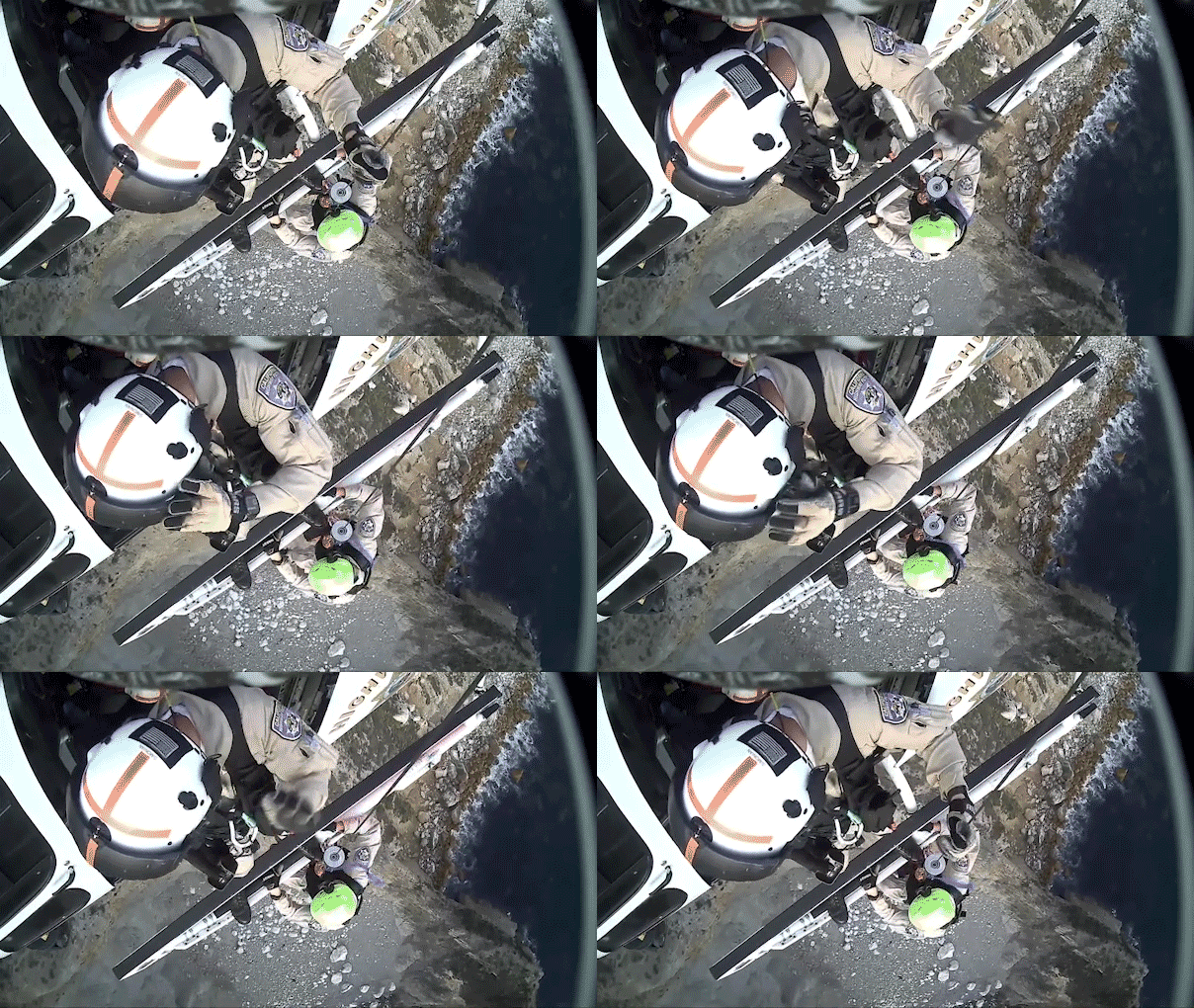
Two climbers stranded on a steep cliff near Hurricane Point in California’s Big Sur region were rescued by a California Highway Patrol helicopter crew. The pair was located about 600 feet below the roadway, where the terrain made a conventional ground rescue impractical. A rescue technician was lowered from an H-70 helicopter and secured each climber during separate hoist operations. Both climbers survived, authorities said.
Video released by the agency shows the aircraft hovering over a ravine as the technician reaches the stranded climbers and guides them to safety. The operation came after Big Sur Fire requested assistance from the patrol’s Paso Robles Air Unit at approximately 6:24 p.m.
| Article Subheadings | |
|---|---|
| 1) | Rescue call near Hurricane Point |
| 2) | Technical hoist through steep terrain |
| 3) | Two climbers brought to safety |
| 4) | Training behind high-risk missions |
| 5) | Additional missions completed by the H-70 crew |
Rescue call near Hurricane Point
Big Sur Fire requested the helicopter response after two climbers became stranded along a remote and sharply sloped section of coastline near Hurricane Point. The incident occurred on a Saturday, with the request reaching the Paso Robles Air Unit at about 6:24 p.m. The climbers were far below the roadway, approximately 600 feet down the cliffside, and the available access points did not provide an apparent safe route out.
The California Highway Patrol dispatched its H-70 helicopter and an aircrew trained for hoist rescues. The operation took place above a steep ravine, where the aircraft had to maintain position while a technician descended to the climbers. Authorities did not release the climbers’ names or explain how they became stranded.
Technical hoist through steep terrain
The rescue required a technical hoist because of the cliff’s gradient and the distance between the roadway and the climbers. Video shows the helicopter hovering above the ravine while a rescue technician was lowered on a cable. The technician reached the first climber and prepared the person for extraction using a Pelican rescue harness.
The terrain created an additional complication. The technician could not safely disconnect from the hoist hook after reaching the first climber. Instead, the technician and climber were lifted together to a staging area where other rescue personnel were waiting. This method allowed the crew to complete the extraction without requiring the technician to move independently across the unstable slope.
Two climbers brought to safety
After the first climber was removed, the helicopter returned to the ravine for the second person. The same technical procedure was used, with the technician securing the climber before the aircraft lifted both of them away from the cliff. The two rescues were conducted one at a time because the aircraft and technician had to manage each hoist in the confined terrain.
Both climbers survived the incident, according to authorities. No further details about their condition were released. The video posted by the agency prompted online praise for the aircrew and the other rescue personnel involved in coordinating the response.
“These high-risk, low-frequency rescues are exactly what CHP Air Operations personnel continuously train for. There is no room for error when operating in steep terrain, under hoist, and in challenging environmental conditions.”
Training behind high-risk missions
The agency described the Big Sur operation as the type of infrequent but dangerous incident for which its air operations personnel regularly train. Hoist rescues require coordination among the pilot, flight crew, technician, people on the ground and any local fire agencies involved in the call.
In this case, the crew had to account for the cliff’s steepness, the helicopter’s position over the ravine and the need to keep the technician attached while the climbers were moved. The rescue demonstrated how specialized aerial equipment can reach people who are inaccessible to ground teams, while also showing the risks associated with working under a helicopter in difficult environmental conditions.
Additional missions completed by the H-70 crew
The Big Sur cliff rescue followed two separate missions conducted by the same H-70 crew on Aug. 9. In the first, the air unit hoisted an injured 13-year-old hiker from Pinnacles National Park. A Paso Robles Fire Department helicopter rescue technician assisted with that operation.
Later that day, the crew rescued a person who suffered severe injuries after falling from a waterfall in Big Sur Gorge. The helicopter subsequently responded to another call in the remote Los Padres National Forest, where a hunter experiencing heat exhaustion and dehydration was taken aboard using a hover step-on maneuver and flown to waiting medical personnel in King City.
| Number | Key Point |
|---|---|
| 1 | Two climbers were stranded about 600 feet below a roadway near Hurricane Point. |
| 2 | An H-70 helicopter lowered a rescue technician to the ravine. |
| 3 | Each climber was secured in a Pelican rescue harness and lifted separately. |
| 4 | Both climbers survived, and their names were not released. |
Summary
The Big Sur rescue highlighted the role of specialized helicopter crews in reaching people trapped on terrain too steep or remote for a standard ground response. By combining a technical hoist, a rescue harness and close coordination with local agencies, the H-70 crew brought both climbers to safety. The operation also followed several other demanding missions handled by the same air unit.
Frequently Asked Questions
Where were the climbers rescued?
They were rescued from a steep cliff near Hurricane Point in Big Sur, approximately 600 feet below the roadway.
How did the helicopter crew remove them?
A rescue technician was lowered from an H-70 helicopter, secured each climber in a Pelican rescue harness and lifted them out one at a time.
Did the climbers survive?
Yes. Authorities said both climbers survived, although their names and further condition details were not released.