
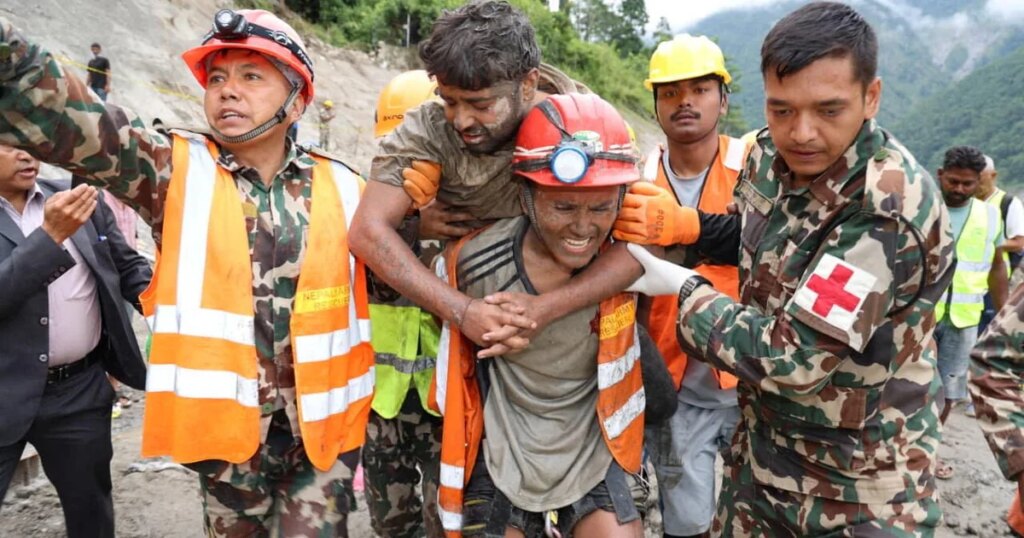
In a significant rescue operation, emergency teams in Nepal successfully pulled two workers alive from the Trishuli 3A hydropower tunnel on Friday, nine days after severe floods devastated the region. The floods, which were likely caused by a glacier collapse, have resulted in hundreds of casualties and numerous missing individuals. As search efforts continue, hope remains for more survivors trapped within the tunnels.
| Article Subheadings |
|---|
| 1) Details of the Rescue Operation |
| 2) The Impact of the Floods |
| 3) Voices from Inside the Tunnel |
| 4) Missing Workers and Safety Concerns |
| 5) Government Response and Efforts |
Details of the Rescue Operation
Emergency personnel achieved a significant breakthrough in the Trishuli 3A hydropower project area when they successfully rescued two workers from the confined tunnel. The rescue operation, which has garnered attention from local and international agencies, unfolded as teams used sophisticated equipment alongside traditional methods to reach the trapped individuals. Nine days of relentless rain and flooding had caused severe destruction in the region, complicating rescue efforts.
Initially, rescuers conducted extensive searches throughout the area, trying to pinpoint locations where workers might be trapped. Their efforts were rewarded when they heard voices from deep within the tunnel, leading them to the two workers. The rescue operation was a collaborative effort, with locals and volunteers joining official emergency teams to lend their support.
The two workers, identified as mechanical foreman Sanjay Shah and mechanical supervisor Kabir Maharjan, were found in stable condition and were promptly airlifted to a hospital in Kathmandu for further medical assessment. Such rescue undertakings require thorough training, quick thinking, and a commitment to saving lives; the dedication of the rescue teams stands as a testament to their professionalism.
The Impact of the Floods
The floods and mudslides triggered by heavy rains have had catastrophic repercussions in Nepal, claiming the lives of at least 1,287 people as per the latest reports from the country’s disaster management agency. Furthermore, more than 5,000 are still classified as missing, underscoring the dire situation. Many towns and villages have been swept away, leading to immense destruction of homes and infrastructure.
On the global stage, the situation in Nepal has drawn widespread concern, with neighboring countries and international organizations offering condolences and assistance. The community’s efforts to recover and rebuild are compounded by the sheer scale of destruction, with entire families and communities being uprooted from their homes. As local emergency services continue their work, awareness of the situation grows, highlighting the need for better preparedness against such natural disasters.
Voices from Inside the Tunnel
Rescue teams received encouragement when they detected sounds coming from the Trishuli 3A tunnel, suggesting that more individuals were still alive inside. Shri Ram Neupane, a local lawmaker, took to social media to share the joyous news of the rescue, expressing hope for additional survivors to be located during ongoing operations.
The urgency of the matter is pressing; rescuers are aware of the ticking clock, as trapped workers are at significant risk of running out of oxygen. A Nepali energy adviser explained the complexity of the tunnel system, which is a series of chambers and tunnels that complicate rescue operations. The trapped workers, being some of the most skilled engineers, are believed to be trying to devise ways to improve their safety until help can arrive.
Missing Workers and Safety Concerns
According to reports from the Independent Power Producers Association of Nepal, at least 557 workers from the Trishuli 3A hydropower project remain missing. Out of this number, approximately 115 are assumed to be trapped in the main tunnel alone. The unfolding situation calls into question the safety protocols in place at construction sites across the region, reigniting discussions about the need for stricter regulations and emergency preparedness measures.
As the rescue mission continues, families of the missing workers are grappling with uncertainty, clinging to hope even amid despair. The anguish is palpable among relatives waiting anxiously for news. This tragic event not only reveals the immediate dangers faced by workers in hazardous environments but also underlines the necessity for continual improvements in worker safety standards.
Government Response and Efforts
In light of the crisis, Nepal’s Foreign Minister Shisir Khanal expressed his excitement about the successful rescues while also shedding light on the broader implications of the tragedy. He noted that while many lives have been saved, the urgent need remains to locate all those missing and provide the necessary assistance. Officials are actively assessing the situation and coordinating with various agencies to enhance rescue operations and provide aid to affected families.
As search and rescue teams work tirelessly to save lives, the government is under pressure to address infrastructure vulnerabilities, particularly in flood-prone areas. This disaster has highlighted existing weaknesses in disaster management systems and the pressing need for improved response strategies when dealing with future calamities. The government has begun discussions aimed at instituting reforms to ensure better preparedness and risk reduction measures will be prioritized.
| No. | Key Points |
|---|---|
| 1 | Two workers were successfully rescued from the Trishuli 3A hydropower tunnel nine days after devastating floods. |
| 2 | At least 1,287 people have died due to the floods, with thousands more unaccounted for. |
| 3 | A complex system of tunnels has complicated rescue efforts for the remaining workers. |
| 4 | Families are anxiously awaiting news of their missing loved ones amidst the disastrous aftermath. |
| 5 | The government’s response focuses on rescue operations while addressing safety concerns in construction sites. |
Summary
The recent floods in Nepal have resulted in tragic loss of life and extensive destruction, underscoring the urgency of rescue efforts for the many still missing. The remarkable rescue of two workers from the Trishuli 3A hydropower project brings a glimmer of hope amidst the devastation, prompting a re-evaluation of safety protocols for construction in vulnerable areas. As the nation faces this crisis, the collaborative efforts between government agencies, local officials, and communities remain vital in overcoming the challenges posed by such natural disasters.
Frequently Asked Questions
Question: What caused the floods in Nepal?
The floods were likely triggered by a glacier collapse and heavy rains that led to significant destruction in various parts of the country.
Question: How many workers are still missing from the Trishuli 3A project?
At least 557 workers are reported missing from the Trishuli 3A hydropower project, with around 115 believed to be trapped in the main tunnel.
Question: What are the government’s plans moving forward?
The government plans to coordinate rescue efforts and assess the current infrastructure to address safety vulnerabilities, improving disaster management systems for the future.