
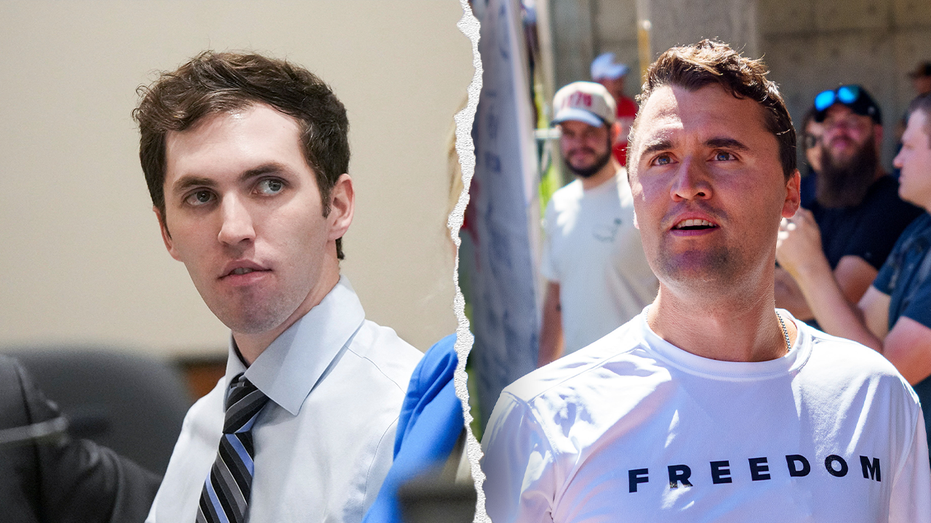
A Utah judge ended a hearing involving Tyler Robinson without setting a trial date in the case over the fatal shooting of Charlie Kirk. The court heard competing arguments about the time needed to review evidence, prepare motions and coordinate lawyers’ schedules. Jeffrey Neiman, representing Kirk’s widow, urged the court to move the case forward, while Robinson’s defense argued that a rushed trial could lead to mistakes. Judge Tony Graf Jr. scheduled the next hearing for Nov. 9, when he said he would announce his ruling.
| 1) | Judge delays decision on trial timing |
| 2) | Prosecution and defense offer competing schedules |
| 3) | Evidence volume drives the defense request |
| 4) | Widow’s attorney presses for a speedy resolution |
| 5) | Next hearing set for November |
Judge delays decision on trial timing
The roughly three-hour hearing took place in Provo, Utah, on Oct. 23, 2026. Robinson, 23, appeared in a light gray suit, without handcuffs or shackles, and did not address the court. He spoke quietly with members of his legal team during breaks.
Judge Tony Graf Jr. had expected to set a trial date at the hearing. Instead, he said he needed additional time after questioning attorneys about their proposed timelines and existing commitments in other cases. Technical problems involving WebEx also caused several interruptions, with one defense attorney and an attorney for Kirk’s parents attending remotely.
Prosecution and defense offer competing schedules
Utah County prosecutors identified Jan. 31, 2028, as their preferred trial date, although they said they could be ready as early as October 2027. Robinson’s defense requested a tentative date in the third quarter of 2029, citing the volume of evidence and lawyers’ obligations in other proceedings.
One scheduling conflict involves attorney Richard Novak, who has a federal racketeering trial set to begin Jan. 10, 2028. Both sides also acknowledged that a trial extending through the holiday season could create difficulties for jurors and witnesses. Novak argued that the proposed federal trial date was firmly established and that the state case should not be rushed.
“The reality is rushing to trial does not lead to closure. It does not lead to finality. It leads to mistakes,” Novak told the court.
Evidence volume drives the defense request
Defense attorney Staci Visser said the case includes more than 31,000 pieces of discovery and about 8 million digital artifacts. She said attorneys must review the material before filing motions, seeking additional information or issuing subpoenas.
Visser described discovery review as the foundation for later stages of the case and said it affects every subsequent decision. On that basis, she argued that the state’s proposed January 2028 trial date was not practical. The defense’s request for a 2029 date was described as a soft target rather than a final commitment.
Widow’s attorney presses for a speedy resolution
Jeffrey Neiman, representing Erika Kirk, urged the court to set a date and emphasized the impact of continued uncertainty on the Kirk family. Robinson was charged nearly a year before entering a plea last month, adding to Neiman’s concern about the pace of the proceedings.
Utah’s state constitution gives crime victims and their representatives a right to a speedy resolution. Erika Kirk is the court-designated victim representative. Neiman said the family would be willing to ask the federal court to reschedule Novak’s other trial if doing so would remove a scheduling obstacle.
“Every day of delay adds to uncertainty, invites speculation and that erodes confidence in this system,” Neiman said.
“Time is the defense’s best ally,” he added.
Next hearing set for November
Judge Graf scheduled the next hearing for Monday, Nov. 9, at 1 p.m. Mountain Time. He said he would read his ruling then, leaving the trial schedule unresolved after the October arguments.
Robinson is accused of aggravated murder and six other counts in connection with the Sept. 10, 2025, shooting at Utah Valley University in Orem, Utah. Kirk, the founder of Turning Point USA, was speaking at an event when he was shot and killed. The allegations remain pending before the court.
| No. | Key Point |
|---|---|
| 1 | No trial date was set after the Oct. 23 hearing. |
| 2 | Prosecutors preferred January 2028, while the defense sought a tentative date in the third quarter of 2029. |
| 3 | The defense cited more than 31,000 discovery items and about 8 million digital artifacts. |
| 4 | The next hearing is scheduled for Nov. 9, when the judge plans to announce his ruling. |
Summary
The hearing highlighted a fundamental dispute over whether the case should proceed on an accelerated schedule or allow extensive preparation. Prosecutors and the victim’s representative emphasized the need for a timely resolution, while the defense pointed to the scale of the evidence and existing trial commitments. The judge will address the competing positions at the November hearing.
Frequently Asked Questions
Was a trial date set for Tyler Robinson?
No. Judge Tony Graf Jr. postponed the decision after questioning the parties about evidence preparation and scheduling conflicts.
What dates did the lawyers propose?
Prosecutors preferred Jan. 31, 2028, and said they could be ready in October 2027. The defense requested a tentative date in the third quarter of 2029.
When is the next hearing?
The next hearing is set for Monday, Nov. 9, at 1 p.m. Mountain Time. The judge said he plans to announce his ruling then.