
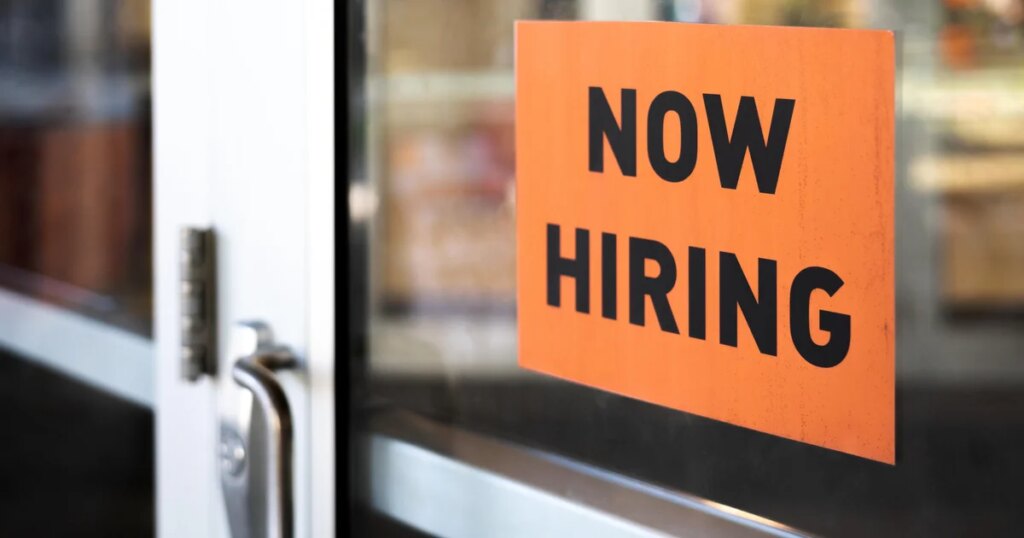
In a surprising turn of events, U.S. employers added 162,000 jobs in August, surpassing economists’ expectations of 65,000 jobs. This figure marks a significant increase from the hiring pace seen in July and has implications for the economic landscape. While the unemployment rate remained steady at 4.1%, analysts suggest this jobs report could impact future decisions regarding interest rates by the Federal Reserve.
| Article Subheadings |
|---|
| 1) Overview of Job Gains in August |
| 2) Implications of Wage Growth |
| 3) Federal Reserve’s Interest Rate Outlook |
| 4) Sectors Driving Job Creation |
| 5) Labor Market Analysis and Future Projections |
Overview of Job Gains in August
In August, the U.S. labor market experienced a noteworthy surge, with employers adding 162,000 jobs. This robust growth significantly outpaced economists’ predictions, which anticipated only 65,000 new jobs for the month. The hiring trend observed indicates a strong rebound from the previous month’s performance, where job creation was far less dynamic. As per the data from the Labor Department, this surge in hiring illustrates a shift toward better economic conditions, signaling a recovery that many analysts did not expect to see so soon. This uptick in job growth contrasts sharply with July’s performance, which was later revised to show only 21,000 additions, previously reported as a loss of 23,000 jobs.
The unemployment rate held steady at 4.1%, indicating that while jobs are being created at a higher rate, the overall labor force participation could be adjusting to keep this rate constant. Experts suggest that the increase in new jobs is a positive sign, foreshadowing growth in consumer confidence and spending, which is crucial for continuing economic recovery.
Implications of Wage Growth
Despite the impressive job gains in August, wage growth remains a point of concern. The average wage growth was reported at 3.1%, which is the lowest level since May 2021. This sluggish pace raises questions about the bargaining power of workers and suggests that many may not have sufficient leverage to negotiate higher salaries. According to Elise Gould, a senior economist at the Economic Policy Institute, “Slowing nominal wage growth suggests workers don’t have the leverage to bid up their wages.”
The implications of stagnant wage growth are multifaceted. On one hand, a large pool of employment opportunities could lead to increased competition among employers, which could eventually push wages higher. However, the current scenario indicates that many individuals who are actively seeking new jobs find themselves in a challenging position when it comes to negotiating salaries. Given the persistence of low wage growth despite falling unemployment rates, analysts are left to believe that more robust economic conditions are required to uplift average earnings across the board.
Federal Reserve’s Interest Rate Outlook
The recent jobs report will certainly be a focal point for the Federal Reserve as it weighs its next steps on interest rates. Economists indicate that with the backdrop of solid job growth, the Federal Reserve may consider raising interest rates during its upcoming meeting scheduled for September 16. However, decisions remain contingent upon forthcoming economic data, particularly the Consumer Price Index report due on September 11.
According to Ellen Zentner, chief economic strategist for a prominent wealth management firm, “An upside surprise in payrolls will likely ramp up concerns about a rate hike, but that outcome is in the hands of next week’s inflation numbers.” This highlights the interconnected nature of job growth and inflation pressures and the delicate balance the Federal Reserve must maintain to ensure economic stability. Earlier indications from Federal Reserve Chair Kevin Warsh spoke to the overall health of the labor market, emphasizing that while there are areas of concern, particularly for younger workers, the majority of individuals willing to work are successfully finding jobs.
Sectors Driving Job Creation
August’s job surge was largely driven by significant hiring in the food services and bars sector as well as local government education. Collectively, these two sectors contributed 59,000 and 42,000 new jobs, respectively. The hospitality industry, in particular, has shown a rebound, indicating that consumer spending and economic activity in this sector have begun to recover post-pandemic. This is noteworthy as it reflects not only the pent-up demand for services but also signals a healthier economy overall.
Furthermore, the rebound in local government education correlates with the upcoming academic year as schools and municipalities prepare for the influx of students. This seasonal hiring is a regular trend that has historically provided stability to employment figures each August. As businesses in the hospitality sector work to regain momentum lost during the pandemic, their recovery could have broader implications for overall economic performance in the coming months.
Labor Market Analysis and Future Projections
Overall, the recent trends in the labor market suggest that the U.S. economy may be on a path toward sustained recovery, albeit with caution. The increase in job additions comes as the labor force, the total number of individuals either working or seeking work, expanded by 683,000 last month, responding positively after a decline in previous months. This could indicate a renewed interest in labor among those who previously opted out due to various constraints, including the pandemic fallout.
Despite these encouraging figures, lingering uncertainties about wage growth and inflation continue to cast a shadow on the recovery trajectory. The Federal Reserve’s measures to tackle inflation remain a primary concern, and the path ahead will depend significantly on how labor market dynamics evolve in conjunction with inflation data. As businesses adjust their hiring strategies in response to these conditions, and with seasonal factors influencing various sectors, it will be critical to monitor upcoming data to paint a clearer picture of the health of the U.S. economy.
| No. | Key Points |
|---|---|
| 1 | U.S. jobs in August increased by 162,000, significantly above the expected 65,000. |
| 2 | Unemployment rate remained at 4.1%, indicating stability despite increased hiring. |
| 3 | Job growth was led by the food services and government education sectors returning strongly. |
| 4 | Wage growth slowed to 3.1%, raising questions about workers’ bargaining power. |
| 5 | The Federal Reserve may respond to the job market data with an interest rate hike in the near future. |
Summary
The strong job growth in August reveals significant recovery in the U.S. labor market, which may lead the Federal Reserve to consider raising interest rates in response. Despite positive trends in job creation, the stagnant wage growth raises concerns for workers and could impact consumer spending moving forward. As the economy continues to navigate recovery from the pandemic, critical data in the coming weeks will further define the trajectory of both employment and inflation.
Frequently Asked Questions
Question: What caused the job increase in August?
The job increase was primarily attributed to significant hiring in the food services sector and local government education, which collectively added substantial numbers of new positions.
Question: How does wage growth impact the economy?
Wage growth is crucial as it influences consumer spending power. When wages are stagnant, it limits the ability of workers to support economic activity through spending, impacting overall economic growth.
Question: What do Federal Reserve interest rate hikes mean for consumers?
Interest rate hikes typically lead to higher borrowing costs, affecting loans, mortgages, and credit cards. This can slow down consumer spending and investments, aiming to control inflation and maintain economic stability.