
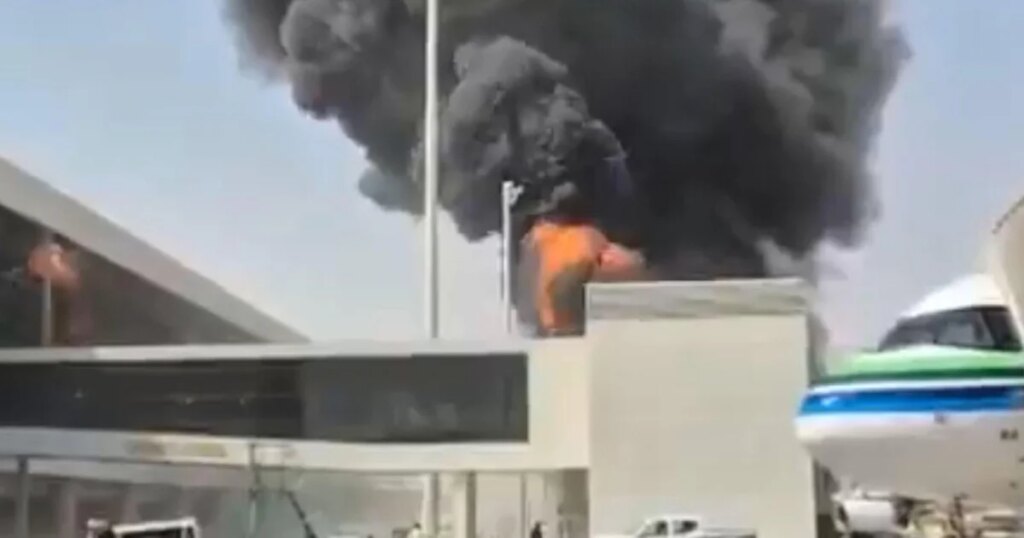
On October 12, 2026, the U.S. embassy in Saudi Arabia issued a warning to American citizens to exercise “extreme caution” at the country’s airports following a series of violent attacks. These incidents have resulted in the loss of life, highlighting an increasingly tense security situation. Additionally, the U.S. military has disabled a commercial vessel in the Gulf of Oman amid ongoing naval confrontations, while the Saudi-led coalition reported repeated strikes in Riyadh, further intensifying regional tensions.
| Article Subheadings |
|---|
| 1) U.S. Embassy Warning to Citizens |
| 2) Military Action in the Gulf of Oman |
| 3) Ongoing Attacks on Saudi Airports |
| 4) U.S. Involvement Considered |
| 5) Implications of Recent Events |
U.S. Embassy Warning to Citizens
The U.S. embassy in Saudi Arabia recently issued an urgent advisory for American citizens to exercise “extreme caution” while traveling through the country’s major airports. This advisory follows a violent weekend marked by missile strikes that resulted in the death of 13 individuals, raising alarm over safety in the region. The embassy’s statement was clear in its message: travelers should remain vigilant and aware of their surroundings while at airports.
In its release, the embassy mentioned specific attacks, including two strikes at King Khalid International Airport in Riyadh and King Fahd International Airport in Dammam on October 11, heightening concerns for public safety amidst ongoing hostilities. American citizens are advised to keep abreast of local news updates and to follow guidance from authorities regarding travel routes and airport operations, as the situation remains fluid.
Military Action in the Gulf of Oman
In a related development, the U.S. military confirmed that it had taken action against a Panama-flagged commercial vessel in the Gulf of Oman. This maneuver, which involved the firing of precision munitions from a fighter jet, reportedly disabled the ship’s propulsion system without causing harm to the crew onboard. This marked a significant escalation in U.S. naval operations in the region, particularly following increased tensions related to Iranian maritime activities.
According to the U.S. Central Command (CENTCOM), the vessel, known as the Ocean Molica or “Arika Sun,” had recently departed an Iranian port. The backdrop of this operation is the ongoing blockade of Iranian ports, which has been in effect since a ceasefire between the U.S. and Iran collapsed in July. CENTCOM emphasized that 135 ships have been directed away from these waters, and extensive measures have been undertaken against vessels suspected of engaging in the transport of sanctioned Iranian oil and petroleum products.
Ongoing Attacks on Saudi Airports
Just one day after the U.S. embassy’s cautionary announcement, the international airport in Riyadh was struck again by a projectile. This military action follows the earlier missile attack that claimed 12 lives and injured many others. The ongoing strikes, attributed to the Iran-backed Houthi rebels from Yemen, have raised serious questions about the effectiveness of Saudi air defense systems and the safety of its key transportation hubs.
Saudi officials reported the death of a Pakistani national and numerous injuries as a result of the latest attack on the domestic terminal at King Khalid International Airport. Following the missile attacks, which have now struck the airport multiple times within a short period, operations at this critical airport have been severely disrupted. Talks of heightened security and military responses are being discussed among Saudi authorities in light of the attacks.
U.S. Involvement Considered
In a noteworthy political development, President Trump hinted at the possibility of U.S. military involvement in Saudi Arabia’s ongoing battle against the Houthi rebels. Following inquiries about the recent attacks, President Trump stated, “We may. We’re gonna look at it,” signaling a readiness to reassess the U.S.’s military posture in the region. He indicated that the White House would quickly deliberate over potential responses, underlining the administration’s close monitoring of the situation.
Additionally, the President’s statements come amid broader discussions regarding the limits of U.S. military engagement in the region, especially considering his previous commitments to avoid new military interventions before forthcoming midterm elections. The ongoing strife has changed the dynamics, presenting challenges for military and political decision-making.
Implications of Recent Events
The recent series of violent incidents and military actions have underscored escalating tensions between Iran-backed forces and the Saudi-led coalition in the region. The implications extend beyond immediate safety concerns for travelers and citizens, as they highlight the fragile balance of power in the Middle East and raise questions about future U.S. military engagement. These events come at a time when diplomatic relations are fraught, necessitating careful navigation of security policies.
Moreover, the involvement of the U.S. military in neutralizing vessels linked to Iran indicates a potential shift in U.S. strategy and could provoke further responses from Iranian authorities. The regional stability depends on a concerted approach towards managing the ongoing conflict, particularly as hostilities escalate and affect civilian lives across the border.
| No. | Key Points |
|---|---|
| 1 | U.S. citizens are advised to exercise extreme caution at Saudi airports. |
| 2 | The U.S. military disabled a commercial vessel in the Gulf of Oman. |
| 3 | Riyadh’s airport was hit by a projectile just after a deadly missile strike. |
| 4 | President Trump may consider U.S. military involvement in Saudi-led operations. |
| 5 | The current events illustrate the fragile state of Middle East security. |
Summary
In light of the recent attacks and military actions involving both American and Saudi forces, the region faces a perilous escalation in violence. The U.S. embassy’s advisory for American citizens indicates a serious concern for civilian safety amidst military operations. Continuous aggression from Houthi rebels poses significant challenges for Saudi Arabia, while potential U.S. involvement complicates the delicate geopolitical landscape, necessitating ongoing attention and action from international authorities.
Frequently Asked Questions
Question: What triggered the U.S. embassy’s cautionary advisory in Saudi Arabia?
The advisory was issued following a series of missile strikes that resulted in casualties, emphasizing the heightened security risks at major airports in the country.
Question: What actions did the U.S. military take in the Gulf of Oman?
The U.S. military disabled a commercial vessel by firing precision munitions, which targeted the ship’s propulsion system while ensuring the crew’s safety.
Question: How has the attack on the Riyadh airport affected its operations?
The airport has been closed following repeated strikes, which have caused significant casualties and disruptions, raising serious concerns about the security of civil aviation in the region.