
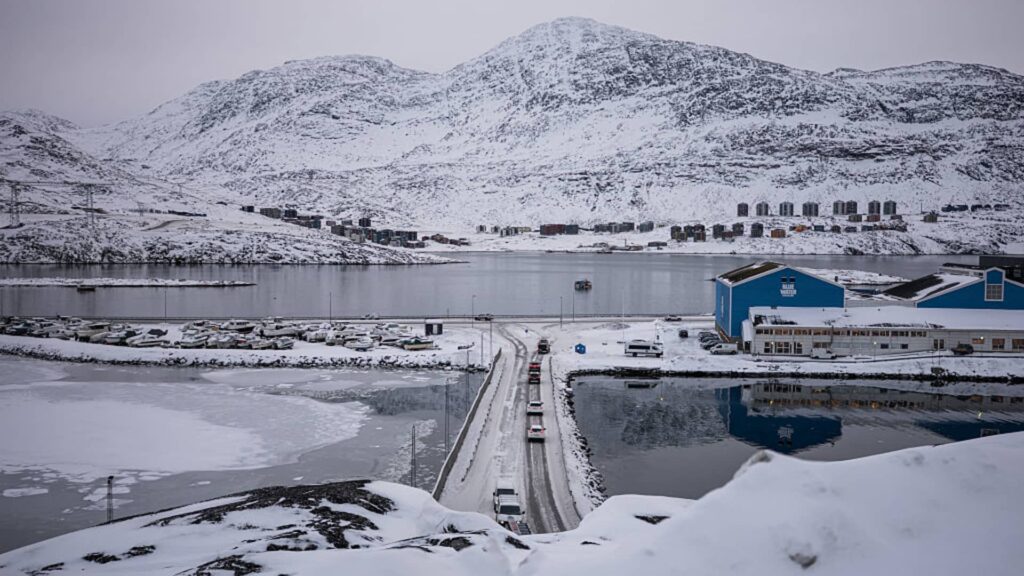
A recent agreement between the United States, Denmark, and Greenland to enhance military presence in Greenland following significant geopolitical tensions has led to a notable surge in the stock prices of several companies involved in Greenland’s natural resources sector. The pact is anticipated to promote cooperation while bolstering security in the Arctic environment. Industry players are already reacting strongly to these developments, showcasing widespread optimism regarding Greenland’s strategic importance and economic potential.
| Article Subheadings |
|---|
| 1) Overview of the Agreement |
| 2) Market Reactions |
| 3) Implications for Greenland’s Sovereignty |
| 4) Companies Poised for Growth |
| 5) The Bigger Picture: U.S. National Security |
Overview of the Agreement
The recently announced agreement between the United States and Denmark aims to enhance military cooperation in Greenland, a self-governing territory of Denmark crucial to both nations’ strategic interests. This agreement comes amidst rising geopolitical tensions in the Arctic, where control over natural resources and military presence is increasingly important. U.S. officials, including President Donald Trump, emphasized that the deal will provide the U.S. with the ability to “secure and defend” Greenland, underlining the territory’s vital role in national security.
The signing of the agreement is scheduled to coincide with the upcoming United Nations General Assembly, marking a significant moment for Arctic diplomacy. The overarching objective of the pact is to prevent adversaries from establishing their own military presence in Greenland while expanding the U.S. military footprint there. Although the specific details of the agreement have yet to be disclosed, it has already generated significant attention, prompting both political and economic responses.
Market Reactions
In response to the announcement of this military pact, shares of companies exposed to Greenland have skyrocketed. Notably, shares of Greenland Energy soared by an impressive 159%, while Greenland Mines experienced a staggering increase of over 200%. Critical Metals Corp also saw a notable rise, climbing nearly 37% in just a matter of hours. This dramatic increase in stock prices reflects investor optimism regarding the strategic importance and potential economic benefits of resource development in Greenland.
The rise in share prices is not only indicative of the deal’s potential economic impact but also reflects the broader investor sentiment regarding the Arctic region as a whole. Analysts suggest that these companies are likely to benefit from increased attention and potential investments spurred by the agreement. Furthermore, the perceived stability brought about by U.S. military presence may attract further exploration and extraction operations in the rich resource-laden region.
Implications for Greenland’s Sovereignty
Despite the focus on military readiness and resource exploitation, Greenlandic and Danish officials have stressed the importance of respecting the island’s right to self-determination. There is a palpable concern among local populations regarding the implications of foreign military presence on their sovereignty and autonomy. In a statement, Greenland’s Prime Minister Jens-Frederik Nielsen expressed optimism about the agreement, emphasizing its alignment with Greenlandic interests and the benefits of international cooperation. He stated, “It is joyous that we are about to make an agreement that will ensure and strengthen the security of Greenland…”
Balancing military collaboration and local autonomy is paramount for the leaders involved. Insisting on the need for a pact that respects the rights of Greenlanders, officials aim to mitigate any fears regarding the potential overreach of foreign military influence on the island’s governance. As such, it remains essential that future discussions and implementations of the pact consider the views of Greenland’s citizens and uphold their rights.
Companies Poised for Growth
The evolving circumstances surrounding the agreement have placed several companies in an advantageous position. Greenland Energy, an oil and gas exploration firm, has been making headlines with its ambitions to unlock the hydrocarbon potential in the Jameson Land Basin on the island’s east coast. The firm, which has received scrutiny over its past operations, is now viewed more favorably in light of the anticipated support from U.S. military infrastructure.
Similarly, Greenland Mines is stepping up its operations focused on the Skaergaard Project, which harbors some of the largest undeveloped palladium, gold, and platinum deposits in the world. This strategic military pact could pave the way for securing necessary permits and operational stability, substantially enhancing the project’s viability. Additionally, Critical Metals Corp is on track with projects involving rare earth minerals—an increasingly crucial resource in today’s tech-driven economy. All these companies are seen as potential growth stars within the mineral-rich landscape of Greenland, especially in light of improved geopolitical stability.
The Bigger Picture: U.S. National Security
The strategic significance of Greenland extends beyond its valuable resources; it represents a critical vantage point for military operations in the Arctic. The U.S. agreement with Denmark highlights American interests in countering foreign influence, specifically from competitors like Russia and China. Both nations have been proactive in enhancing their Arctic capabilities, raising alarms in Washington regarding potential threats to U.S. interests and trade routes.
The ongoing competition for Arctic dominance is not limited to military considerations, as economic factors play a pivotal role as well. Greenland’s vast resources—ranging from oil and gas to rare minerals—position it at the center of a broader geopolitical conflict. U.S. officials assert that a military presence in Greenland will act as a deterrent not only against adversarial military bases but also against the encroachment of rival investments and infrastructure projects in the region.
| No. | Key Points |
|---|---|
| 1 | The U.S. and Denmark have finalized a military cooperation agreement regarding Greenland. |
| 2 | Stock shares of companies related to Greenland’s resources surged after the announcement. |
| 3 | Local leaders emphasize the need to respect Greenland’s autonomy and rights amid increased military presence. |
| 4 | Resource firms like Greenland Energy and Greenland Mines are positioned to benefit from the geopolitical climate. |
| 5 | The agreement is part of a broader U.S. strategy to counter foreign influence in the Arctic region. |
Summary
The recent military pact between the U.S., Denmark, and Greenland underscores the increasing geopolitical importance of Greenland in the context of national security and resource management. The surging stock prices of related companies reflect investor confidence in the resources that Greenland has to offer as a result of this newfound strategic alignment. However, the implications for local governance and the rights of Greenlandic citizens remain a crucial factor as these developments unfold. The future of Greenland lies at an intersection of autonomy, foreign diplomacy, and economic opportunity, making it an area ripe for scrutiny and development.
Frequently Asked Questions
Question: What does the new agreement entail?
The agreement enhances military cooperation among the U.S., Denmark, and Greenland to establish a significant military presence on the territory while preventing adversaries from establishing their own bases.
Question: How are stock markets reacting to the Greenland developments?
Shares of companies involved in Greenland’s natural resources have surged, indicating investor optimism regarding the strategic importance and potential economic benefits of the region.
Question: What concerns do Greenlandic officials have regarding the pact?
Greenlandic officials express concerns about maintaining the territory’s right to self-determination and sovereignty while balancing military cooperation with the U.S.