
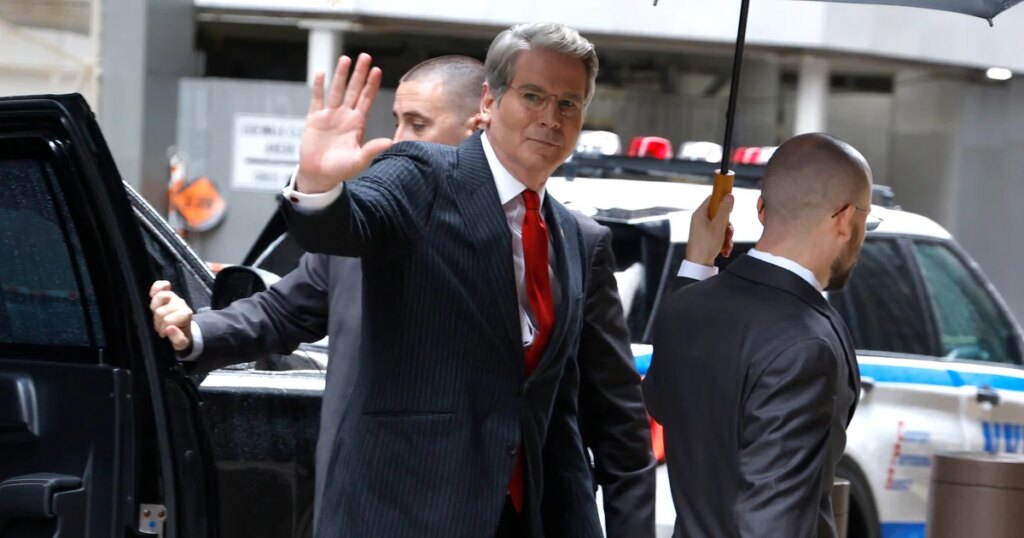
In a crucial series of meetings, U.S. Treasury Secretary Scott Bessent engaged with Chinese Vice Premier He Lifeng in New York City on Sunday, laying the groundwork for an upcoming summit between President Trump and President Xi Jinping. Focused on advancing U.S.-China economic relations, the discussions included trade and the significant issue of artificial intelligence (AI). The outcomes from these talks set the stage for further dialogue between the two global superpowers, particularly concerning international trade practices and technological cooperation.
| Article Subheadings |
|---|
| 1) High-Stakes Meetings in New York |
| 2) Key Discussion Points: Trade and AI |
| 3) Trade Mechanisms and Agreements |
| 4) Upcoming Summit with President Xi |
| 5) Political Context and Future Implications |
High-Stakes Meetings in New York
On a pivotal Sunday in New York City, U.S. Treasury Secretary Scott Bessent met with Chinese Vice Premier He Lifeng at the headquarters of JPMorgan Chase. This engagement is particularly significant as it precedes a vital summit between President Trump and President Xi Jinping, scheduled for later this week. Bessent’s objective was to deepen discussions on the economic and trade relationship between the United States and China, two of the largest economies in the world. The meeting also included U.S. Trade Representative Jamieson Greer, emphasizing the high-level focus on enhancing bilateral trade relations.
These discussions are part of ongoing efforts to align both nations on economic issues, particularly in a climate of heightened trade tensions. Bessent stated, “These talks help lay the groundwork for President Trump to advance America’s economic interests and deliver results for the American people.” The stakes are high as both nations navigate complex trade agreements and technological advancements, with the necessity to create a more stable and predictable trading environment at the forefront of these talks.
Key Discussion Points: Trade and AI
During their discussions, Bessent and He focused on prominent topics such as trade and artificial intelligence (AI). Bessent later described their conversation as “very successful,” particularly regarding trade negotiations and potential collaborations in the field of AI. The importance of AI resonated throughout the discussions, as both countries acknowledged their roles as key players in the ongoing tech race. Addressing AI issues, they discussed the introduction of a proposed “notification mechanism” related to national security incidents linked to AI, which is aimed at increasing transparency.
“Moving from opaque to more transparency,” Bessent noted, highlighting the shared responsibility of both nations in this transformative technology.
Trade Mechanisms and Agreements
Amid the complexities of U.S.-China relations, Bessent articulated their focus on developing a “board of trade.” This initiative aims to identify non-sensitive goods that could facilitate smoother exchanges between the two countries, covering items such as consumer products, low-tech goods, energy products, agricultural products, and potentially medical devices. By establishing categories of goods that can be traded in a “balanced way,” both nations hope to reduce friction in their economic interactions.
U.S. Trade Representative Jamieson Greer reaffirmed this sentiment, asserting that the strategy aims to monitor the implementation of recent trade commitments while optimizing U.S.-China trade dynamics. Greer’s remarks emphasized the administration’s intent to ensure that American farmers, manufacturers, and workers benefit from the dialogue. This methodical approach to trade signifies an attempt to foster mutually beneficial outcomes for both nations amidst previous tensions.
Upcoming Summit with President Xi
The anticipated summit between President Trump and President Xi Jinping on Thursday will mark the second occasion this year when the leaders have convened face-to-face, following their earlier meeting in Beijing in May. With high expectations for productive outcomes, this event will also include a state dinner to further underscore the importance of U.S.-China relations. The discussions are poised to focus on several critical issues, including trade pacts and strategic trade components, particularly concerning critical minerals.
Industry experts have suggested that AI should be a primary agenda item during this summit, given the rapid advancements in technology and the potential regulatory implications. Democratic Representative Ro Khanna voiced his support for prioritizing an agreement regarding AI during the summit, advocating for “basic standards” to be established. This focus reflects widespread concern regarding the need for international standards in the growing domain of AI technology.
Political Context and Future Implications
As these meetings unfold, the political landscape surrounding U.S.-China relations remains complex and multifaceted. The Trump administration’s approach of pursuing balanced trade through rigorous monitoring and an emphasis on non-sensitive goods indicates a strategic pivot intended to enhance economic stability. With the upcoming summit featuring significant conversations regarding AI and trade agreements, the potential ramifications for both nations—and indeed, the global economy—could be profound.
Ultimately, how both leaders navigate these discussions will be critical for future U.S.-China relations. As technology continues to evolve at a rapid pace, the ability of both nations to engage in cooperative dialogues, establish regulations, and develop trade partnerships will undoubtedly shape their economic futures. The outcomes of the upcoming summit could have lasting implications for international trade practices and diplomatic relations.
| No. | Key Points |
|---|---|
| 1 | U.S. Treasury Secretary Scott Bessent met with Chinese Vice Premier He Lifeng to strengthen U.S.-China economic relations. |
| 2 | The discussions emphasized the importance of trade and artificial intelligence (AI) enhancements. |
| 3 | A new trade mechanism aims to identify and facilitate the exchange of non-sensitive goods between the two nations. |
| 4 | The upcoming summit between Presidents Trump and Xi aims to address trade agreements and technology standards. |
| 5 | Political context suggests a strategic pivot in U.S.-China relations focusing on cooperative trade and technology practices. |
Summary
The meetings between U.S. Treasury Secretary Scott Bessent and Chinese Vice Premier He Lifeng mark a defining point in the U.S.-China relationship as they prepare for a crucial summit. The key discussions surrounding trade and artificial intelligence underscore the importance of these topics in the context of adapting to a rapidly changing global landscape. As both nations look to establish mechanisms for cooperation and agree on technological standards, the outcomes of the expected summit could profoundly impact international trade, economic stability, and diplomatic relations moving forward.
Frequently Asked Questions
Question: What was the primary agenda for the meeting between Bessent and He?
The primary agenda was to discuss and strengthen the economic and trade relationship between the United States and China, with a significant focus on artificial intelligence.
Question: How does the U.S. plan to ensure balanced trade with China?
The U.S. is pursuing balanced trade by monitoring recent commitments and optimizing exchanges of non-sensitive goods between the two nations.
Question: What are the implications of the upcoming summit between Trump and Xi?
The summit could lead to significant agreements on trade and technological standards, particularly in AI, and may shape future economic relations and diplomatic ties between the U.S. and China.