
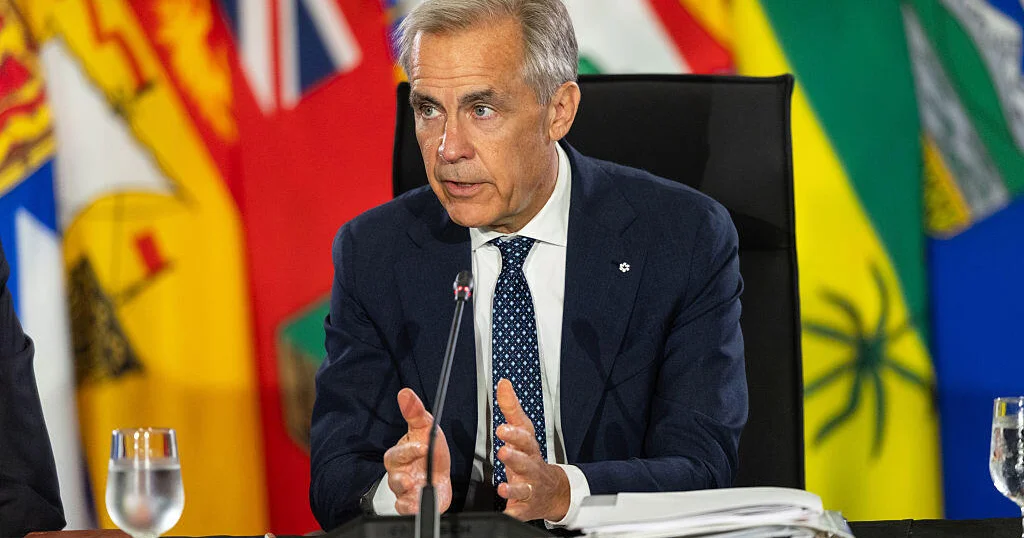
Tensions between the United States and Canada have escalated following the U.S. decision to impose 50% tariffs on $20 billion worth of Canadian goods. The move comes after negotiation efforts between the two nations broke down, with both sides citing unmet expectations and conditions. In response, Canadian Prime Minister Mark Carney announced that Canada would retaliate with equal tariffs, potentially exacerbating the trade conflict between the two countries.
| Article Subheadings |
|---|
| 1) U.S. Tariff Announcement and Immediate Reaction |
| 2) Canada’s Response and Position |
| 3) Breakdown of Negotiations: Key Issues |
| 4) Economic Implications of the New Tariffs |
| 5) Political Context and Future Relations |
U.S. Tariff Announcement and Immediate Reaction
In a significant escalation of trade tensions, the U.S. announced that it would implement a 50% tariff on a wide array of Canadian products, valued at an estimated $20 billion. This decision came into effect early on Saturday after last-minute negotiations between the two nations failed to reach a consensus. U.S. Trade Representative Jamieson Greer expressed disappointment following the discussions, explaining to reporters that Canada declined to finalize the trade deal based on terms previously agreed upon earlier that week.
The imposition of these tariffs is set to affect approximately 5% of all Canadian exports to the U.S. annually, with products ranging from sports equipment, such as hockey sticks, to everyday items like tongue depressors. This move is reflective of the U.S. administration’s continued focus on what it perceives as imbalanced trade agreements affecting American interests.
Canada’s Response and Position
In a decisive response, Prime Minister Mark Carney stated that Canada would retaliate with equivalent tariffs. He noted, “Canada will match those tariffs dollar for dollar to protect our workers and businesses.” This firm stance demonstrates Canada’s commitment to defending its economic sovereignty and reiterates the importance of bilateral relations with its southern neighbor. Carney underscored that the progress made in negotiations did not align with Canada’s objectives and thus prompted the suspension of trade talks, directing Canadian negotiators to return to Ottawa.
With both sides taking a hardline approach, the potential for ongoing retaliation looms, which could escalate into a trade war that may severely impact both economies. The Canadian government is preparing to formulate a strategy to mitigate the consequences of the tariffs and protect Canadian industries that may be adversely affected.
Breakdown of Negotiations: Key Issues
The recent breakdown in negotiations highlights several key issues that have plagued the U.S.-Canada trade relationship. A senior official from the Trump administration pointed out that Canada’s requests for concessions relating to tariffs on steel, aluminum, and lumber were not met, causing friction between the two countries. Moreover, leaders from both nations have voiced concerns about the reliability of any potential agreements amidst fluctuating terms.
In a statement, Carney criticized the U.S. approach, arguing that “last-minute changes in the U.S. proposed terms were unfair, uneconomic, and called into question the reliability of any deal.” The lack of clarity and consistency in the negotiation process has not only disrupted discussions but has raised alarm bells about future collaboration between the two longstanding allies. The tariffs may further complicate trade in numerous sectors, notably affecting supply chains integral to both economies.
Economic Implications of the New Tariffs
The economic implications of the new tariffs are far-reaching. Approximately $880 billion worth of goods and services were traded between the U.S. and Canada last year, making the economic relationships between the two nations crucial. The tariffs are expected to place additional financial burdens on Canadian exporters, driving prices up for consumers and reducing the competitiveness of Canadian goods in the U.S. market.
Experts have articulated concerns that these tariffs could lead to a broader economic slowdown, not just in Canada but also in the U.S., as higher tariff costs could lead to increased consumer prices and reduced spending. Moreover, retaliatory tariffs from Canada could complicate matters, as Canadian businesses may seek to impose similar tariffs on American goods, leading to a tit-for-tat economic conflict.
Political Context and Future Relations
The ongoing trade tensions are compounded by an already testing political relationship. President Donald Trump has displayed a contentious stance toward Canada, driven by historical grievances that include trade imbalances, NATO obligations, and various infrastructure disputes, such as those involving a critical bridge connecting the two countries. This backdrop of political strife further complicates the diplomatic efforts of both sides.
Looking ahead, experts suggest that any resolution will require significant compromises from both sides to foster long-term stability in trade relations. Until then, the tariffs could serve as a flashpoint, igniting further disputes and necessitating increased diplomatic engagement to mitigate escalating tensions. The upcoming months will be critical in determining how both nations approach this trade crisis and whether a sustainable resolution can be achieved.
| No. | Key Points |
|---|---|
| 1 | The U.S. is imposing 50% tariffs on $20 billion worth of Canadian goods. |
| 2 | Canada plans to match these tariffs dollar for dollar in retaliation. |
| 3 | Negotiations broke down due to disagreements over steel, aluminum, and other tariffs. |
| 4 | Economic implications are severe, with potential price hikes and reduced competitiveness for Canadian exports. |
| 5 | The political context adds pressure, with a history of strained relations between Trump and Canadian leadership. |
Summary
The recent tariff imposition by the U.S. on Canadian goods represents a marked escalation in an already tumultuous trade relationship. As both countries prepare to engage in tit-for-tat measures, the impending consequences could be significant economically and politically. This situation underscores the need for diplomatic efforts to resolve the complexities of trade negotiations, with the potential to reshape future relations between these two crucial allies. As events unfold, businesses and consumers alike will be keenly watching the impacts of these tariffs on the broader economy.
Frequently Asked Questions
Question: What are the implications of the new tariffs on Canadian goods?
The new 50% tariffs will increase costs for Canadian exporters, likely leading to higher prices for consumers in both Canada and the U.S. This may also result in retaliatory tariffs from Canada, complicating trade further.
Question: Why did negotiations between the U.S. and Canada collapse?
Negotiations broke down due to Canada’s requests for concessions on various tariffs that the U.S. administration was unwilling to grant, leading to frustration and ultimately a suspension of talks.
Question: How might this trade conflict affect future U.S.-Canada relations?
The trade conflict could strain relations significantly, requiring both nations to communicate effectively to reach compromises and resolve disputes, or risk a prolonged economic standoff.